
Best for
Places this machine suits
Have a different kind of site? Ask us whether it fits.
Catalogue
50 machine types for every place people gather.
By venue
Machine mixes planned around where they stand.
Travel & tech
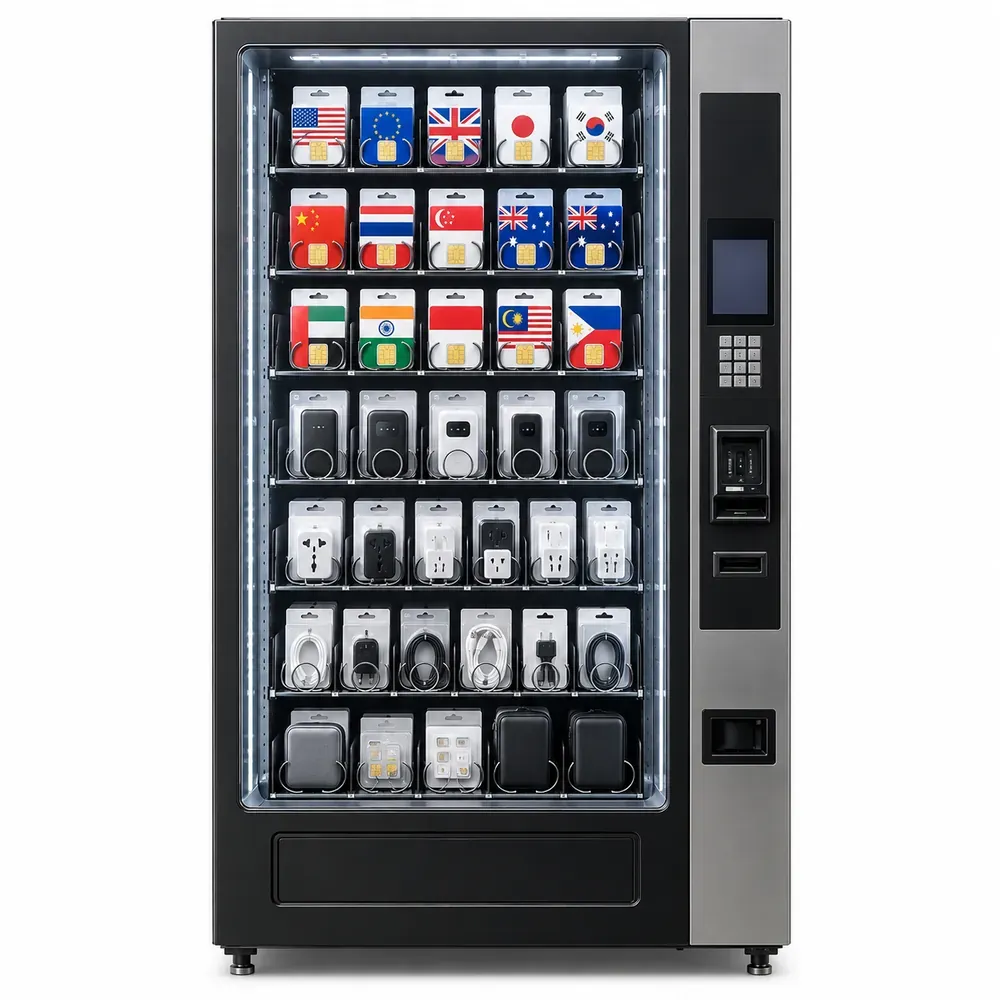
Travel connectivity accessories. SIMs are never sold from an unattended machine (SIM sales need Aadhaar-based KYC); any SIM or eSIM connectivity product is checked per site with a licensed telecom partner.
Best for
Have a different kind of site? Ask us whether it fits.
What it can stock
The final range is planned with you for each site.
Selling a SIM requires Aadhaar-based KYC and a registered telecom distributor, so SIMs are not sold from an unattended machine today. Feasibility is checked per site with a licensed telecom partner.
Key points
Specifications
Sizes, capacity and hardware depend on the model and configuration we agree for your site. We share a spec sheet with your quote; the safety certification that applies to this model (such as BIS, where required) is confirmed in your written quote, and you can ask us for the documents.
Smart features
Options vary by model and are confirmed in your quote.
UPI QR, cards and wallets through the payment reader.
Browse by category and tap to buy, like the machines in our photos.
Stock levels, sales and alerts on a dashboard, so refills are planned.
Shelf layout and product mix planned around who uses the space.
Signage on the machine body to suit your venue or your brand.
Ways to get it
Pick the model that suits your budget and how hands-on you want to be. Terms are shared with your quote.
For businesses and operators
Own the machine outright and run it your way. We help with configuration, installation and training.
Ask about this option: buy a machineFor offices, campuses and sites
Pay a periodic fee instead of buying upfront, with servicing included as agreed in the contract.
Ask about this option: rent or subscribeFor hosts with space and footfall
We place, stock and maintain the machine; you provide the location. Subject to a site survey.
Ask about this option: we operate itFor entrepreneurs and franchisees
Run machines in your city with our hardware, software and support behind you.
Ask about this option: become a partnerHow we deploy it
Footfall, space, power and who will use it.
Machine model, product mix and payment options.
Delivery, set-up and a test run on site.
Refills planned from remote stock data.
Upkeep and support as per your agreement.
Related machines
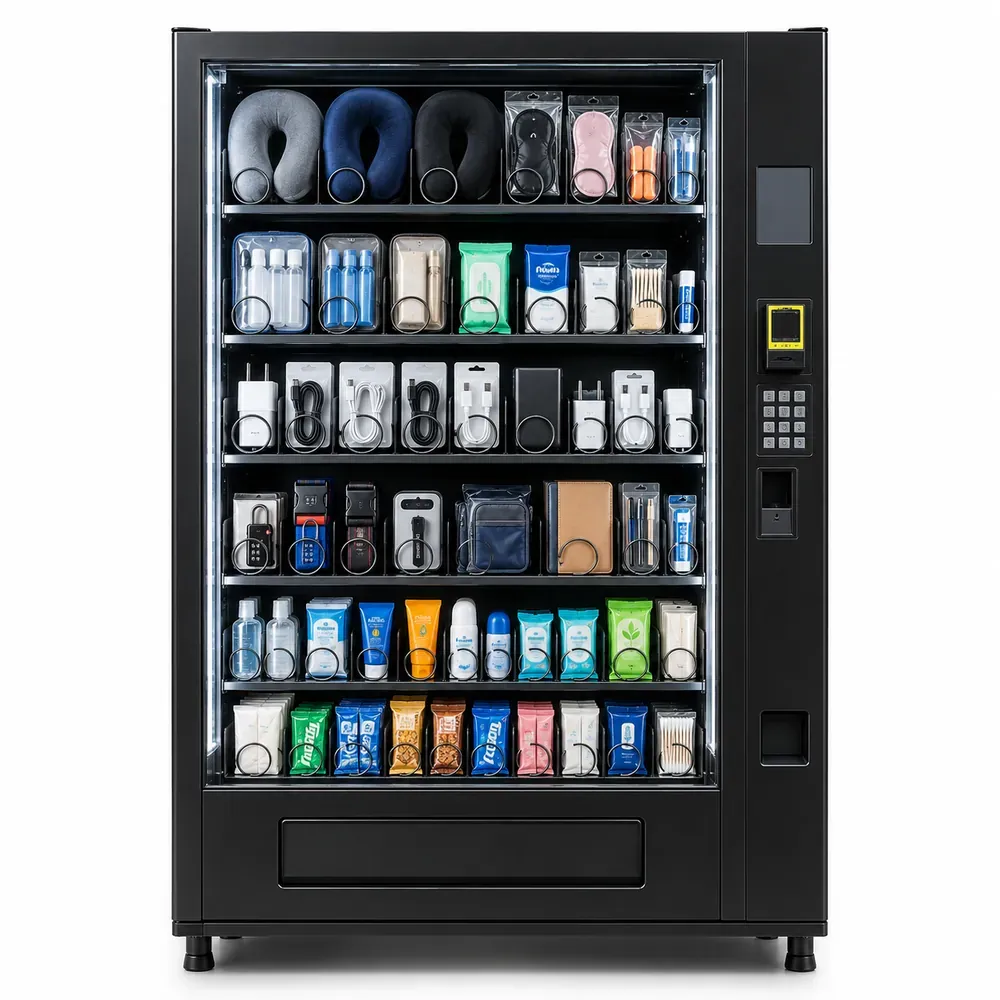
Provides items travellers commonly forget.
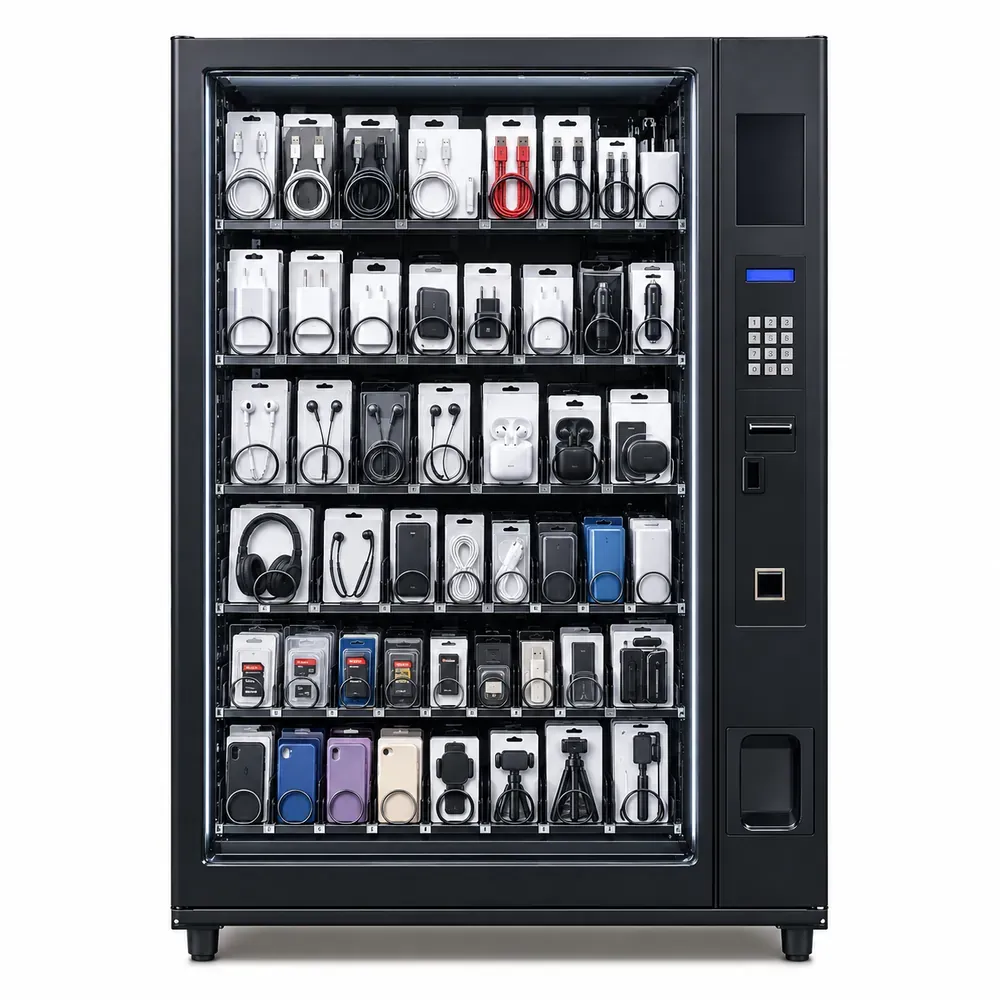
Sells cables, chargers, adapters, earphones and other accessories.
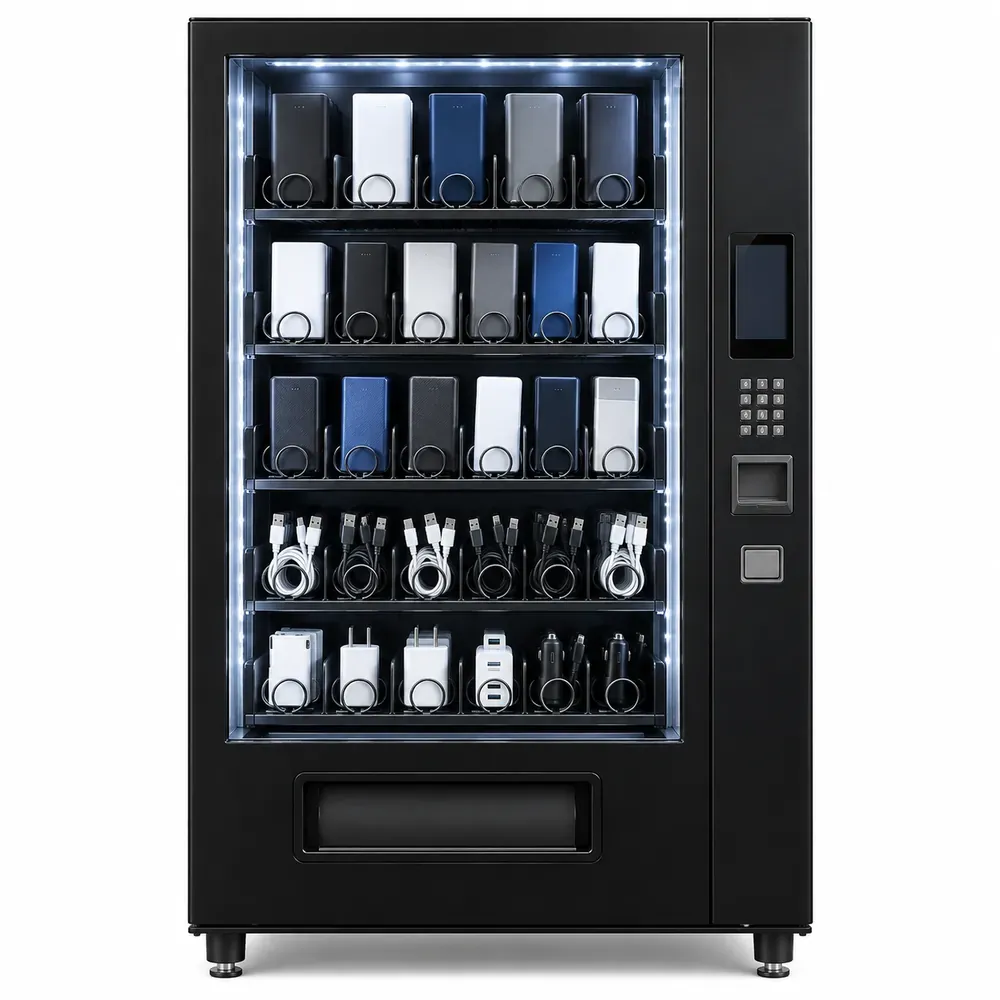
Rents or sells portable power banks.
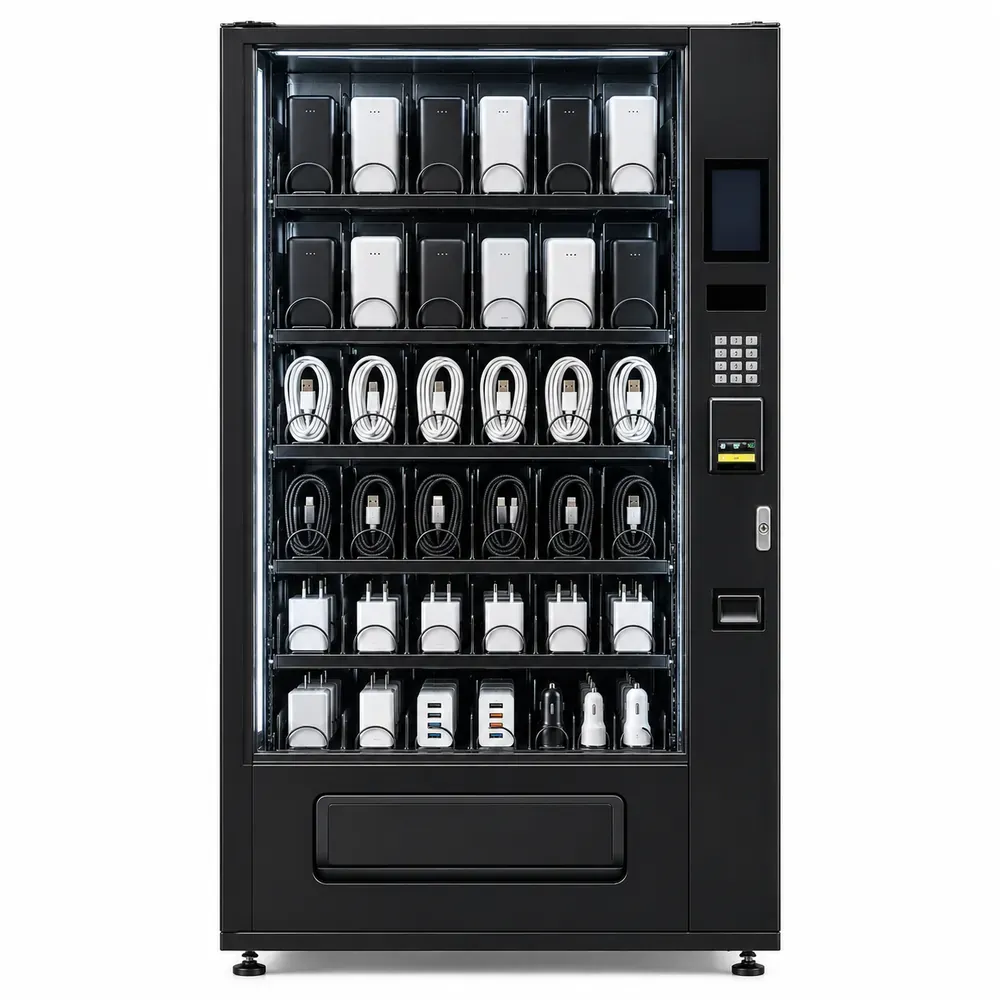
Allows customers to rent charging cables or power banks.
Tell us where it will go and roughly how many people pass by. We reply with configuration options and the engagement model that suits you.
A travel connectivity vending machine is a self-service unit that sells small connectivity and charging accessories to people on the move. Think of cables, plug adapters, earphones and similar sealed items that a traveller needs right now. It does not sell SIM cards, and later in this guide you will see why that line matters.
India sees a constant flow of business travellers, tourists and families passing through airports, stations, bus stands and hotels. Many of them reach a stop with a dead cable, a missing adapter or earphones that stopped working. A shop may be closed, far away or simply too slow when a flight is boarding. A machine that is open at any hour fills that gap for a few seconds of effort.
This guide explains how a travel connectivity vending machine works, what to stock, where to place it and how to stay on the right side of the rules. It is written for hotel owners, property managers, travel retailers and anyone planning a small business around travellers.
The flow of a travel connectivity vending machine is close to any snack machine, only the products are different. Each item sits in a numbered slot behind a glass front. The user chooses a slot, pays and the machine releases the item into a pickup tray.
Smart features such as remote stock alerts, sales reports and price changes from a phone are optional and model dependent. Ask us which features a shortlisted machine supports before you finalise.
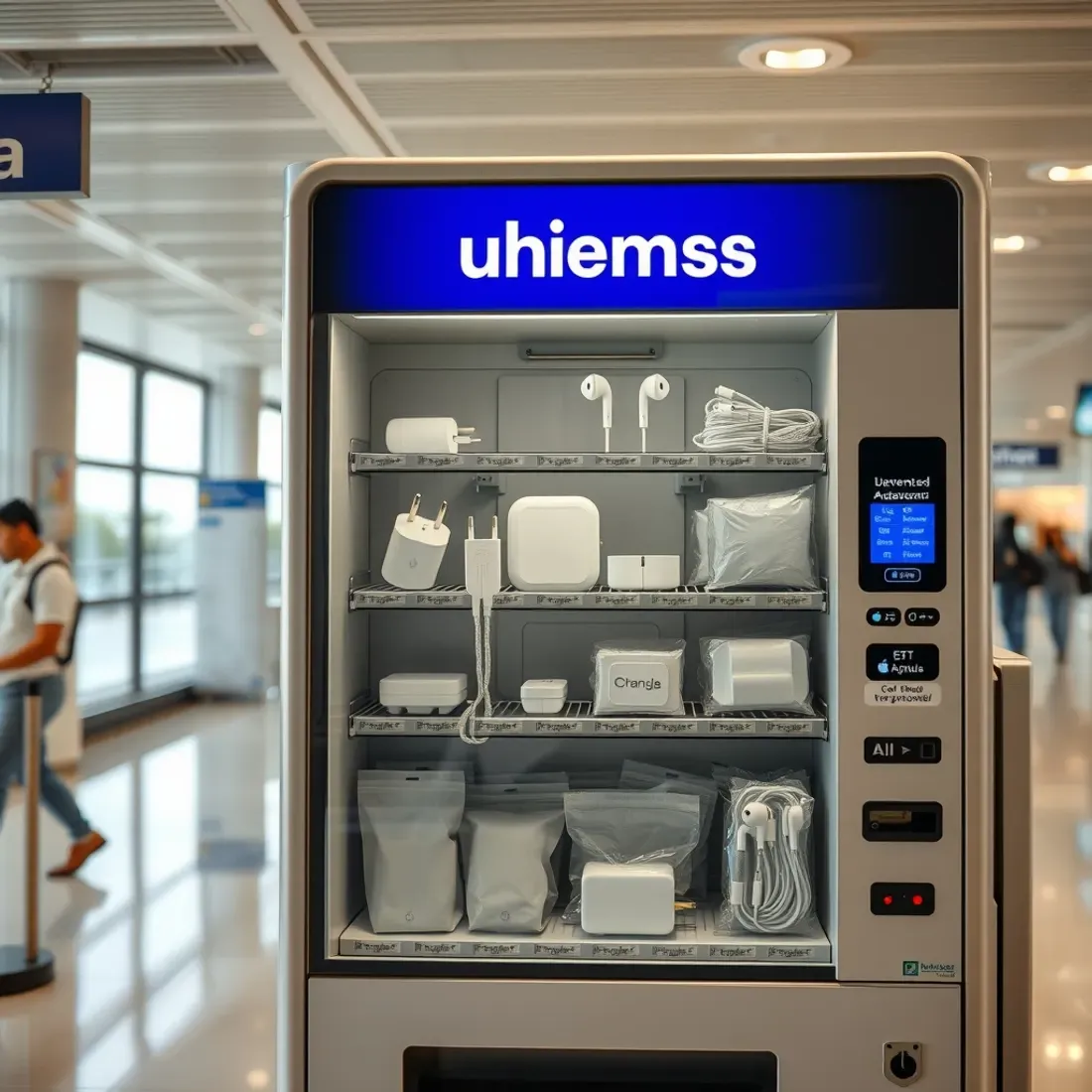
Connectivity accessories are small, light and often boxed in thin packaging. That makes slot design important.
Measure the packaging of your top items and share the sizes with us. A good slot plan is built from real product sizes, not guesses.
The right product list turns a travel connectivity vending machine from a novelty into something travellers trust. Keep it short, practical and focused on what a stressed traveller truly needs. Think of it as airport connectivity accessories in a small footprint.
| Product type | Typical pack | Why it sells |
|---|---|---|
| Charging cables | Sealed single cable packs | The most common travel problem |
| Travel plug adapters | Small boxed adapters | Visitors with a different plug type |
| Earphones | Sealed earphone packs | Lost or broken on the journey |
| SIM ejector tools | Small blister packs | Needed when a traveller swaps a SIM |
| Phone pouches | Waterproof or neck pouches | Useful at beaches and in rain |
| Basic power accessories | Sealed small items | Only where the product is suitable |
Only sell sealed, clearly labelled items from reliable suppliers. Check the pack for the supplier details and keep those records. For any electrical item, ask the supplier which safety standards apply and request the proof in writing. Do not describe any item as certified unless the paperwork is in your hands.
In the first month, stock a handful of fast movers and watch the sales. Cables and earphones often move first at transport hubs, while adapters matter more where foreign guests stay. Replace slow rows with items that travellers ask for. A good travel adapter vending machine row that empties early tells you to give that product more space.
SIM cards are the one item people most often expect from this kind of machine, and the answer is simple. SIMs are never sold from an unattended machine. In India, a new SIM needs identity verification, and Aadhaar-based KYC cannot be done by a machine that nobody supervises.
Any SIM or eSIM connectivity product is checked per site with a licensed telecom partner. That partner confirms what is allowed, how the customer is verified and who is responsible for the process. We do not promise any telecom product from the machine, and you should be wary of any seller who does.
The Telecom Regulatory Authority of India publishes consumer information on mobile services, and the Department of Telecommunications explains the licensing framework. Read both before you plan anything that touches telecom products.
A clear rule protects you, the site owner and the traveller. If a travel connectivity vending machine only sells accessories, approvals are easier and disputes are rarer. Travellers also know exactly what to expect. A travel connectivity kiosk that stays within its lane earns trust faster than one that promises everything.
A travel connectivity vending machine in the wrong corner will sit unused, even if the products are perfect. Walk the site at different hours and watch where travellers pause. People with a problem stop where they feel stuck, such as near gates, charging points, check-in areas and lobbies.
Good spots for a travel connectivity vending machine usually share these traits:
Our travel hubs vending solutions page explains how machines suit airports, stations and highway stops. For guest properties, see our hotel vending solutions page, which covers lobbies and corridors.
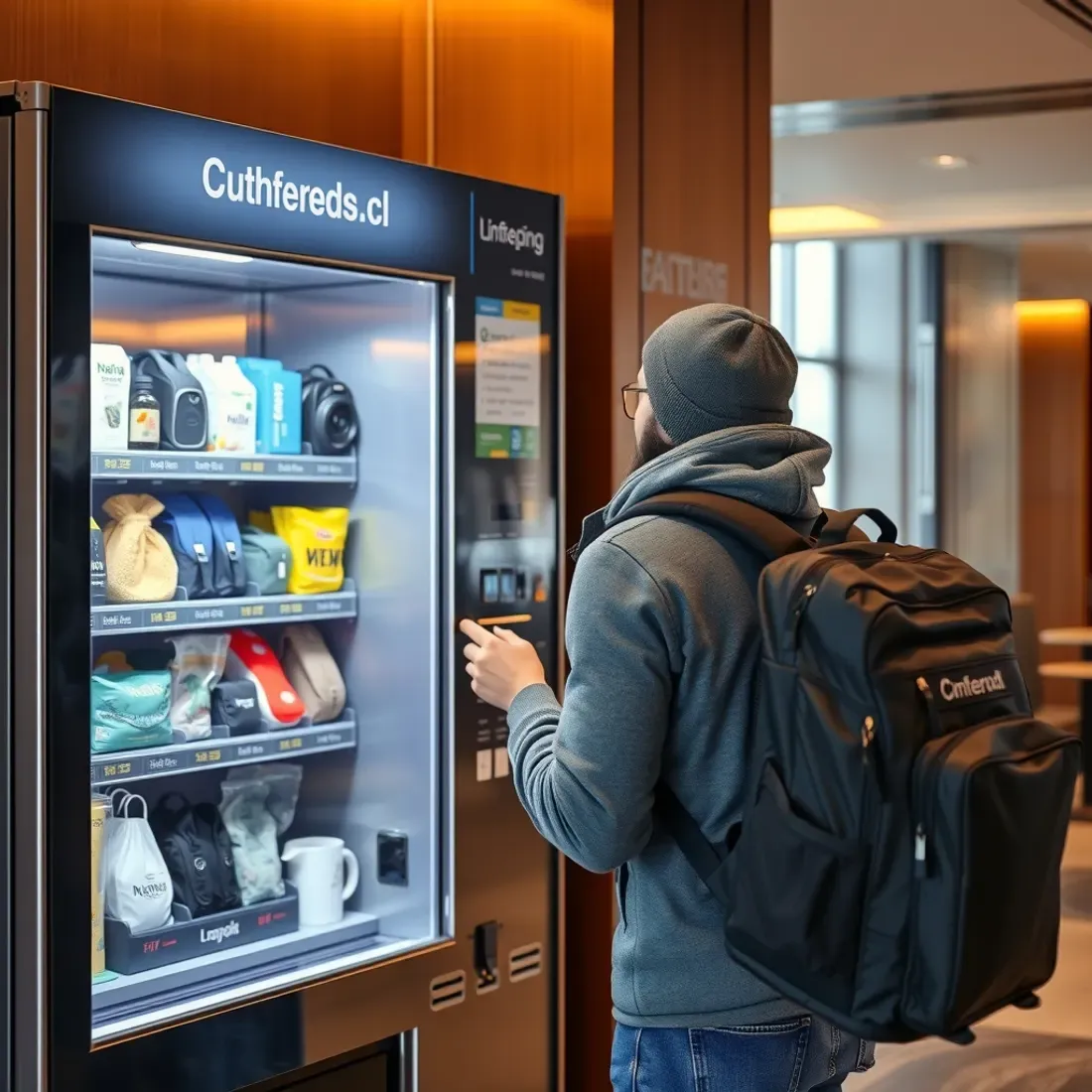
Check that the floor is level and can carry a loaded machine. Confirm that the machine will not block an exit, a walkway or a fire point. Look at the lighting too, as a bright and clean machine feels safer to use at night. If the site is a transport hub, ask the manager about required approvals before you order anything.
Most Indian users of a travel connectivity vending machine now expect to pay by UPI. A QR code payment is quick and avoids the need for exact change. UPI is run by the National Payments Corporation of India, and it works with most Indian banks and payment apps.
Foreign visitors may not have a UPI app on their phone. At international travel points, a card option can help, but the available methods are model dependent. Confirm them in your quote.
Failed payments and stuck items will happen now and then. Plan for them from day one.
Travellers have little time and little patience. A fast, fair refund keeps your machine trusted even after a bad moment.
An empty row or a dusty glass front on a travel connectivity vending machine pushes users away. A simple routine keeps the machine useful and clean.
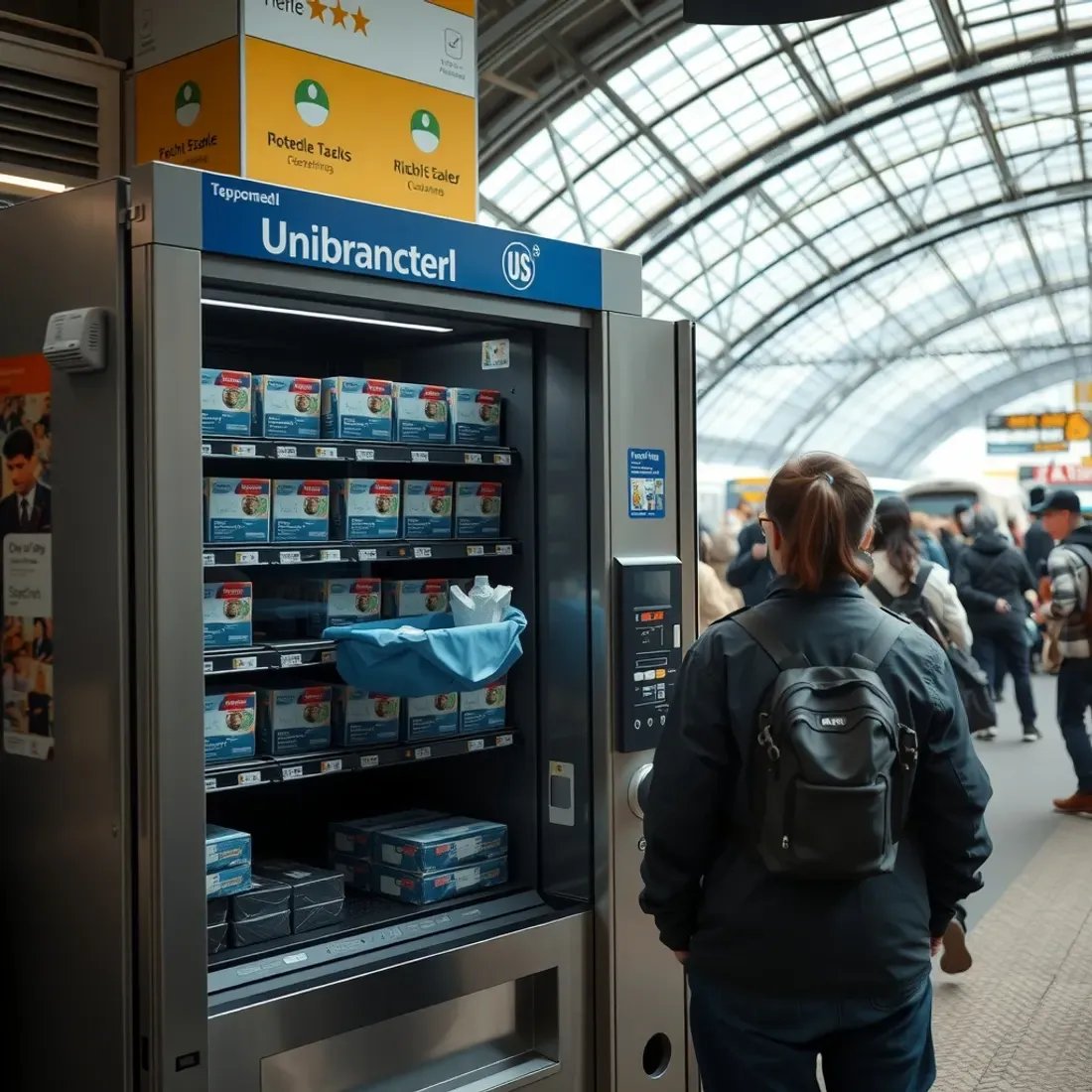
Small electronics are attractive to thieves. For a travel connectivity vending machine, choose a model with a strong body and a locked service door, and place it where staff or cameras can see it. Ask the site owner whether camera cover is possible. Do not stock high value items until you have seen how the site behaves in the first months.
Electrical safety should never be guessed. Any BIS or other safety certification for the machine will be confirmed in your written quote. You can read about Indian product standards on the Bureau of Indian Standards website. Use an earthed power point and keep cables tidy and away from foot traffic.
A travel connectivity vending machine is not the only way to help travellers with small connectivity problems. Here is how it compares.
For many sites, a mix works best. The machine covers urgent and late-night needs, while shops and the front desk handle the rest.
If your site needs more than connectivity items, a broader unit may fit better. Our travel essentials vending machine page covers machines that carry general items for journeys. If power is the main problem, look at our power bank vending machine and mobile charger rental machine pages. You can also browse all vending machine types to compare sizes and formats.
A tourist connectivity machine suits places where visitors arrive in groups and move on quickly. Think of hill stations, beach towns, heritage sites and busy market streets. Visitors there often forget adapters or cables, and local shops may not stock the right type.
Hotels in these areas can also host a travel connectivity vending machine in the lobby for guests. Guests who arrive late at night often find that the shops are shut. A machine in the lobby saves them a trip and saves your staff a request. Always agree on placement and upkeep in writing before the machine goes in.
Seasonality matters here. A tourist spot may be busy for a few months and quiet for the rest of the year, so plan your stock for the busy period. Ask us whether flexible arrangements are available for seasonal sites.
There are different ways to bring a machine to your site. The right route to a travel connectivity vending machine depends on your budget, your time and the footfall nearby.
If you are thinking about running machines as a business, our vending machine partner page explains how to begin. Not sure which machine fits your site? Use the vending machine finder to narrow your choices in a few steps.
A few simple errors cause most of the trouble with a new travel connectivity vending machine.
Use this short list before you request a quote:
Ready to plan a travel connectivity vending machine for your airport shop, hotel or tourist site? Share your site details, expected footfall and product list, and we will help you choose a suitable model. Request a free travel connectivity vending machine quote, and you can compare the options that fit your site.
No. SIM cards are never sold from an unattended machine, because SIM sales need Aadhaar-based KYC that a machine cannot complete. Any SIM or eSIM connectivity product is checked site by site with a licensed telecom partner. The machine itself is best used for accessories such as cables, adapters and earphones.
Think of the small items a traveller forgets or loses on the way: charging cables, plug adapters, earphones, SIM ejector tools and phone pouches. Which items fit depends on the slot sizes of the model you choose. Share your product list with us and we will check it against the slot plan.
It works best where travellers are in a hurry and shops are far or closed. Airports, railway stations, bus terminals, hotel lobbies and busy tourist areas are the usual choices. Foot traffic matters more than the size of the site, so count the people passing by at different hours.
Yes, in almost every case. Transport hubs and hotels have their own approval process for any new retail point, and the rules vary by site. Start by speaking to the property or terminal manager, and ask us to help you prepare the details of the machine and the product list.
UPI by QR code is the most common choice, but the exact payment options are model dependent. Foreign visitors may not have a UPI app, so a card option can help at international travel points. Confirm the payment methods in your written quote before you decide.