
Best for
Places this machine suits
Have a different kind of site? Ask us whether it fits.
Catalogue
50 machine types for every place people gather.
By venue
Machine mixes planned around where they stand.
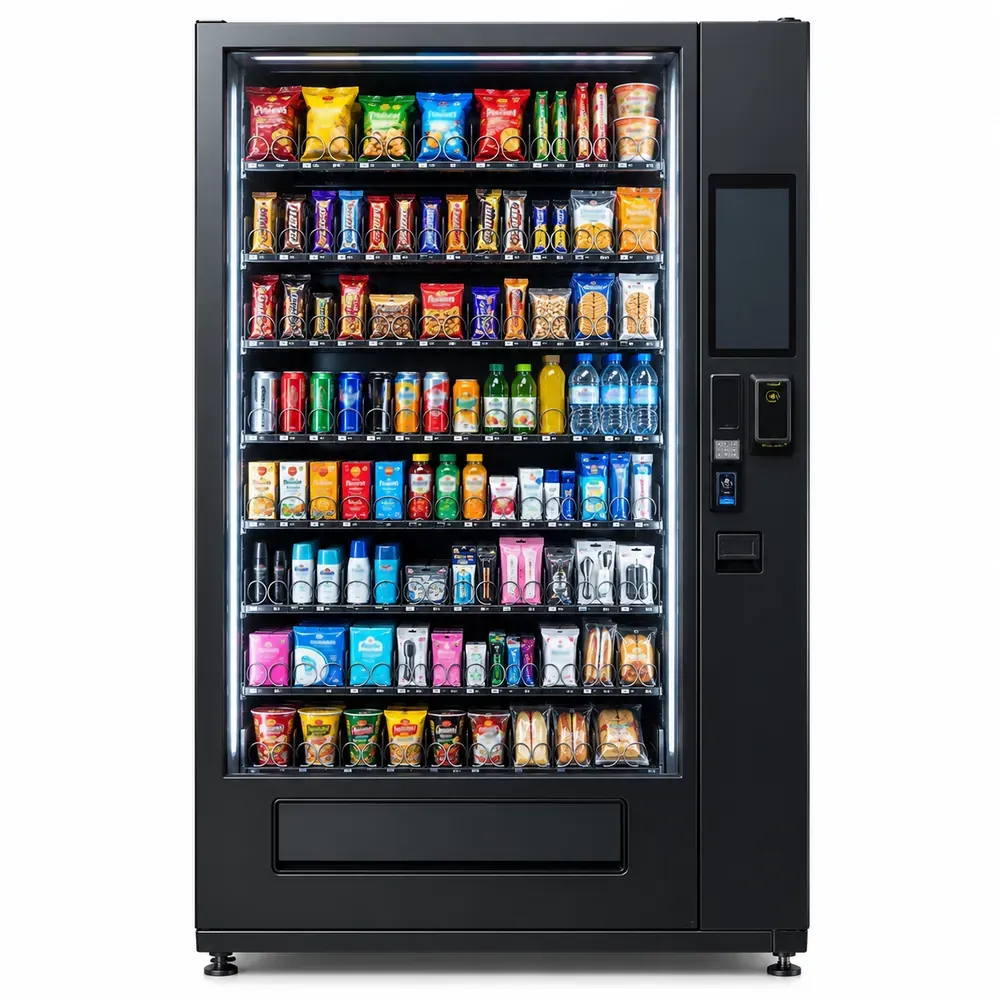
Smart store
Large automated vending unit combining food, beverages, personal care, electronics and everyday essentials.
Best for
Have a different kind of site? Ask us whether it fits.
What it can stock
The final range is planned with you for each site.
Key points
Specifications
Sizes, capacity and hardware depend on the model and configuration we agree for your site. We share a spec sheet with your quote; the safety certification that applies to this model (such as BIS, where required) is confirmed in your written quote, and you can ask us for the documents.
Smart features
Options vary by model and are confirmed in your quote.
UPI QR, cards and wallets through the payment reader.
Browse by category and tap to buy, like the machines in our photos.
Stock levels, sales and alerts on a dashboard, so refills are planned.
Shelf layout and product mix planned around who uses the space.
Signage on the machine body to suit your venue or your brand.
Ways to get it
Pick the model that suits your budget and how hands-on you want to be. Terms are shared with your quote.
For businesses and operators
Own the machine outright and run it your way. We help with configuration, installation and training.
Ask about this option: buy a machineFor offices, campuses and sites
Pay a periodic fee instead of buying upfront, with servicing included as agreed in the contract.
Ask about this option: rent or subscribeFor hosts with space and footfall
We place, stock and maintain the machine; you provide the location. Subject to a site survey.
Ask about this option: we operate itFor entrepreneurs and franchisees
Run machines in your city with our hardware, software and support behind you.
Ask about this option: become a partnerHow we deploy it
Footfall, space, power and who will use it.
Machine model, product mix and payment options.
Delivery, set-up and a test run on site.
Refills planned from remote stock data.
Upkeep and support as per your agreement.
Related machines
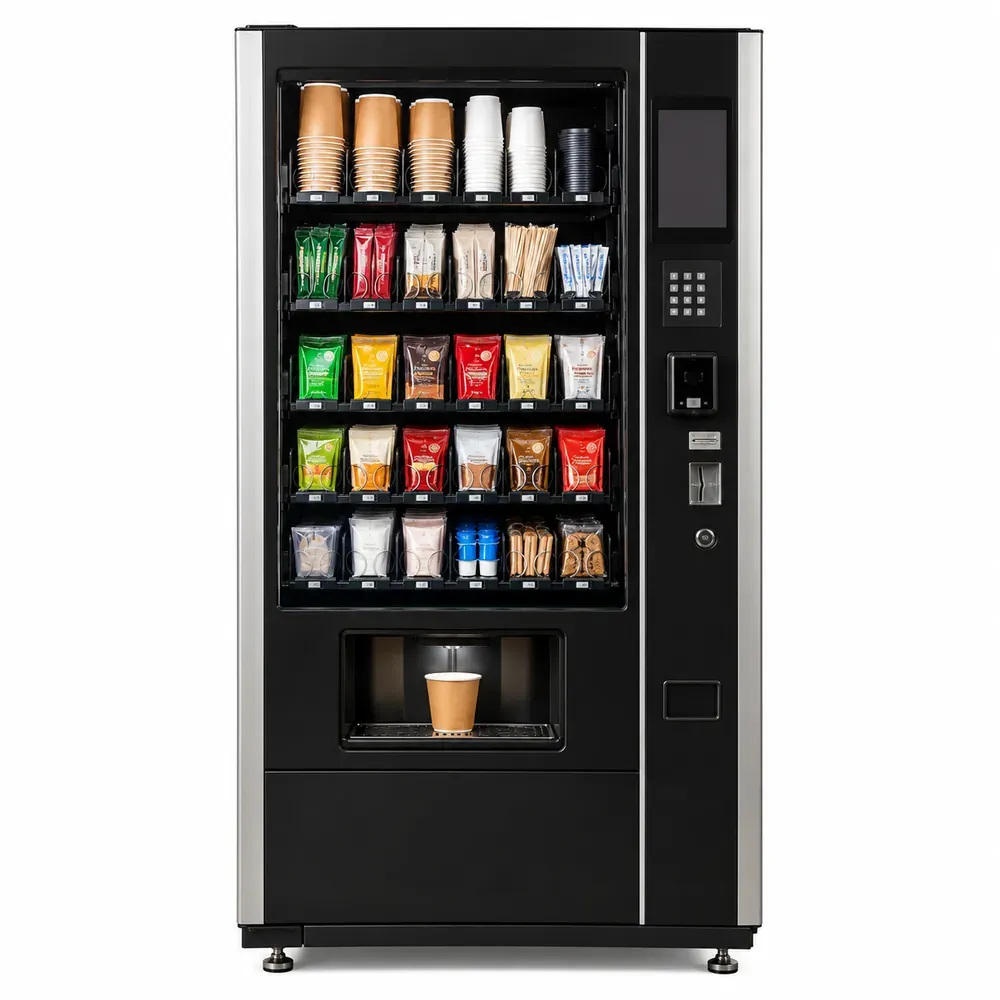
Automated machine serving hot beverages such as tea, coffee, cappuccino and premixes.
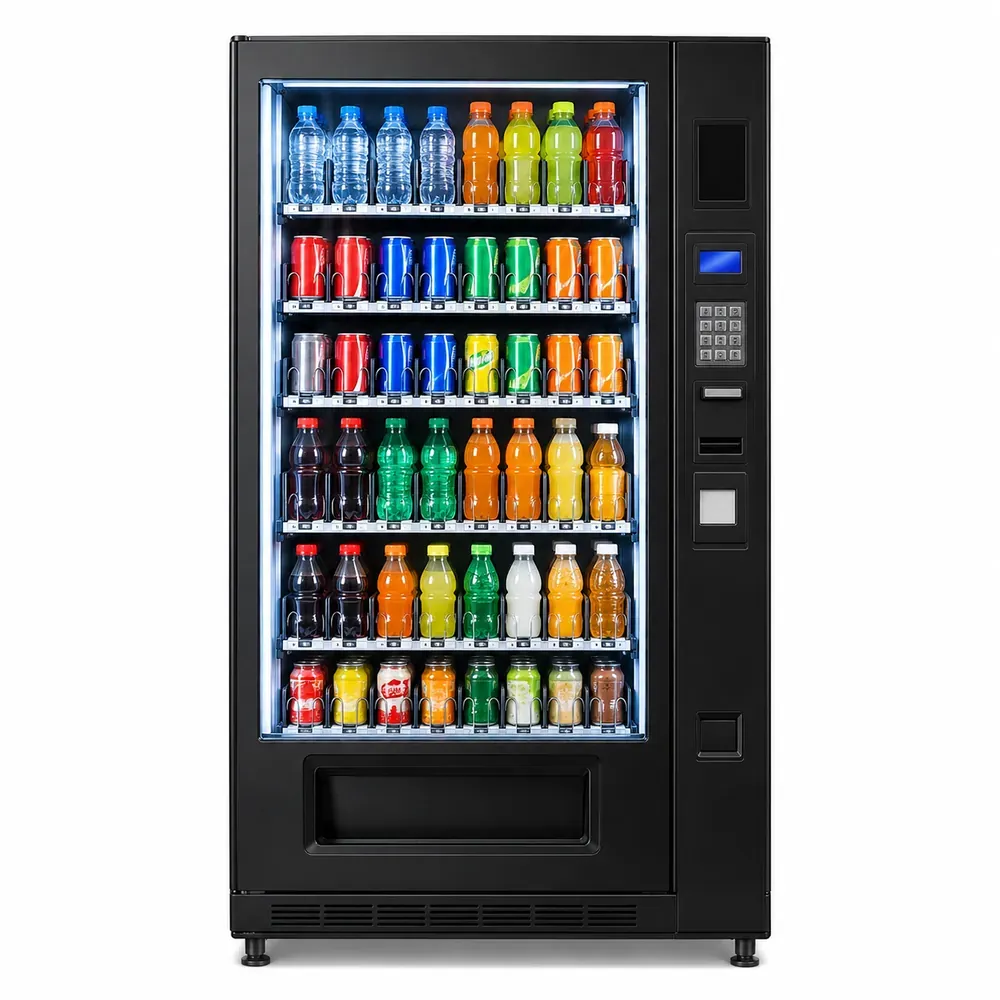
Dispenses chilled soft drinks, juices, energy drinks and water.
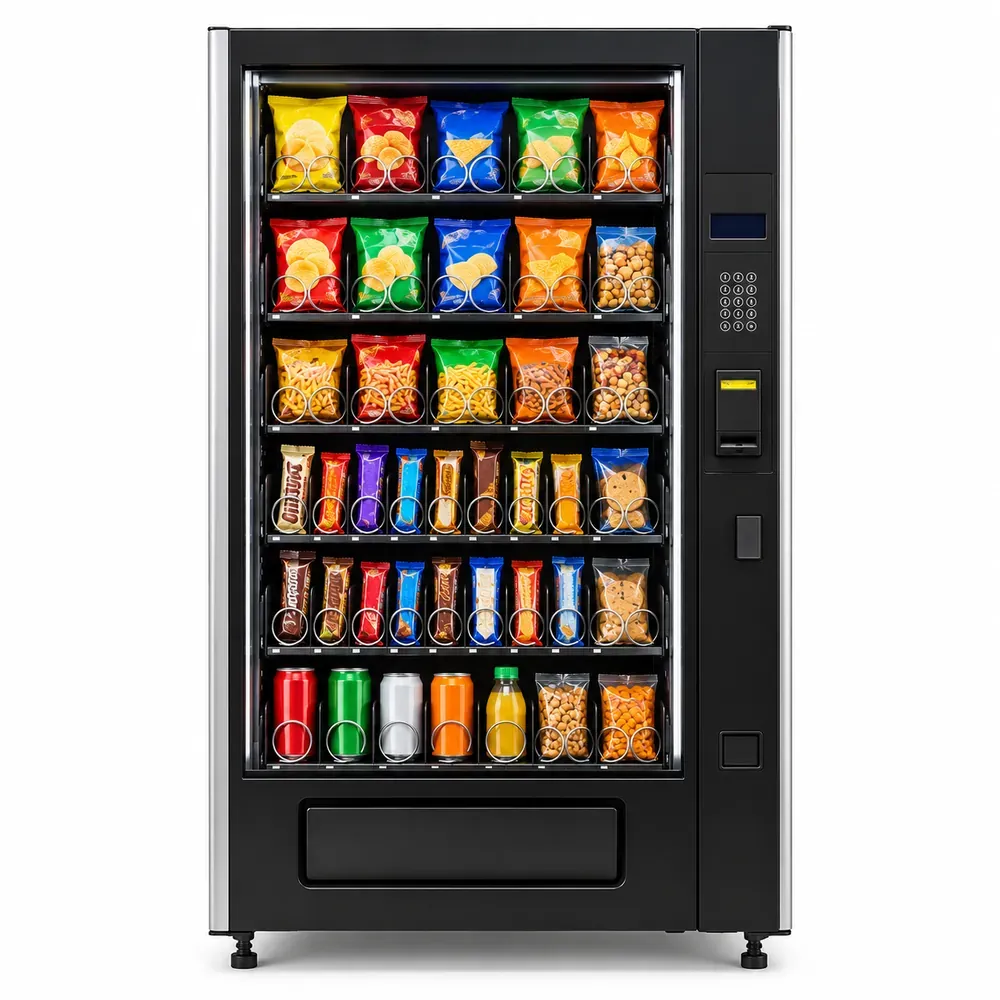
Sells packaged snacks such as chips, biscuits, chocolates and namkeen.
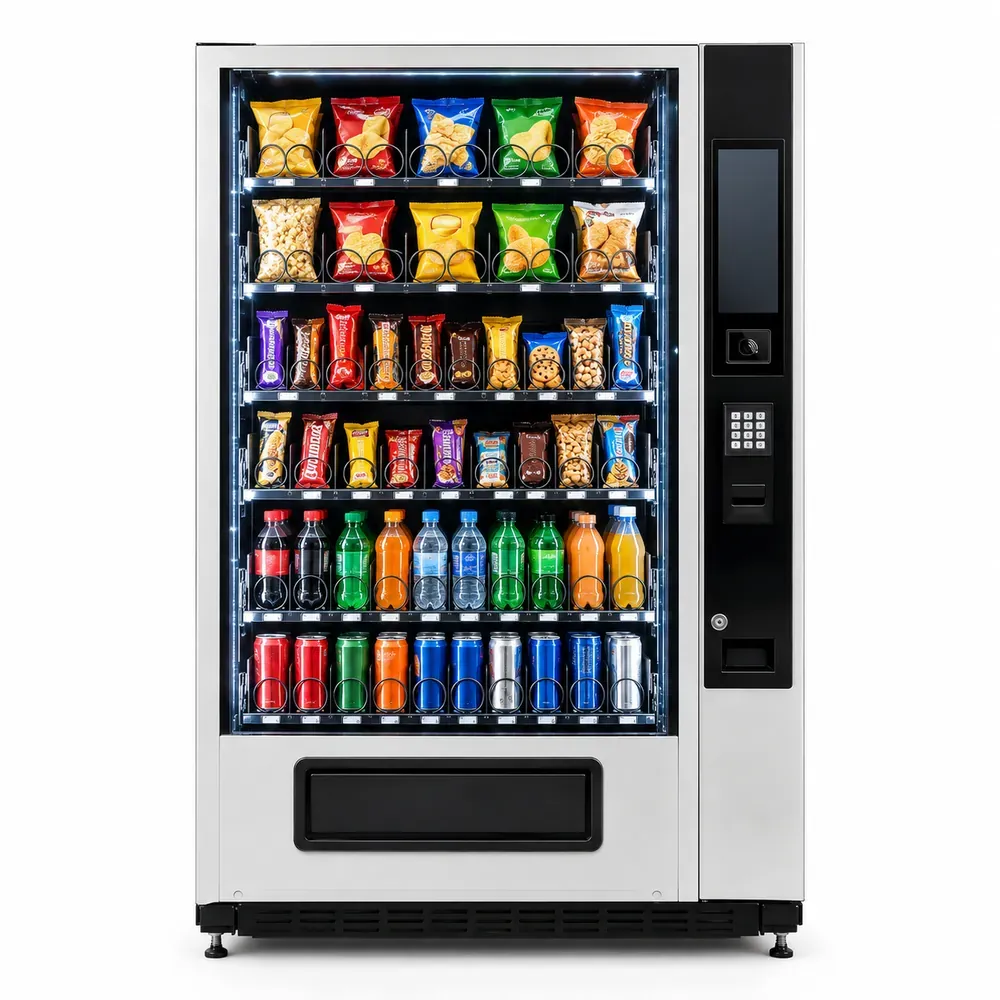
Combines snacks and beverages in a single automated retail unit.
Tell us where it will go and roughly how many people pass by. We reply with configuration options and the engagement model that suits you.
A convenience store machine is a large, automated unit that works like a small shop open all day and all night. Instead of one product line, it carries a mix of daily needs. Think packaged snacks, cold drinks, instant noodles, toothpaste, sanitary pads, phone chargers and other small items people often need at odd hours.
In India, this idea fits well in places where people live, study or work long hours. A residential society, a hostel block, an IT park or a hospital corridor often has demand after the nearby kirana shop closes. An unmanned mini store fills that gap without the cost of staff on night shifts.
This guide explains how to plan, place, stock and run a convenience store machine. It covers the practical choices that decide whether the machine becomes a useful service or just a big box in the corner.
Several everyday trends make a 24x7 vending kiosk more practical in India today than it was a decade ago.
None of these reasons guarantee sales at a given spot. They simply mean that the conditions for an automated retail machine are better than before. Your own footfall, product mix and pricing will decide the result.
The people who gain most are those with limited time or limited options. A night-shift nurse who needs a quick snack, a student who ran out of soap, or a resident who needs a phone cable at midnight all benefit from a nearby convenience store machine. For the site owner, it is an amenity that can improve daily life without building a full shop.
The basic flow of a convenience store machine is simple, even on advanced models. Here is what usually happens from the user’s side:
On the operator side, the convenience store machine tracks what sold, what is running low and whether any fault has occurred. This data helps plan refills so that popular items do not run out.
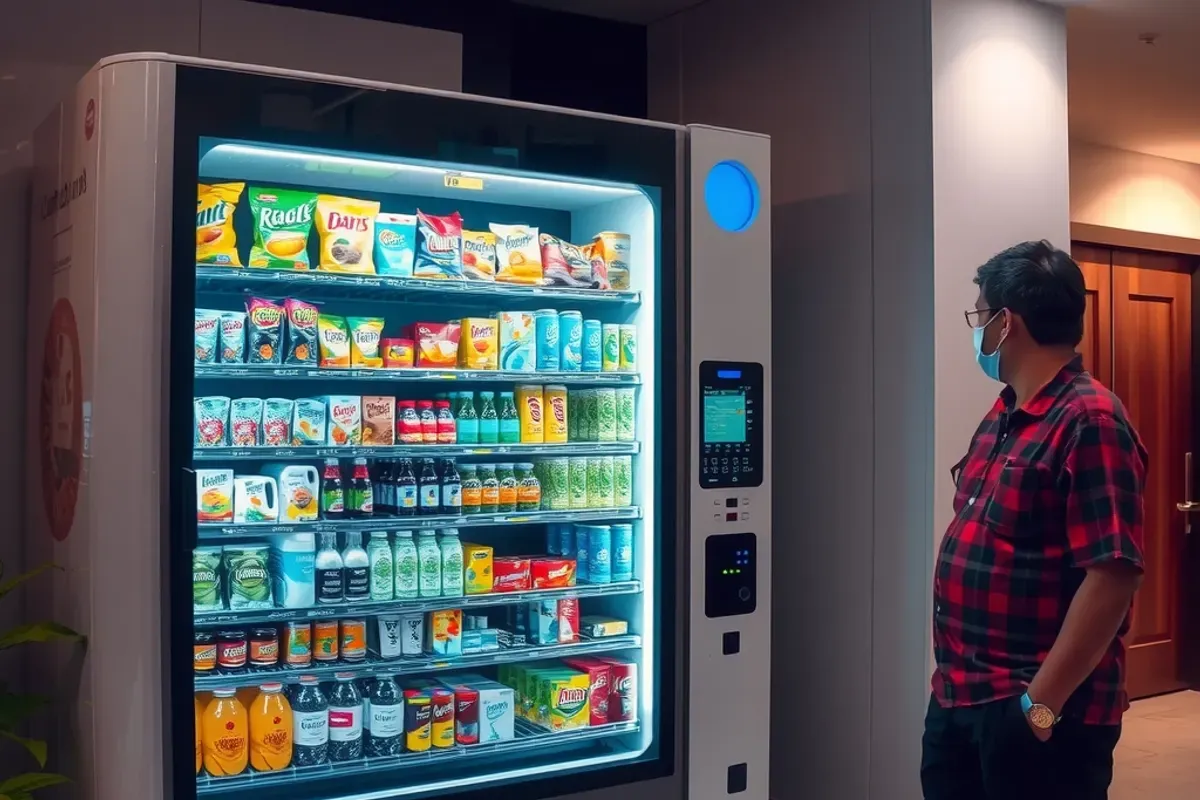
Different machines use different ways to hand over the product. Spiral coils are common for packets and bottles. Lift or elevator systems lower items gently, which helps for glass jars or fragile packs. Some units use locker style doors or a weight sensing cabinet that unlocks after payment. The right style depends on what you plan to sell. If you are unsure, the vending machine finder can help narrow down options by venue and product type.
Location matters more than almost anything else. A great convenience store machine in a quiet corner will sell little, while a simple machine on a busy path can do well.
Keep these points in mind:
Each venue has its own pattern of demand. A housing society often sees evening and late night use, while an office sees peaks around breaks. Our pages on residential society vending, office vending options and hospital vending setups explain what tends to work in each setting. Campuses and hostels are covered on the campus solutions page.
The product mix is where a convenience store machine becomes truly useful. The aim is to cover common “I need it now” moments. A balanced mix often includes items from several groups, as shown below.
| Product group | Typical items | Why it sells at odd hours | Points to check |
|---|---|---|---|
| Packaged food | Biscuits, chips, namkeen, instant noodles | Quick hunger fix after the canteen closes | Expiry dates, FSSAI-compliant packaging |
| Beverages | Water bottles, juices, soft drinks, flavoured milk | Thirst and late night study or work | Chilled section, temperature control |
| Personal care | Toothpaste, soap, sanitary pads, shaving items | Run-out moments at night or while travelling | Shelf size, discreet placement |
| Electronics | Charging cables, earphones, adapters | Phone emergencies | Higher value items, secure slots |
| Household basics | Batteries, tissues, small stationery | Small everyday needs | Slow movers, review monthly |
| Health basics | Permitted OTC essentials only | Minor needs like bandages | Rules for that site and product |
Food and drinks should be stocked in FSSAI-compliant packaging. Who holds the food licence for the stock depends on the engagement model, so agree on this in writing. The Food Safety and Standards Authority of India website lists the current rules for packaged food and licensing.
It is tempting to fill every slot with something new. A better approach is to start with fast-moving basics and a few test items. After a few weeks, sales data shows what people actually buy. Replace slow movers with items users ask for. If you mainly need food or drinks, a focused snack vending machine or a snack and beverage combo machine may suit a smaller space better.
Payment is where most users judge a convenience store machine. If payment fails or feels slow, people walk away and may not return.
Common options include:
Dynamic QR codes generated per sale are often more reliable for matching payments to products. Static codes are simpler but can make refunds and tracking harder. Payment options are model dependent and optional, so confirm what your shortlisted unit supports. Our smart vending technology page explains these features in more detail.
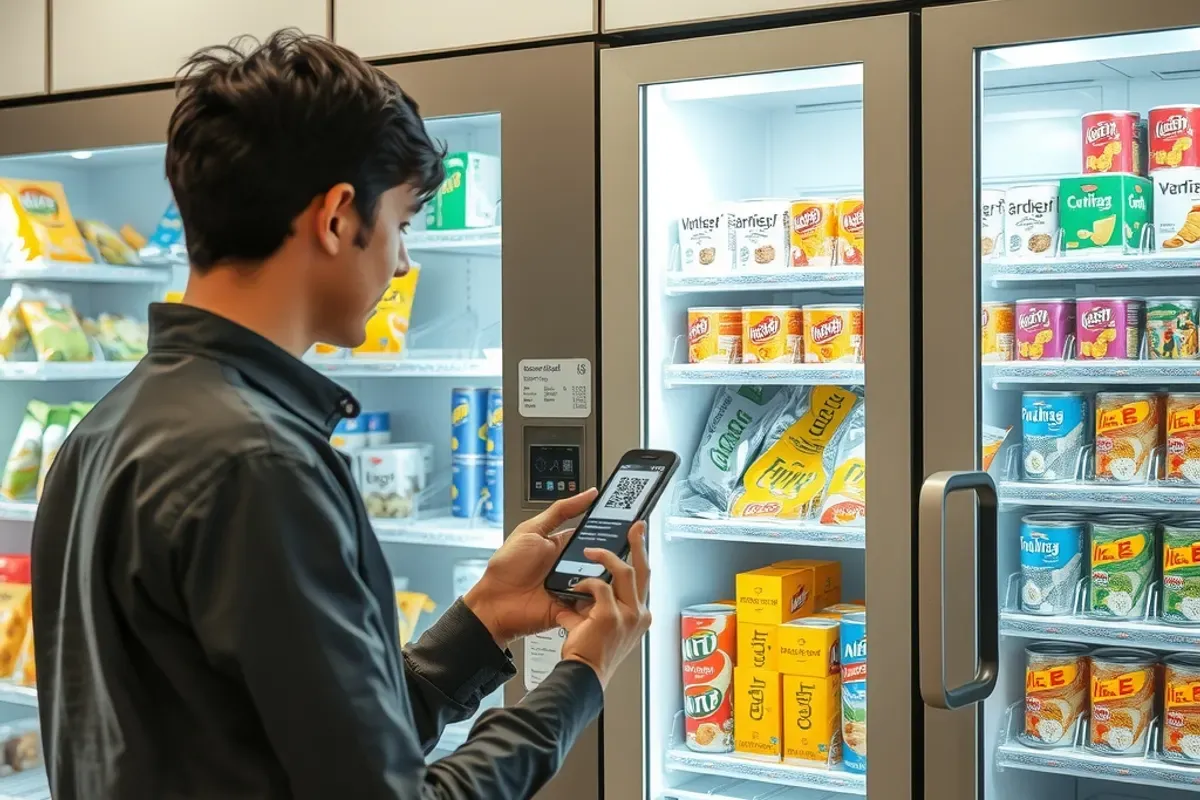
Every payment system has some failures. Plan for them before launch. Display a clear help contact on the convenience store machine. Decide who checks failed payments and how fast refunds go back to users. A simple written process builds trust, especially in a society where neighbours talk to each other.
A convenience store machine is only as good as its upkeep. Empty slots, dirty glass or a broken screen send users away quickly.
Set a refill schedule based on sales, not a fixed calendar alone. Busy sites may need refills several times a week, while quiet ones may need less. During each visit, the service person should:
A connected convenience store machine can send alerts when stock runs low, when a door is left open or when temperature drifts. This lets the operator fix issues before users notice. These features are model dependent, so check which ones come with the unit you choose.
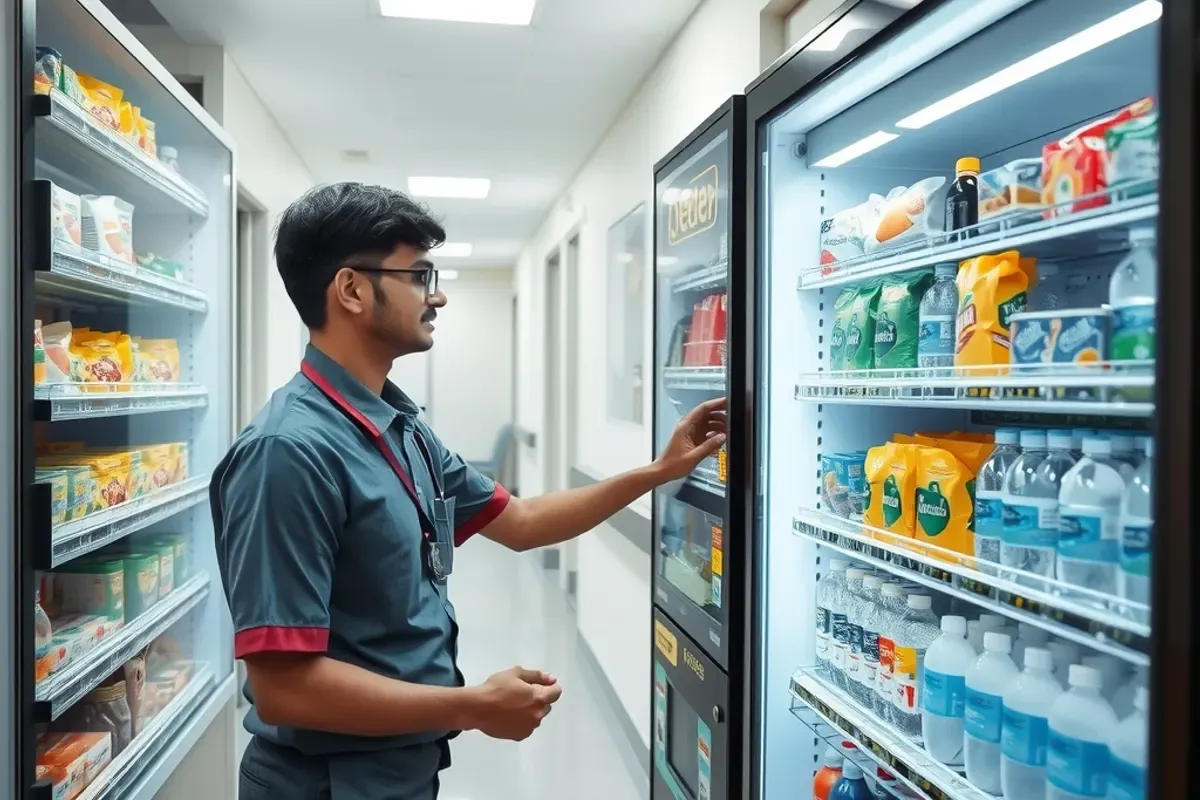
Electrical safety is not something to guess about. Any BIS or other safety certification for the machine will be confirmed in your written quote. You can read about Indian product standards on the Bureau of Indian Standards website. Also check that the power point is earthed and that cables are not a tripping risk.
Bigger is not always better. A very large convenience store machine at a quiet site means many slots that rarely empty, which leads to old stock and wasted money. A small unit at a busy site runs out fast and frustrates users.
A simple way to think about size:
Count how many people pass the spot in the evening and at night, not just during the day. Those hours are when a convenience store machine adds the most value. Share these rough numbers with us, and we can suggest a size that matches your site rather than the biggest model available.
Before you decide, it helps to compare a convenience store machine with other ways of serving the same need.
For many societies and campuses, a convenience store machine works best alongside existing shops, not as a replacement. It handles the night hours and quick needs, while larger shopping still happens elsewhere.
If your site has low footfall, or if people mostly want drinks and snacks, a smaller unit may serve you better. You can browse all vending machine types to compare sizes and categories. A focused machine is easier to keep full and fresh.
There is no single correct way to bring a convenience store machine to your site. The right model depends on your budget, your time and how involved you want to be.
Typical approaches in the industry include:
Not every model is offered at every site. Ask us whether an engagement model is available for your location and requirements. If you are thinking of running machines as a venture, our vending machine business page explains how partnering might work.
Whichever route you choose, clear answers early save trouble later:
Many first-time sites make the same avoidable errors. Learning from them can save time and money.
Avoiding these mistakes does not guarantee success, but it removes the most common reasons a convenience store machine fails to gain regular users.
Use this short checklist before you request a quote. It helps you share clear details and get a better match.
Having these details ready makes the first conversation faster. If you still have general questions, our vending machine FAQ covers many basics.
Ready to bring an always-open mini store to your society, campus, office or hospital? Share your site details and product ideas, and we will suggest a suitable configuration and the engagement options we can discuss for your location. Request a free convenience store machine quote and tell us a little about your space.
A regular snack machine usually holds one product type, like chips or drinks. A convenience store machine is larger and mixes many categories, such as packaged food, beverages, toiletries, phone accessories and household basics. It works like a tiny shop that never closes, so the product plan and restocking routine need more thought.
Yes, and we recommend it. A short survey or a suggestion box near the machine helps you learn what people run out of late at night. Many sites change part of the product mix after the first few weeks of sales data. Final choices still depend on shelf size, temperature needs and any rules that apply to that product.
Most smart features, such as UPI payments, remote stock alerts and sales reports, need a stable connection, usually by mobile data or Wi-Fi. What happens during an outage depends on the model and payment setup. Ask us how the machine you are considering behaves offline before you finalise the site.
That depends on the engagement model you choose. You may buy the machine and run it yourself, or you can ask us whether an operated model is available for your site, where a service team handles refills and cleaning. Either way, agree on a written refill schedule and a contact person for issues.
Only permitted OTC essentials should be considered, and only where the rules for that site and product allow it. Prescription medicines must never be sold from an unattended machine. We review any health-related product list with you and suggest checking local requirements before stocking items like pain balms or bandages.
Large multi-category units take more floor space than a single snack machine, and you also need clear room in front for users and for the service door to open. Ask us for the exact dimensions of the model you shortlist, then mark that area on the floor before you commit to a spot.