
Best for
Places this machine suits
Have a different kind of site? Ask us whether it fits.
Catalogue
50 machine types for every place people gather.
By venue
Machine mixes planned around where they stand.
Meals
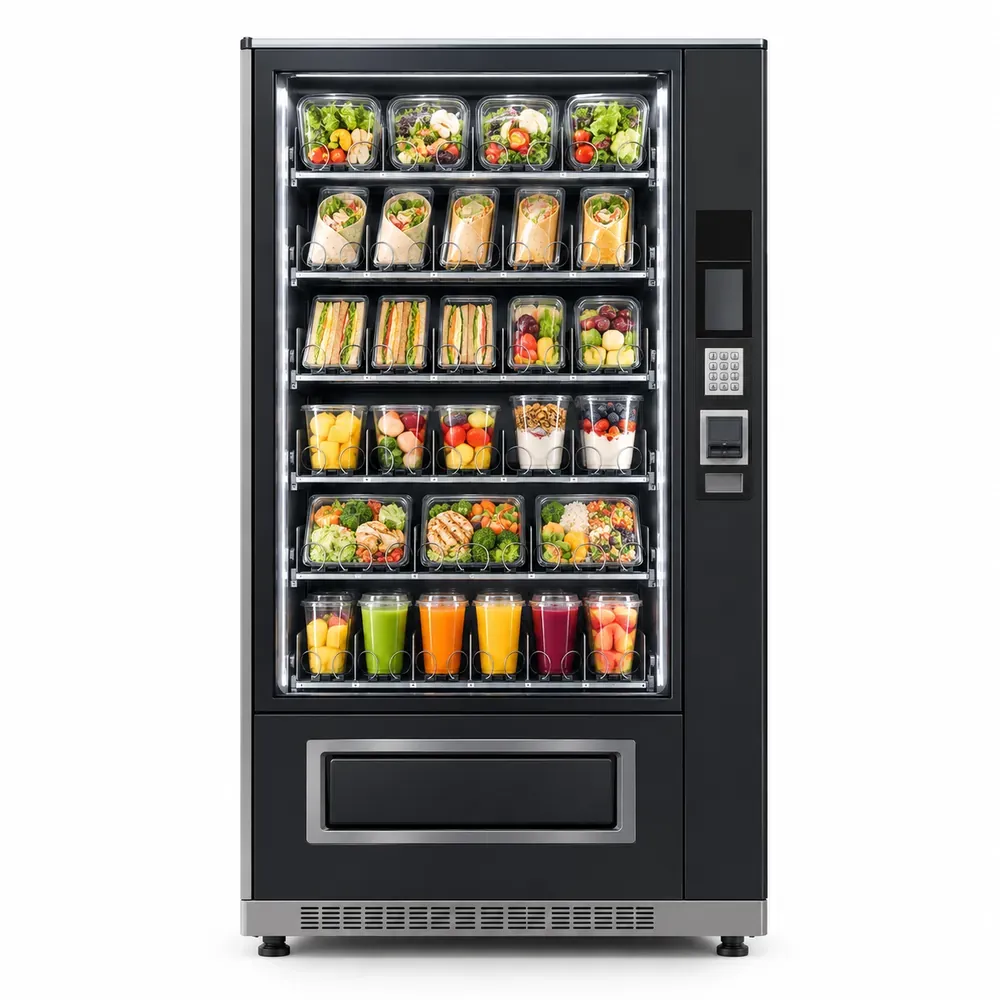
Refrigerated machine selling ready-to-eat meals, sandwiches, salads and wraps.
Best for
Have a different kind of site? Ask us whether it fits.
What it can stock
The final range is planned with you for each site, with food and drink to be stocked in FSSAI-compliant packaging.
Key points
Specifications
Sizes, capacity and hardware depend on the model and configuration we agree for your site. We share a spec sheet with your quote; the safety certification that applies to this model (such as BIS, where required) is confirmed in your written quote, and you can ask us for the documents.
Smart features
Options vary by model and are confirmed in your quote.
UPI QR, cards and wallets through the payment reader.
Browse by category and tap to buy, like the machines in our photos.
Stock levels, sales and alerts on a dashboard, so refills are planned.
Chilled, frozen or heated compartments, depending on the model.
Shelf layout and product mix planned around who uses the space.
Signage on the machine body to suit your venue or your brand.
Ways to get it
Pick the model that suits your budget and how hands-on you want to be. Terms are shared with your quote.
For businesses and operators
Own the machine outright and run it your way. We help with configuration, installation and training.
Ask about this option: buy a machineFor offices, campuses and sites
Pay a periodic fee instead of buying upfront, with servicing included as agreed in the contract.
Ask about this option: rent or subscribeFor hosts with space and footfall
We place, stock and maintain the machine; you provide the location. Subject to a site survey.
Ask about this option: we operate itFor entrepreneurs and franchisees
Run machines in your city with our hardware, software and support behind you.
Ask about this option: become a partnerHow we deploy it
Footfall, space, power and who will use it.
Machine model, product mix and payment options.
Delivery, set-up and a test run on site.
Refills planned from remote stock data.
Upkeep and support as per your agreement.
Related machines
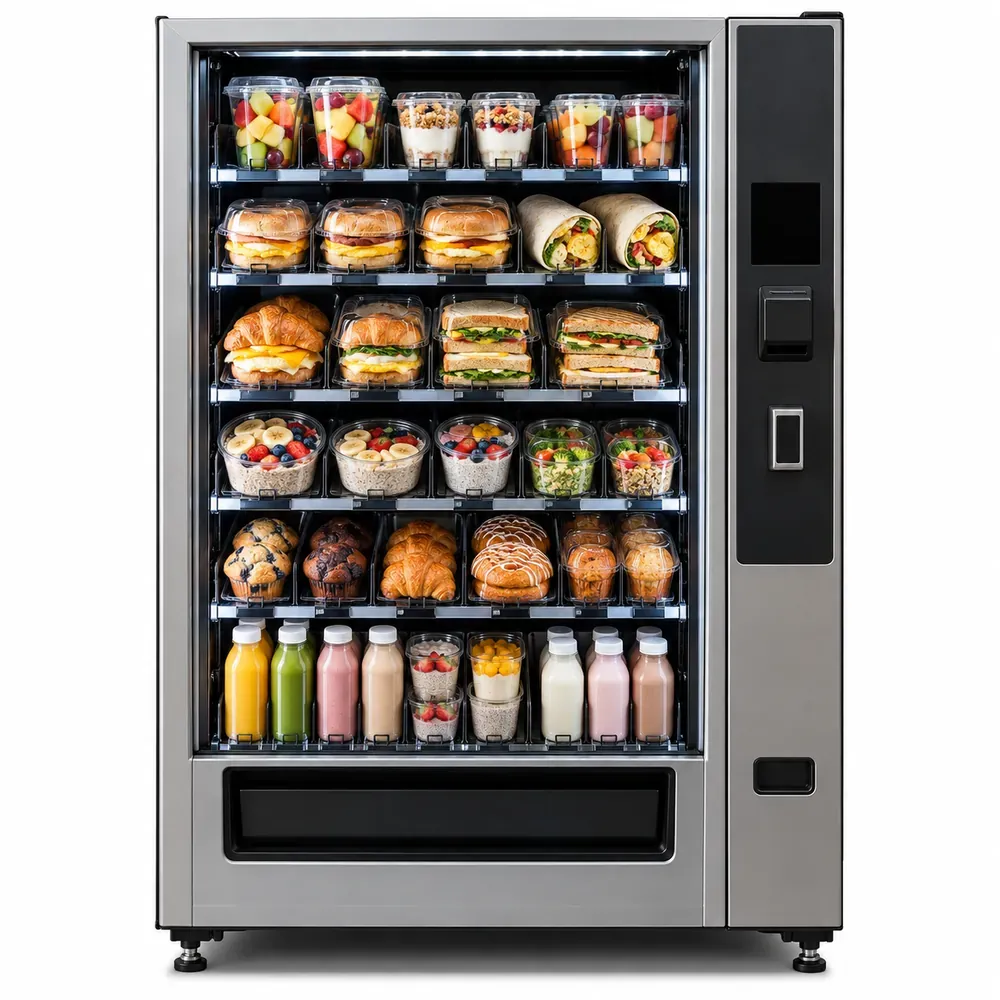
Offers ready-to-eat breakfast items such as poha, upma, idli and sandwiches.
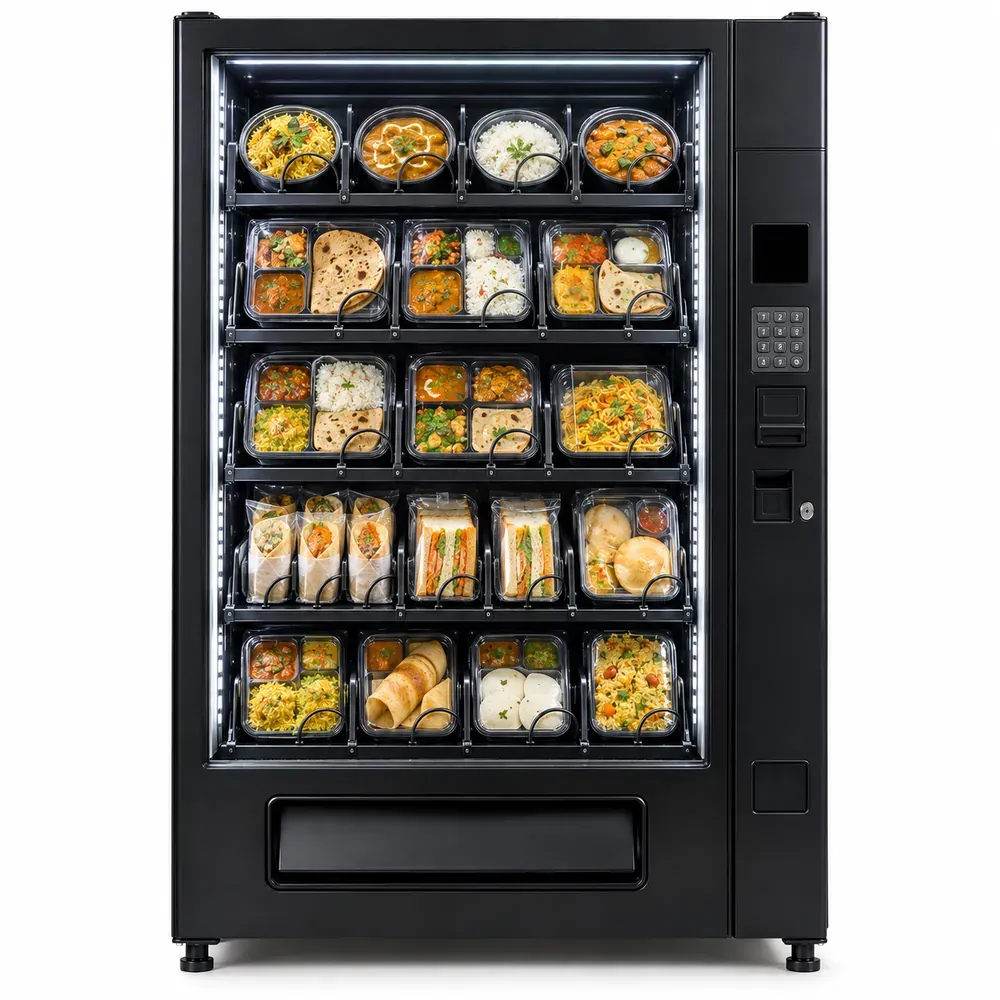
Dispenses packaged Indian meals such as dal-rice, rajma, biryani and thali meals.
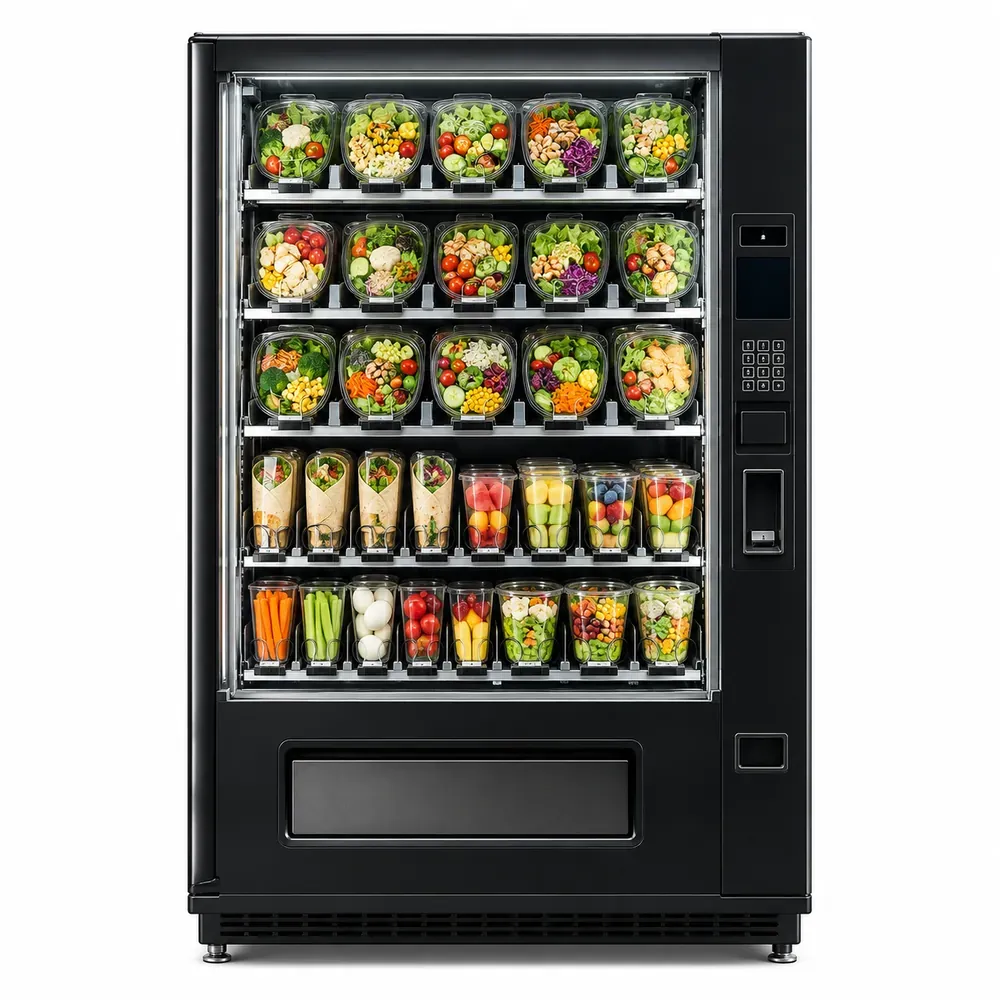
Provides ready-to-eat salads in refrigerated compartments.
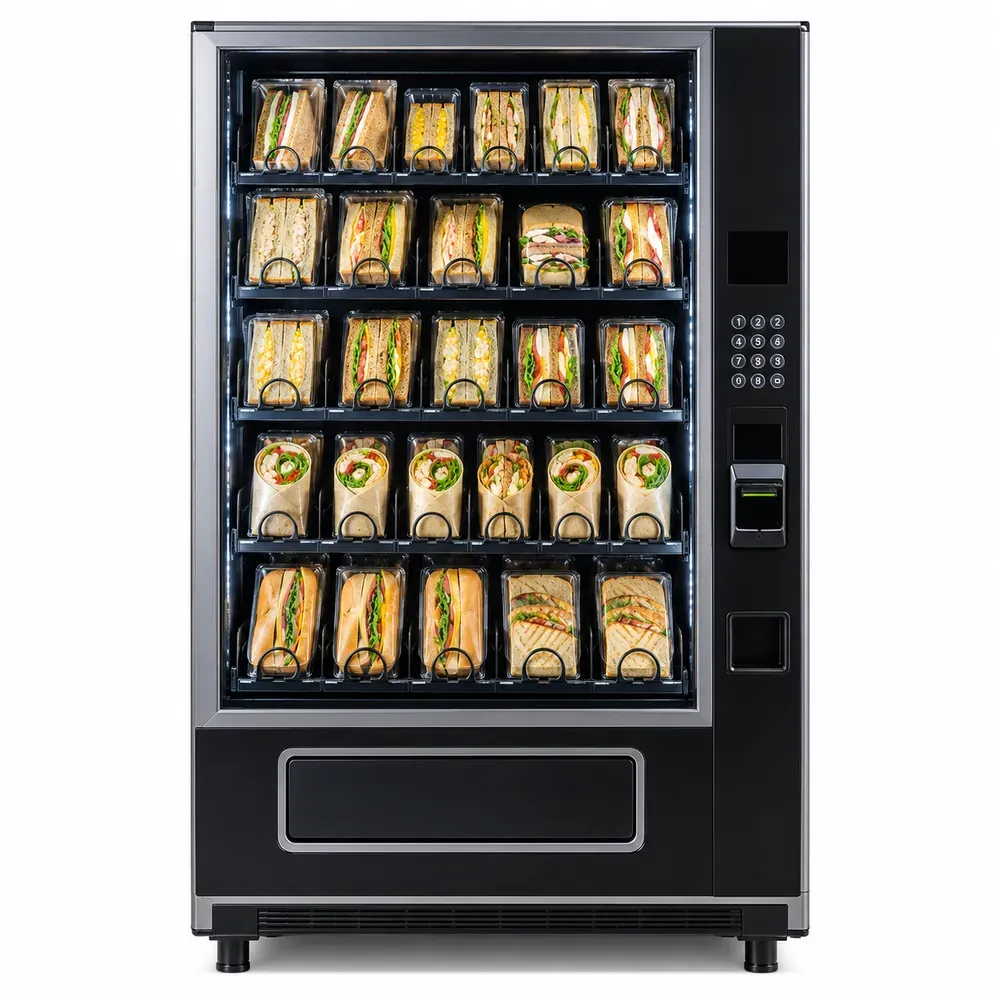
Refrigerated machine selling sandwiches, wraps and rolls.
Tell us where it will go and roughly how many people pass by. We reply with configuration options and the engagement model that suits you.
A fresh food vending machine is a chilled cabinet that sells ready-to-eat meals, sandwiches, salads and wraps at any hour, without a counter or a cashier. In India, many people work late shifts, skip lunch during busy days or wait long hours beside a patient in hospital. A canteen cannot stay open all the time. A machine can.
The idea is simple. A kitchen prepares and packs food. A team stocks the machine. People walk up, choose a meal, pay and eat. The cold cabinet keeps food at a safe temperature until it is bought.
This guide sits below the machine details above. It focuses on planning: what to stock, how cold storage works, where the machine performs well and how to keep waste low. If you want a quick way to shortlist machines for your site, try the vending machine finder.
Food safety is the heart of this machine. Unlike chips or biscuits, fresh meals spoil quickly if they get warm. So a fresh food vending machine is really the last link in the cold chain: it carries on the work that started in the kitchen fridge.
Fresh food passes through several hands before someone eats it. Each step has to stay cold.
If any one step breaks, the food can become unsafe even if it looks fine. The World Health Organization notes on food safety explain why keeping food at safe temperatures matters for preventing illness.
Many modern machines show the cabinet temperature on a small display. Some can also send an alert to the operator if the temperature rises, or stop sales until the problem is fixed. These features are model dependent and optional, so ask which ones a given model includes. You can read more about connected features on our smart vending page.
Even with alerts, a simple habit helps. The person who refills the fresh food vending machine should note the temperature in a log at each visit.
The menu decides whether people come back. A good fresh food vending machine offers a few filling meals, a few light options and something for different tastes. All food should be stocked in FSSAI-compliant packaging with a clear label.
These are the main sellers in most sites.
If sandwiches are your strongest seller, you may also want to compare a dedicated sandwich vending machine.
Health-minded staff and visitors often look for something lighter.
A combined sandwich and salad vending machine setup works for many teams, but some sites prefer a separate salad vending machine when demand for light food is very high.
A chilled machine can also hold a few cold drinks, juices and water bottles. Small add-ons like a dessert cup or a pack of roasted nuts can raise the value of each visit. Keep add-ons limited so the main meals get enough shelf space.
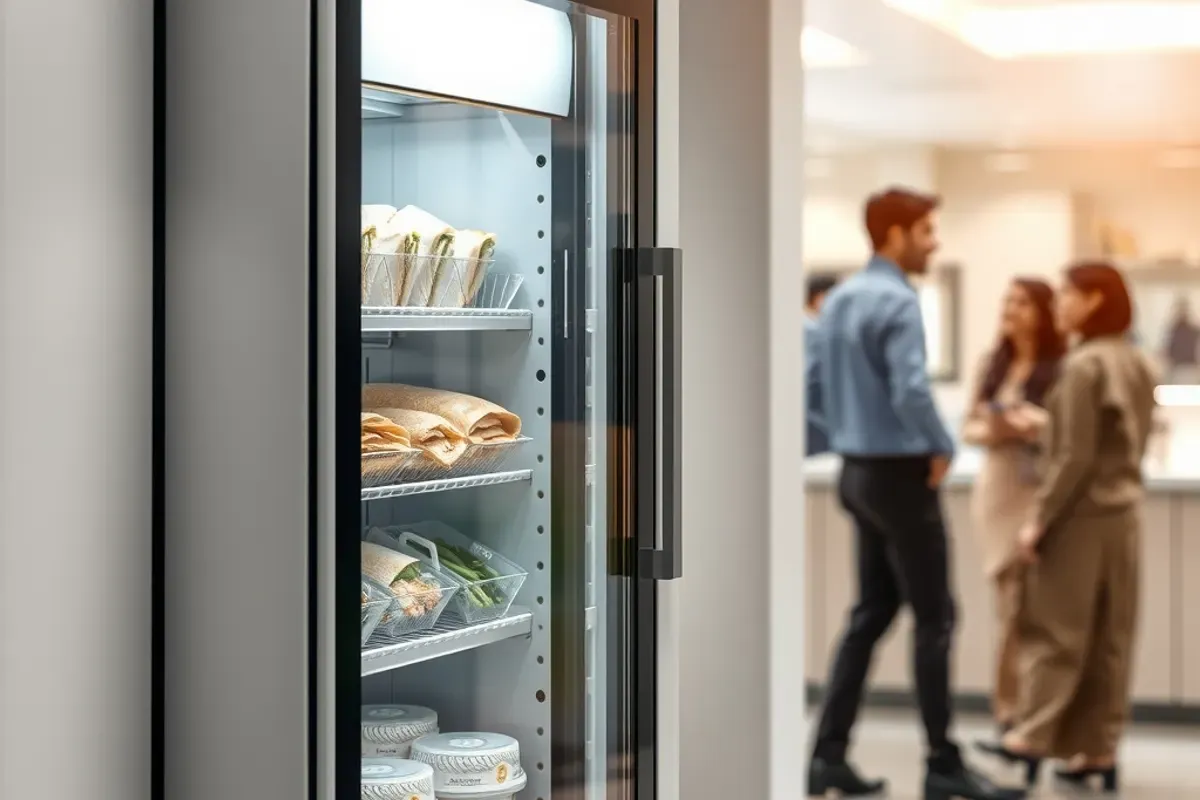
A fresh food vending machine needs steady daily footfall. Chilled food has a short life, so the machine must sell most of its stock before items reach their dates. The best sites have people who eat there every day.
Fresh meal vending in offices is a natural fit. Teams work through lunch, stay late for calls with clients abroad or come in on weekends. A chilled meal machine near the pantry gives them a proper meal without leaving the building. See how we plan vending for offices and corporate campuses.
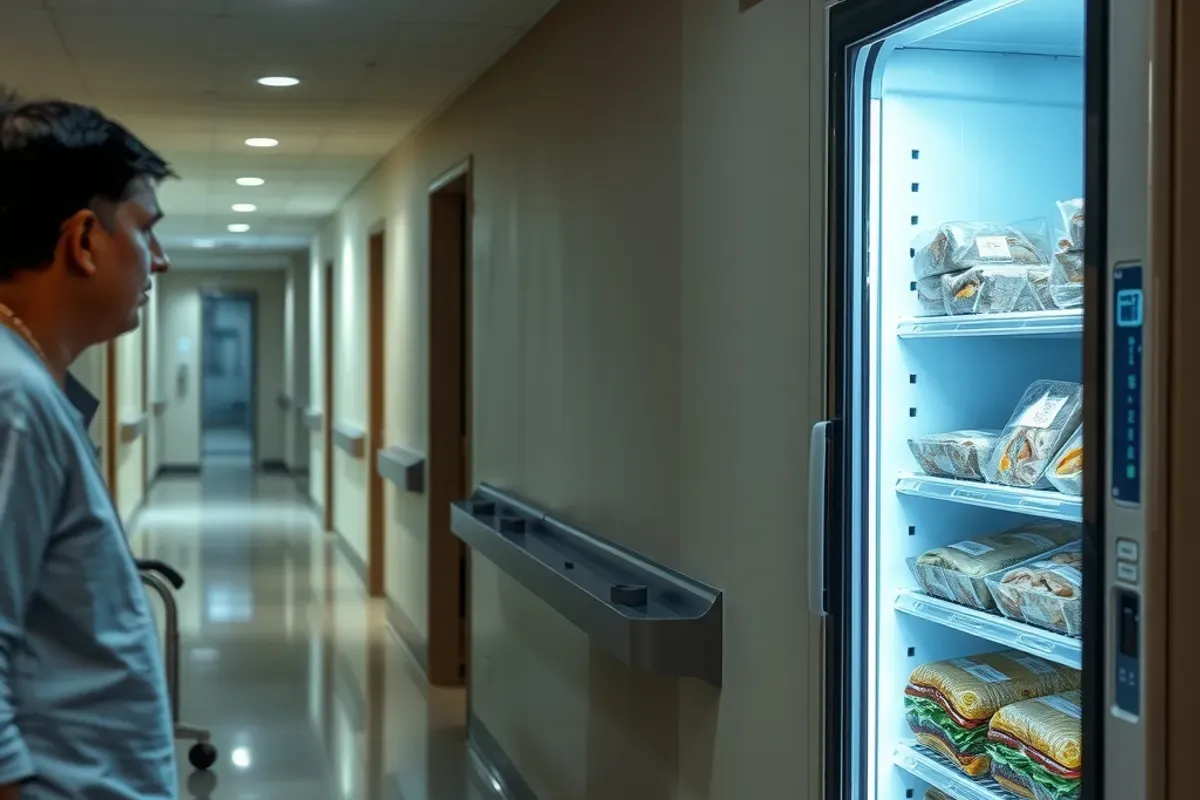
Hospitals run day and night. Doctors, nurses and families of patients often need food at odd hours, when the canteen is closed. A machine in a waiting area or staff lounge helps a lot. Learn more about vending for hospitals and clinics.
Some other places can also suit a fresh food vending machine, if footfall and refill access are right:
Every site is different, so before suggesting a fresh food vending machine we look at headcount, timings and nearby food options before suggesting a model.
Within a building, placement matters as much as the site itself. Put the fresh food vending machine where people already pass at meal times, such as near a pantry, lift lobby or waiting area. It needs a dedicated power socket, space behind it for air flow and protection from direct sun. A fresh food vending machine placed near seating and a microwave also tends to get more repeat use, because people can heat and eat their meal right there.
Before choosing, it helps to compare a fresh food vending machine with the other ways people get meals at work or in hospitals.
| Option | Hours | Staff needed at site | Menu variety | Best for |
|---|---|---|---|---|
| Fresh food vending machine | Any hour the site is open | Only for refills | Medium, changes with supplier | Late shifts, steady daily footfall |
| Staffed canteen | Fixed meal times | Full kitchen and counter team | High | Large sites with big lunch crowds |
| Food delivery apps | Depends on area | None, but security handles gate entry | High | Day shifts in busy city areas |
| Snack vending machine | Any hour | Only for refills | Packaged snacks only | Quick bites, low budget |
| Hot meal vending machine | Any hour | Only for refills | Hot dishes | Sites wanting food served hot |
A machine does not have to replace a canteen. Many sites use it to cover the hours when the canteen is shut. If hot food matters more to your users, compare a hot meal vending machine.
Running a fresh food vending machine well is mostly about supply. The machine is only as good as the food inside it and how often it is refilled.
Most sites work with a local kitchen, caterer or cloud kitchen. Look for a partner who:
The partner should hold the right food registration or licence for their kitchen. You can check FSSAI licence and registration details on the FoSCoS portal.
Fresh food needs frequent refills, often daily on working days. A good rhythm looks like this:
Some machines can show stock levels and sales remotely, which helps plan the next delivery. This is model dependent.
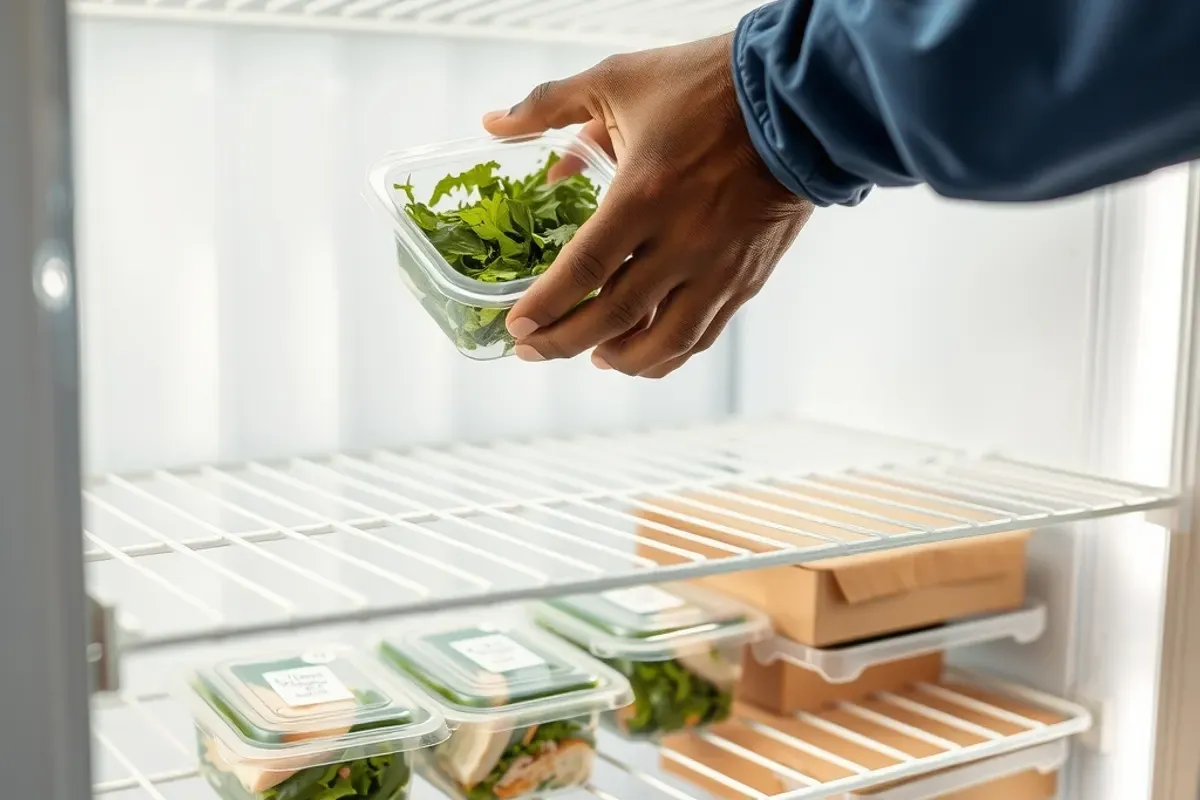
Waste is the biggest cost risk for a fresh food vending machine. A few simple steps help:
People expect to pay the way they pay everywhere else. In India, that usually means UPI by scanning a QR code, along with cards and sometimes cash. Payment options on a fresh food vending machine vary by model, so check which ones are included before you decide.
A good user experience also includes:
Some sites also add a cashless staff wallet or company billing, where the employer pays part of the meal cost. Ask us whether this is possible for your setup.
Size is a common question. A machine that is too big wastes food. One that is too small runs empty by lunchtime and frustrates people. The right fresh food vending machine size depends on how many people will actually buy from it, not just how many work at the site.
Start with your headcount, then think honestly about how many will use the machine on a normal day. People who bring tiffin from home, eat at a nearby dhaba or use a canteen will buy less often. Night-shift staff and visitors with nowhere else to go will buy more. Write down a rough number for each shift.
Chilled sandwiches and salads may only last a few days. Sealed meal trays may last a little longer. Your stock level should be low enough that the shortest-life items sell out before their date. It is better to sell out by evening than to throw food away at night.
Many sites begin with a single refrigerated food vending machine and a short menu. Once sales are steady for a few weeks, they add more items, a second machine on another floor, or a nearby drinks machine. Growing step by step keeps risk low.
People judge a fresh food vending machine by how clean it looks. A smudged glass door or a sticky tray quickly puts buyers off, even if the food inside is perfect.
A simple routine helps:
Staff who handle food should wash their hands before loading and keep packs closed at all times. These small habits protect users and build trust in ready-to-eat meal vending at your site.
Fresh food has more rules than packaged snacks, so plan this part carefully.
Food should be stocked in FSSAI-compliant packaging. Who holds the food licence depends on the engagement model. It may be the food supplier, the site owner or the operator. We never claim to hold one on your behalf. Settle this clearly before the machine goes live.
Each pack should carry the details required by Indian food labelling rules, such as the product name, ingredients, veg or non-veg symbol, date marking and allergen information. The FSSAI labelling and display guidance explains what a food label needs to show.
A chilled machine runs all day and night, so wiring and earthing at the site matter. Any BIS or safety certification for the machine is confirmed in your written quote.
Use this short checklist when comparing models:
Engagement models such as outright purchase, rental or an operator-run setup may be possible. Ask us whether each is available for your location and machine size.
Many first-time sites make the same few mistakes with a fresh food vending machine:
Avoiding these early makes the first month far smoother and builds user trust.
Ready to plan a fresh food vending machine for your office, hospital or other site? Share your headcount, working hours and the space you have. We will suggest a sensible model and menu approach, and confirm details like certification and engagement options in writing. Request your fresh food vending machine quote.
It depends on the product, not the machine. Each pack carries a use-by or best-before date set by the food maker. Chilled sandwiches and salads usually last only a few days, while sealed meal trays may last longer. Plan refills around the shortest date in your mix and remove anything close to expiry.
The cabinet stays cold for a short while if the door stays closed, but a long cut can push food out of safe range. Many sites connect the machine to backup power. Some models can log temperature or lock sales when it rises too high, but this is model dependent. Ask us what suits your site.
A fresh food machine is built to keep food chilled. Some sites place a microwave next to it so people can heat a meal tray themselves. If you want food served hot straight from the machine, look at a dedicated hot meal machine instead, which uses a different heating design.
No. Most sites buy packed meals from a local kitchen, caterer or cloud kitchen that already prepares and labels food. The supplier should pack items in FSSAI-compliant packaging. Who holds the food licence depends on the engagement model, so confirm this before you start.
Yes. A good menu is never fixed. Watch which items sell out and which come back unsold, then swap slow items for new ones. Rotating one or two dishes every few weeks also keeps regular users interested. Changes are simple because shelves and prices can be adjusted.
It works best where enough people eat every day to clear chilled stock before it expires. For a very small team, a snack machine with a few long-life items may be easier. Share your headcount and shift timings with us and we will suggest a practical starting point.