
Best for
Places this machine suits
Have a different kind of site? Ask us whether it fits.
Catalogue
50 machine types for every place people gather.
By venue
Machine mixes planned around where they stand.
Meals
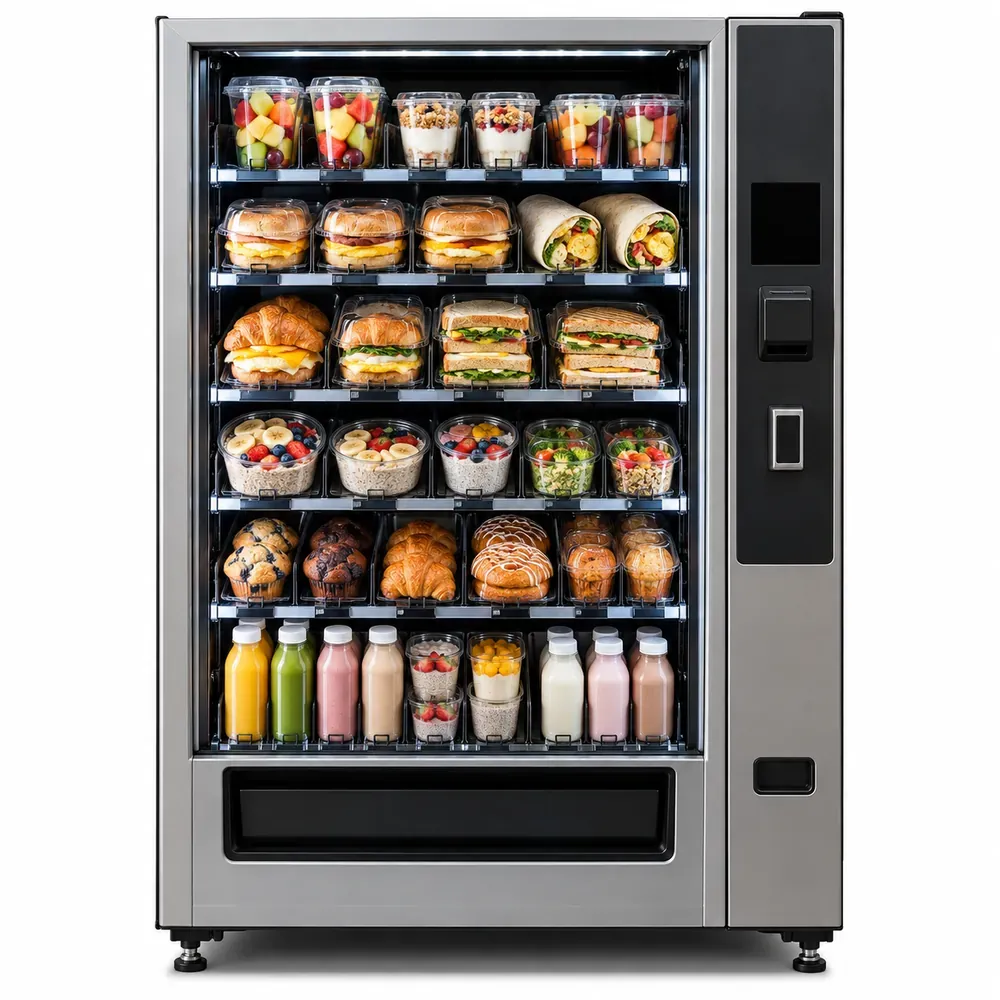
Offers ready-to-eat breakfast items such as poha, upma, idli and sandwiches.
Best for
Have a different kind of site? Ask us whether it fits.
What it can stock
The final range is planned with you for each site, with food and drink to be stocked in FSSAI-compliant packaging.
Key points
Specifications
Sizes, capacity and hardware depend on the model and configuration we agree for your site. We share a spec sheet with your quote; the safety certification that applies to this model (such as BIS, where required) is confirmed in your written quote, and you can ask us for the documents.
Smart features
Options vary by model and are confirmed in your quote.
UPI QR, cards and wallets through the payment reader.
Browse by category and tap to buy, like the machines in our photos.
Stock levels, sales and alerts on a dashboard, so refills are planned.
Shelf layout and product mix planned around who uses the space.
Signage on the machine body to suit your venue or your brand.
Ways to get it
Pick the model that suits your budget and how hands-on you want to be. Terms are shared with your quote.
For businesses and operators
Own the machine outright and run it your way. We help with configuration, installation and training.
Ask about this option: buy a machineFor offices, campuses and sites
Pay a periodic fee instead of buying upfront, with servicing included as agreed in the contract.
Ask about this option: rent or subscribeFor hosts with space and footfall
We place, stock and maintain the machine; you provide the location. Subject to a site survey.
Ask about this option: we operate itFor entrepreneurs and franchisees
Run machines in your city with our hardware, software and support behind you.
Ask about this option: become a partnerHow we deploy it
Footfall, space, power and who will use it.
Machine model, product mix and payment options.
Delivery, set-up and a test run on site.
Refills planned from remote stock data.
Upkeep and support as per your agreement.
Related machines
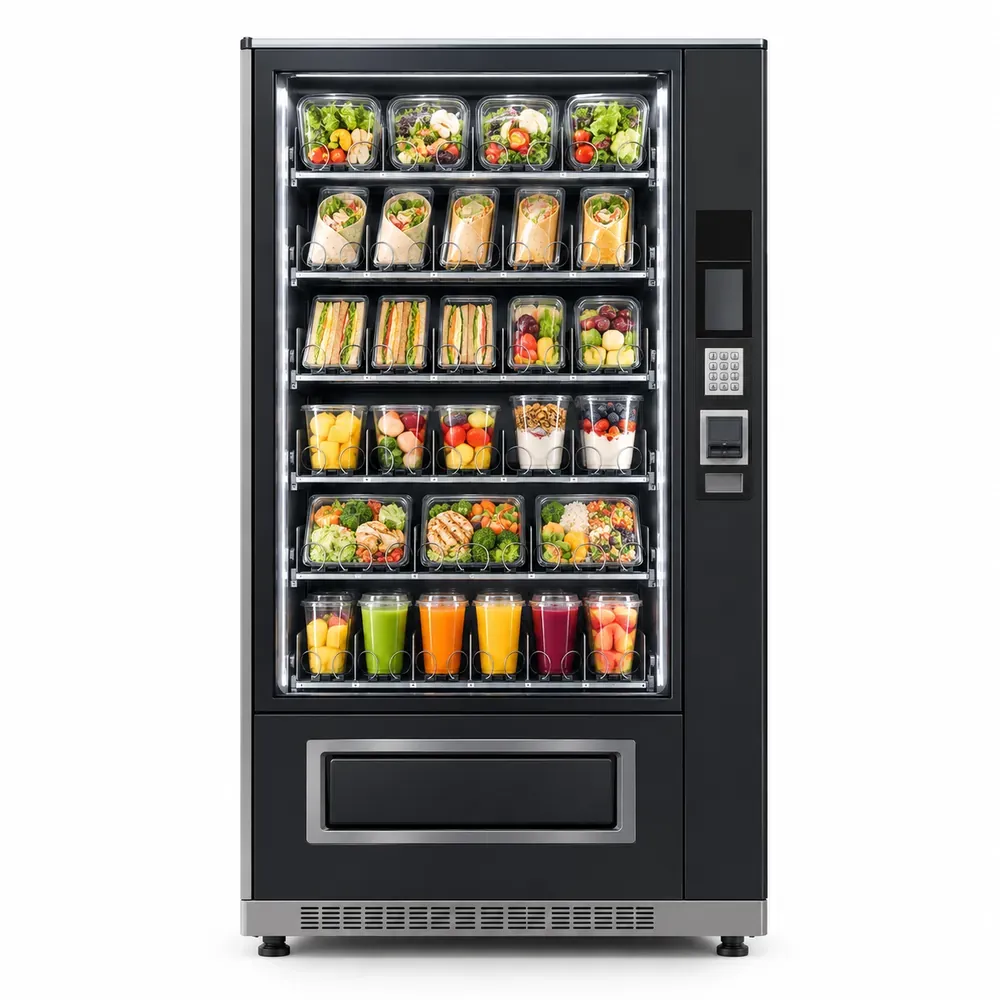
Refrigerated machine selling ready-to-eat meals, sandwiches, salads and wraps.
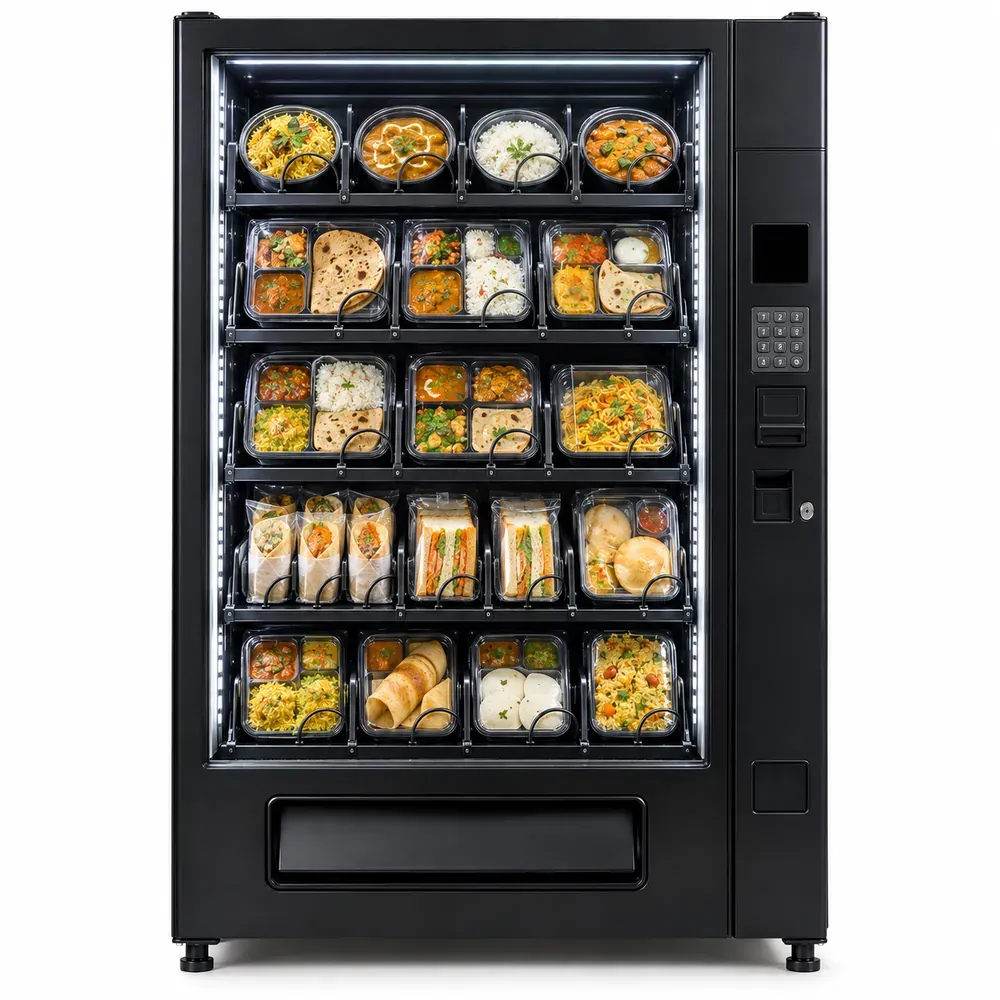
Dispenses packaged Indian meals such as dal-rice, rajma, biryani and thali meals.
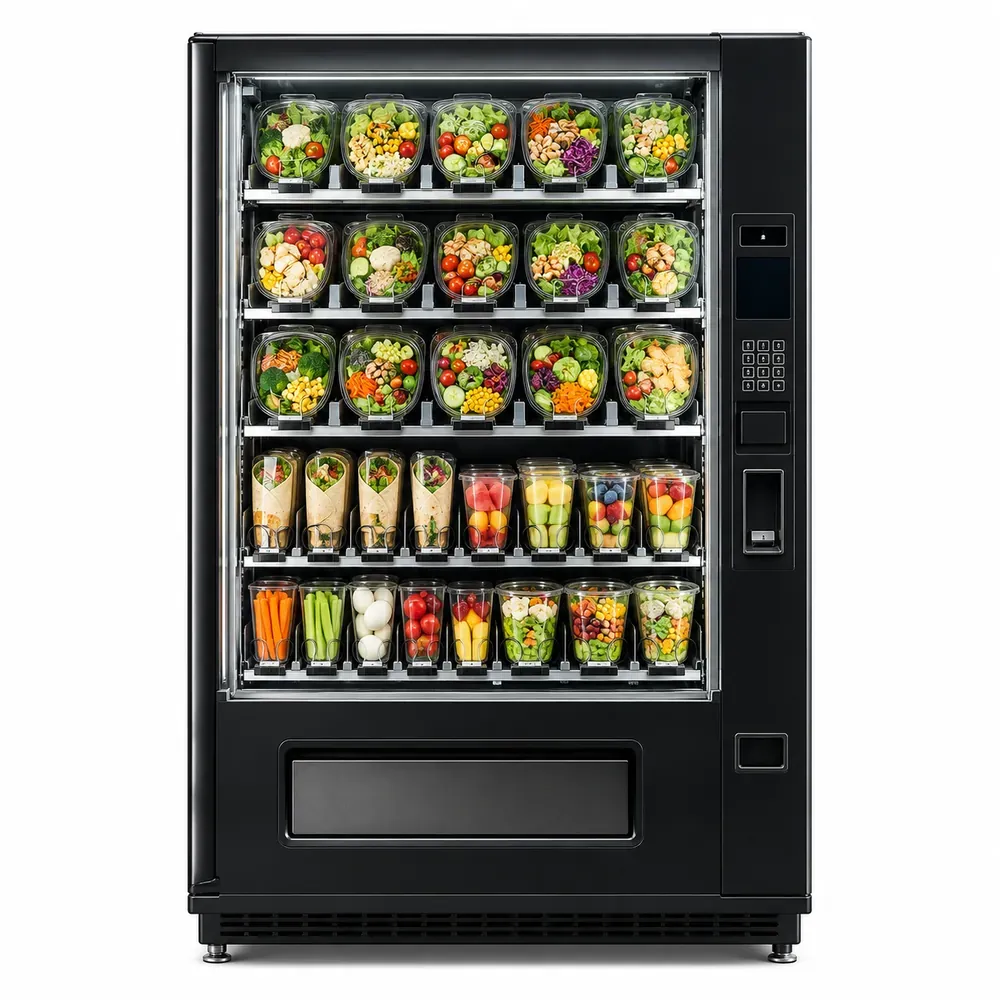
Provides ready-to-eat salads in refrigerated compartments.
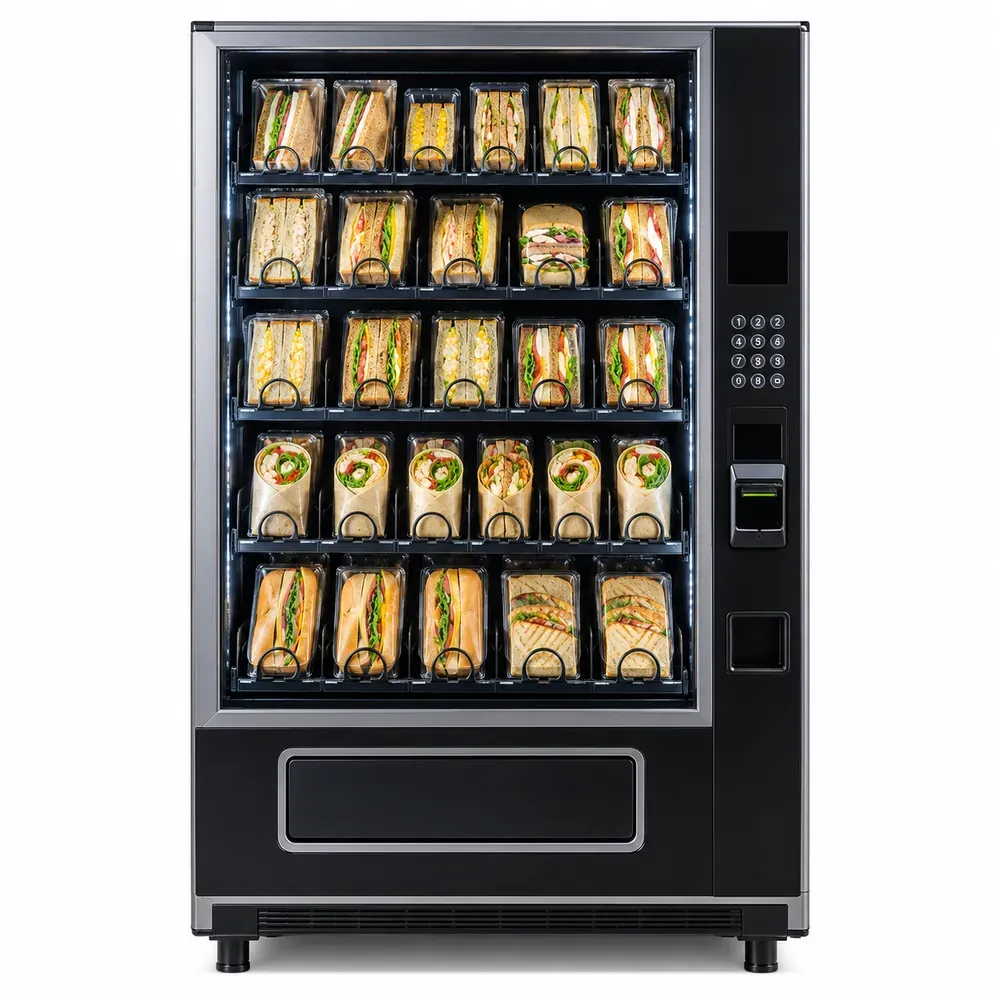
Refrigerated machine selling sandwiches, wraps and rolls.
Tell us where it will go and roughly how many people pass by. We reply with configuration options and the engagement model that suits you.
A breakfast vending machine gives people a fresh, ready-to-eat morning meal at the exact moment they need it, even when the canteen is still closed. For many Indian workplaces, factories and hostels, the first meal of the day is the hardest one to serve well. This guide explains how the machine works, what menu suits Indian tastes, where to place it and how to plan stocking, payments and food safety before you ask for a quote.
Breakfast is the meal people skip most often. Long commutes, early shifts and hostel timings leave little time to sit down and eat. When there is no option on site, people either go hungry until lunch or step out to a roadside stall, which costs time and adds a break nobody planned for.
A breakfast vending machine closes that gap. It keeps a small, steady menu ready from early morning, so a worker arriving at 6 am or a student rushing to an 8 am lecture can grab something filling in under a minute.
Here are the common problems it solves:
According to our catalogue, this breakfast vending machine offers ready-to-eat breakfast items such as poha, upma, idli and sandwiches. These are familiar, light and quick to eat, which is exactly what most people want first thing in the morning. You can browse similar formats such as the sandwich vending machine and the boiled egg vending machine if you want to extend the morning menu.
The idea is simple. Fresh items are prepared by a kitchen or supplier, sealed in hygienic packs and loaded into the machine early in the morning. The machine keeps them at a safe temperature, and customers pick and pay on their own.
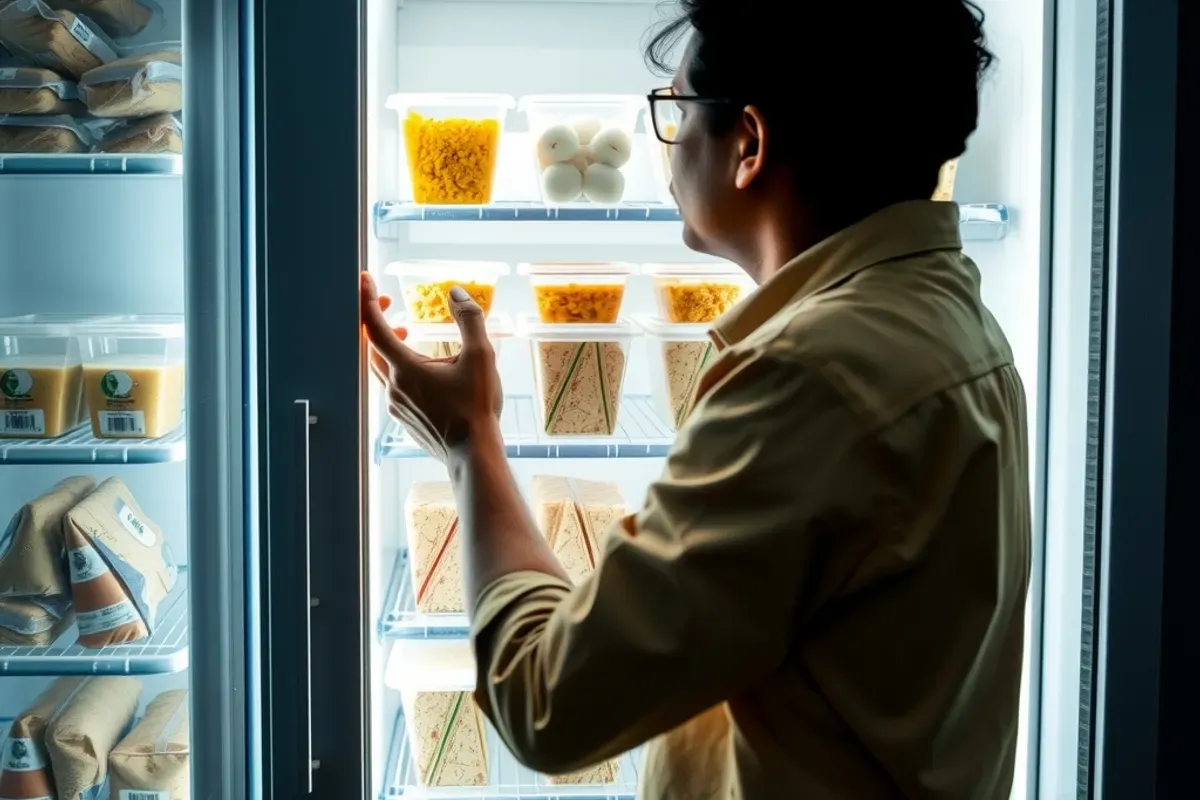
A typical day with a breakfast vending machine looks like this:
Not every breakfast vending machine works the same way. Some models are refrigerated and keep sealed packs chilled, which suits sandwiches, fruit cups and items people can warm in a nearby microwave. Others are designed to hold food warm or heat it before dispensing. The right choice depends on your menu, power supply and how much space you have. Heating features are model dependent, so the exact option is confirmed in your written quote.
Many modern machines include telemetry, which means they report sales and stock levels online. This helps the refill team know what sold out early and what was left. You can read more about these features on our smart vending page. Features like remote monitoring, temperature alerts and digital menus are optional and depend on the model.
An Indian breakfast menu should feel familiar. People trust what they already eat at home. A good starting point is a small mix of savoury, light and on-the-go items, then you adjust based on what actually sells in the first few weeks.
Popular choices include:
India is diverse, and breakfast habits change from state to state. A site in Chennai may sell more idli, while a site in Indore may prefer poha. A factory with many migrant workers may want parathas or bread items. Start with three or four core items, then rotate one slot every week to test something new. Pair your breakfast vending machine with a tea and coffee vending machine if your site does not already have a hot drink option, because tea and breakfast are almost always bought together.
More employers now care about what their people eat. You can add oats, sprouts, fruit or low-oil items to the menu. FSSAI’s Eat Right India movement encourages safe, healthy and sustainable food choices, which is a useful reference when you plan a balanced menu. If health is a priority, also look at our healthy food vending machine.
Our catalogue highlights three key venues for a breakfast vending machine: campuses, industrial sites and offices. Each has its own morning pattern, so placement matters as much as the menu.
| Venue | Morning pattern | Suggested menu focus | Placement tip |
|---|---|---|---|
| Office | Rush between arrival and first meeting | Sandwiches, poha, fruit, coffee pairing | Pantry or near the lift lobby |
| Factory or plant | Shift changes, often very early | Filling items like upma, idli, bread | Near the gate or canteen entrance |
| College or hostel | Before early lectures and exams | Budget-friendly poha, sandwiches, milk | Hostel common room or academic block |
| Hospital | Staff shift change and attendants waiting | Light, easy-to-eat items | Staff area or waiting lounge |
In offices, the morning rush is short but intense. People arrive, drop their bags and want a quick bite before the first call. A breakfast vending machine for office pantries works well because it saves a trip outside. See how we plan this on our office vending solutions page.
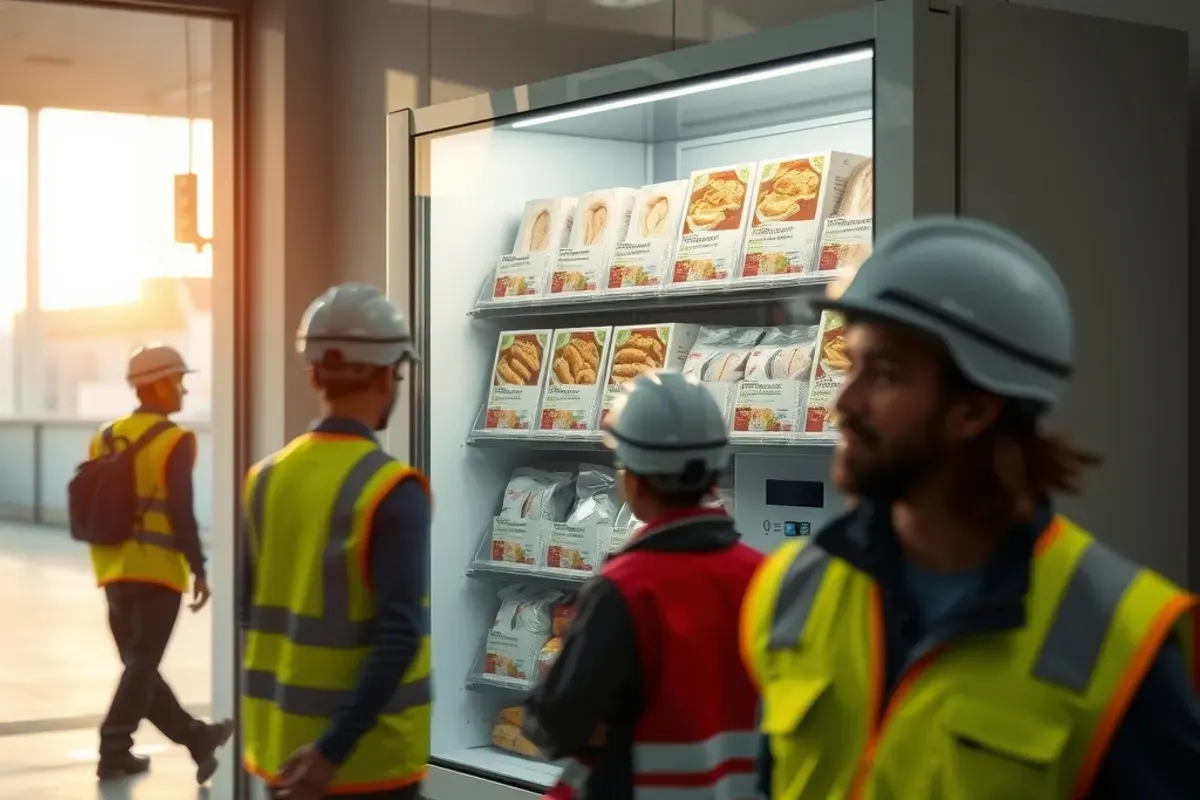
Factories often run shifts that start before sunrise. Canteen service may be limited at those hours, and workers coming off a night shift need food before travelling home. Placing a breakfast vending machine for factory workers near the gate or rest area means both incoming and outgoing shifts can use it. Learn more on our industrial vending solutions page.
Students often skip breakfast because the mess opens too late or closes too early. A breakfast vending machine in the hostel common area gives them an affordable option before class. Our campus vending solutions page covers how we plan machines for colleges and hostels.
Fresh food is the heart of a breakfast vending machine, and it needs more care than packaged snacks. Breakfast items have a short shelf life, so planning the supply chain is the most important part of running a breakfast vending machine well.
Most short-life breakfast items need to be loaded every morning. Work out when your first customers arrive and plan the refill to finish before then. A good routine includes:
Items should be stocked in FSSAI-compliant packaging and kept at the right temperature for their type. Chilled items must stay chilled, and hot-hold items must stay hot. The Food Safety and Standards Authority of India publishes the food safety and standards regulations that cover packaging, labelling and hygiene, so it helps to read the parts that apply to your menu.
This is a common question. Who holds the FSSAI registration or licence depends on the engagement model. It could be the food supplier, the operator or the site owner. We never claim to hold a licence on your behalf, so please check the requirement for your exact setup before launch.
People in a hurry do not want to fumble for change. Today, most customers in India expect to pay a breakfast vending machine the same way they pay a tea stall, by scanning a QR code with a UPI app, and most modern machines support this.
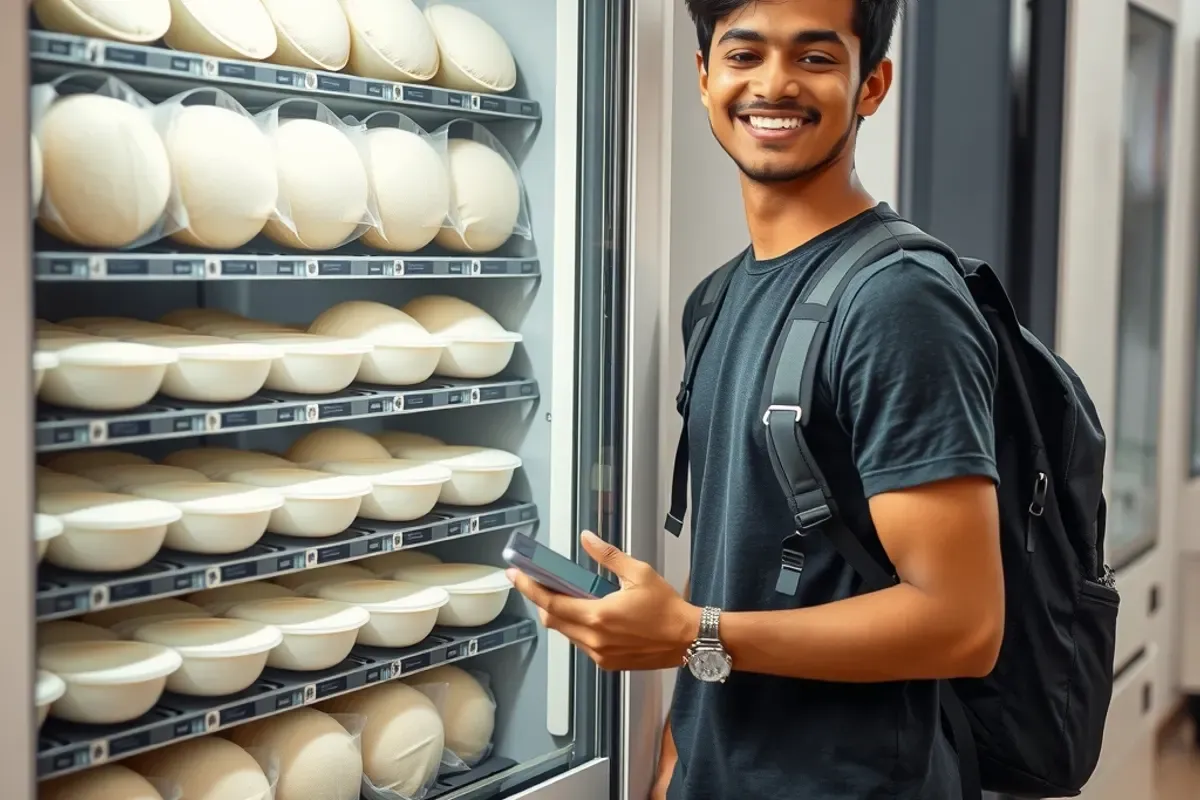
Company-paid or subsidised breakfast through ID cards is model dependent. Share your preferred flow and we will confirm what is possible in your written quote.
On any breakfast vending machine, a clear display, simple item numbering and good lighting make a big difference early in the morning. Put the menu at eye level and keep popular items in the easiest slots. If your site has many first-time users, a small sign showing how to pay saves a lot of confusion in the first week.
We do not publish fixed prices, because the cost of a breakfast vending machine depends on the model, heating or cooling needs, payment options, branding and how many units you need. Running costs depend on your menu, supplier and footfall.
Different sites prefer different arrangements. Some want to buy the machine outright, some want an operator to run it, and some want a revenue-share setup. These options are not confirmed for every location, so please ask us whether the model you prefer is available at your site.
Having these answers ready speeds up your quote:
If you are still unsure which machine fits, try our vending machine finder to get a recommendation in four quick steps.
Many sites already have a canteen and wonder whether a breakfast vending machine adds anything. In practice, the two work best together. The canteen handles full meals and large crowds, while the machine covers the hours and corners the counter cannot reach.
| Factor | Breakfast vending machine | Canteen counter |
|---|---|---|
| Opening hours | Available whenever stocked, including early shifts | Fixed service timings |
| Staffing | No counter staff needed to sell | Needs cooks and servers |
| Speed | Pick and pay in under a minute | Depends on queue length |
| Menu size | Small, focused menu | Wider, cooked-to-order menu |
| Freshness | Depends on daily refills and use-by labels | Cooked on site |
| Best for | Early starters, night shifts, quick grab-and-go | Sit-down meals and lunch rush |
Smaller offices, co-working floors and hostel blocks often have no canteen at all. Here, a breakfast vending machine can be the main morning food vending machine on site, as long as a reliable supplier refills it every day. Start small, watch sales for two to three weeks and then decide whether to add more slots or a second machine.
Large factories, hospitals and big campuses usually benefit from both. The breakfast vending machine takes pressure off the canteen during the first hour, and the canteen focuses on lunch and dinner. This split also helps during festivals, exams or audits when the canteen is short-staffed.
Before you request a quote, walk through this short checklist with your admin, HR or facilities team. It keeps everyone aligned and avoids surprises after installation.
Track a few simple numbers each week: items sold, items wasted and items that sold out early. If one item keeps selling out, add more of it. If another is often wasted, replace it. Over a month, this simple habit turns a breakfast vending machine into a reliable part of your site’s daily routine.
Even a good breakfast vending machine can struggle if the setup is wrong. Watch out for these common mistakes:
Morning demand drops after about 11 am. Rather than leaving the breakfast vending machine half empty, many sites switch to snacks, fruit or drinks for the rest of the day. You can also combine a breakfast vending machine with a fresh food vending machine or a snack vending machine to cover all-day demand. Browse every format on our machines page.
Ready to give your people a reliable morning meal? Tell us about your site, footfall and preferred menu, and we will suggest a suitable setup. Engagement models, heating options and safety certification are confirmed in your written quote. Request your free breakfast vending machine quote today.
It depends on the model. Some machines hold chilled, sealed packs that people warm in a nearby microwave, while others are designed to heat or hold food at serving temperature. Tell us your menu and we will suggest a suitable setup and confirm the heating option in your written quote.
Ideally, fresh stock should be loaded before the first rush, which at most offices and factories starts before the shift begins. The exact refill time depends on your supplier, the shelf life of each item and your shift pattern. We plan this with you during the site survey.
Food usually comes from a local kitchen, caterer or packaged food brand that can deliver every morning. Depending on the engagement model, you may arrange the supplier yourself or ask us whether a managed supply option is available for your location. Either way, items should be stocked in FSSAI-compliant packaging.
Selling food normally needs FSSAI registration or a licence, but who holds it depends on the model you choose. It may be the food supplier, the operator or the site owner. We never claim to hold a licence on your behalf, so please check the requirement for your exact setup.
Unsold short-life items should be removed once they reach their use-by time and never resold. Many sites switch the machine to snacks, fruit or drinks for the rest of the day. Smart sales reports, where the model supports them, help you order closer to real demand.
Most modern machines accept UPI QR payments, and some models can work with cashless cards or employee wallets. Company-paid or subsidised breakfast through an ID card is model dependent, so share your preferred payment flow and we will confirm what is possible for your site in writing.