
Best for
Places this machine suits
Have a different kind of site? Ask us whether it fits.
Catalogue
50 machine types for every place people gather.
By venue
Machine mixes planned around where they stand.
Water & ice
Produces or dispenses packaged ice for consumers and businesses.
Best for
Have a different kind of site? Ask us whether it fits.
What it can stock
The final range is planned with you for each site, with food and drink to be stocked in FSSAI-compliant packaging.
Key points
Specifications
Sizes, capacity and hardware depend on the model and configuration we agree for your site. We share a spec sheet with your quote; the safety certification that applies to this model (such as BIS, where required) is confirmed in your written quote, and you can ask us for the documents.
Smart features
Options vary by model and are confirmed in your quote.
UPI QR, cards and wallets through the payment reader.
Browse by category and tap to buy, like the machines in our photos.
Stock levels, sales and alerts on a dashboard, so refills are planned.
Chilled, frozen or heated compartments, depending on the model.
Shelf layout and product mix planned around who uses the space.
Signage on the machine body to suit your venue or your brand.
Ways to get it
Pick the model that suits your budget and how hands-on you want to be. Terms are shared with your quote.
For businesses and operators
Own the machine outright and run it your way. We help with configuration, installation and training.
Ask about this option: buy a machineFor offices, campuses and sites
Pay a periodic fee instead of buying upfront, with servicing included as agreed in the contract.
Ask about this option: rent or subscribeFor hosts with space and footfall
We place, stock and maintain the machine; you provide the location. Subject to a site survey.
Ask about this option: we operate itFor entrepreneurs and franchisees
Run machines in your city with our hardware, software and support behind you.
Ask about this option: become a partnerHow we deploy it
Footfall, space, power and who will use it.
Machine model, product mix and payment options.
Delivery, set-up and a test run on site.
Refills planned from remote stock data.
Upkeep and support as per your agreement.
Related machines
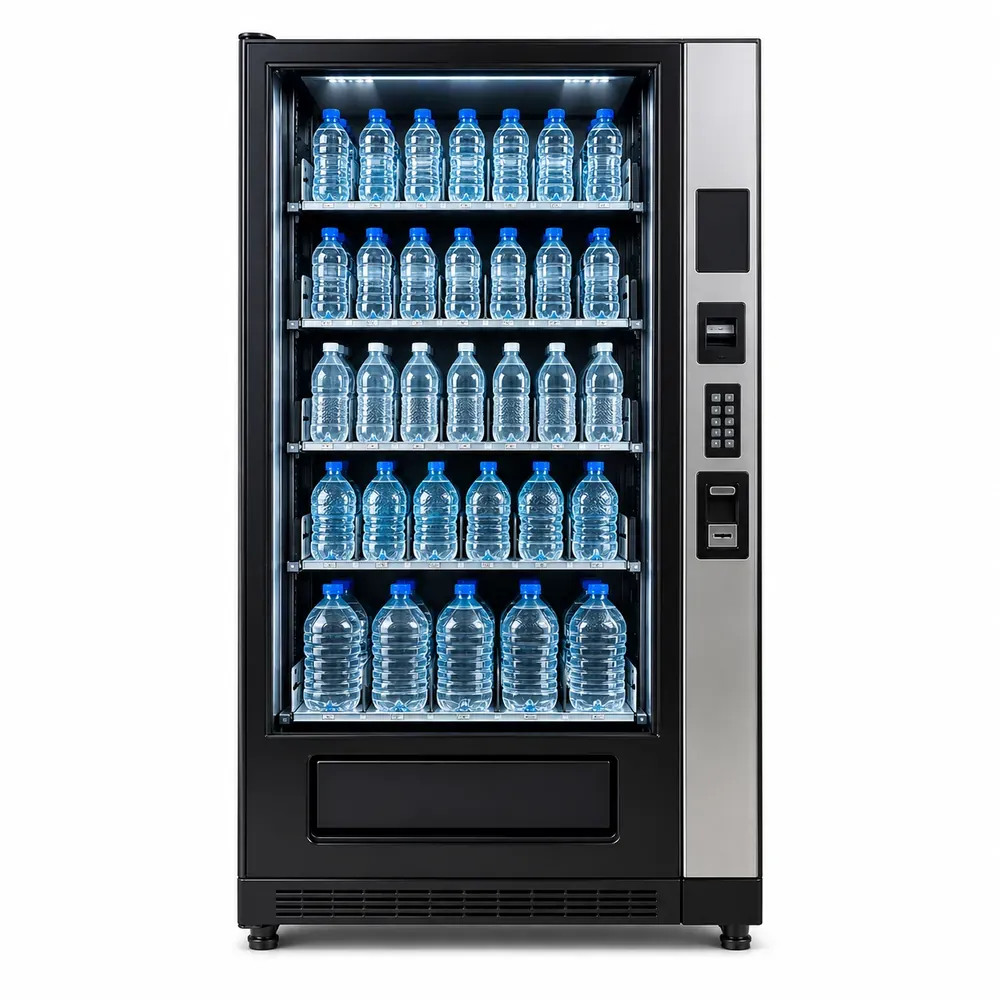
Dispenses filtered/purified drinking water.
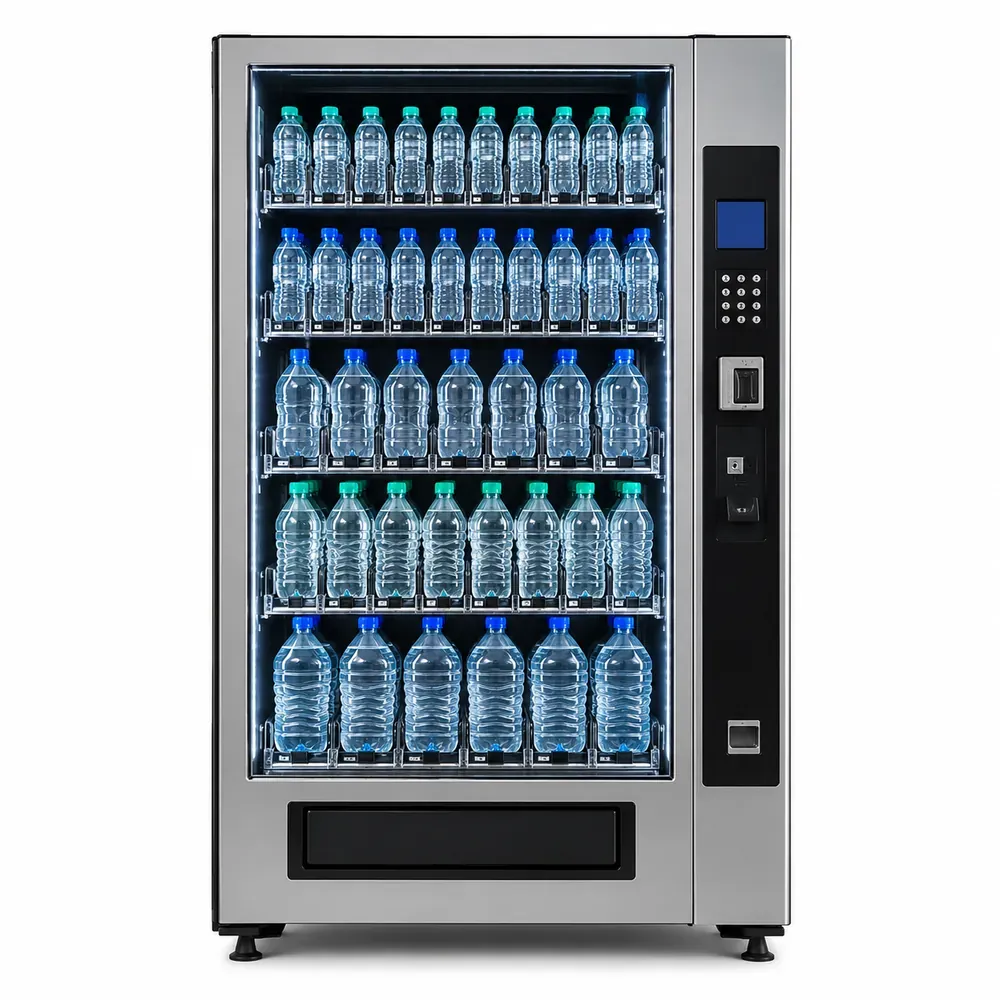
Automated retail machine selling packaged drinking water.
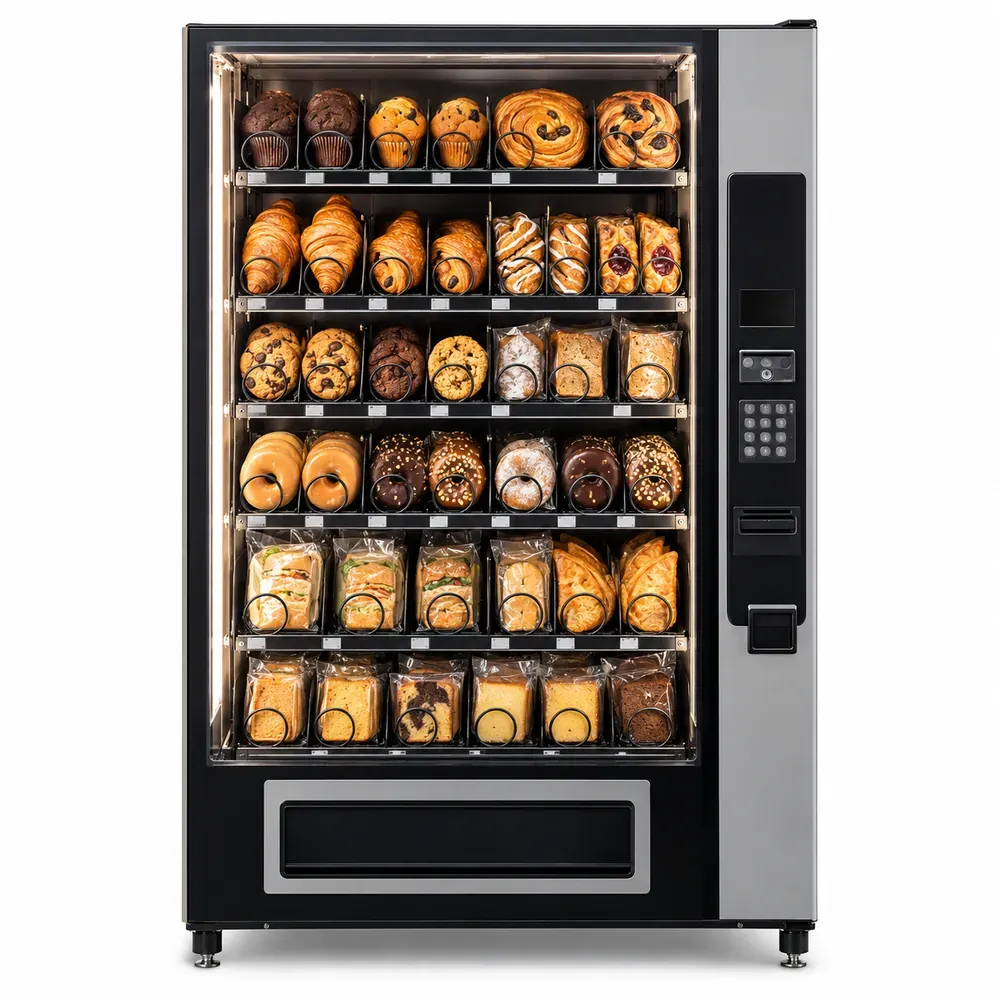
Sells packaged bakery products such as cakes, croissants and muffins.
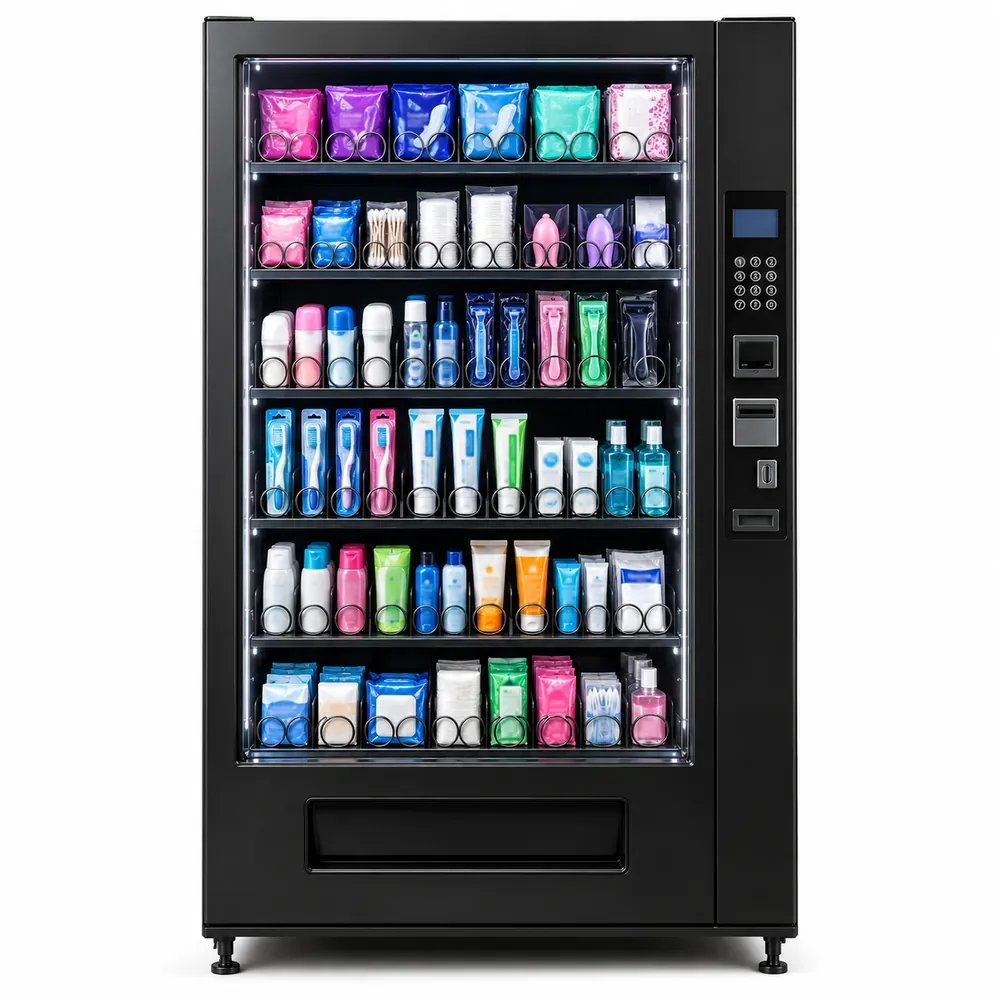
Provides emergency hygiene products.
Tell us where it will go and roughly how many people pass by. We reply with configuration options and the engagement model that suits you.
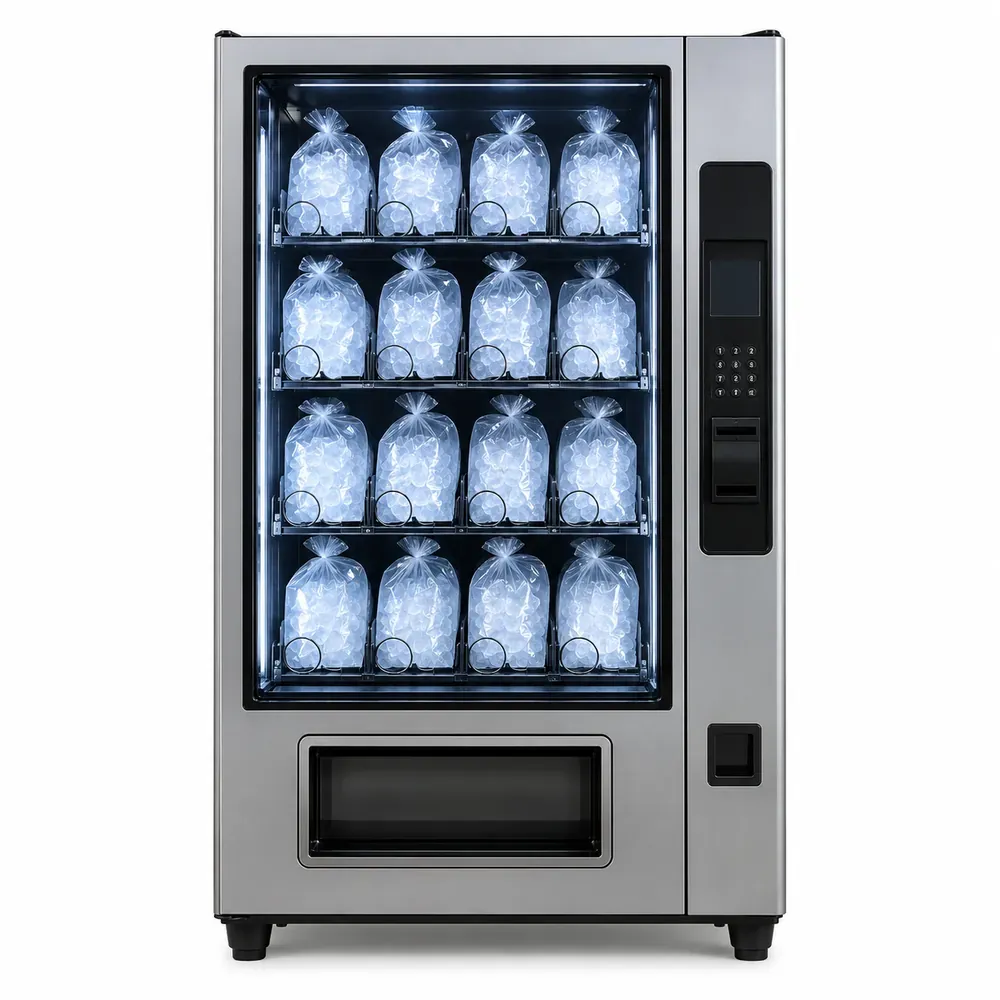
An ice vending machine sells clean ice to anyone who walks up, at any hour, without a shop or a staff member. Some models freeze water on the spot and fill bags automatically. Others simply store sealed bags of ice in a freezer and release one when the buyer pays.
Either way, a buyer at an ice vending machine gets the same result. Some people call it an ice cube vending machine; the idea is the same. They choose a pack size, pay, and collect a bag of ice from the tray within a minute or two.
In India, ice is needed almost everywhere in summer. Juice stalls, small eateries, caterers, wedding halls, resorts and families hosting parties all run out of ice at some point. Most still buy packaged ice or loose slabs from a local supplier or a roadside ice factory. An ice vending machine gives them a closer, cleaner and more predictable option.
This guide explains how these machines work, where they fit, what they need and how to plan one. It adds detail to the machine summary above, so you can decide whether the idea suits your site.
India has long, hot summers in most regions, and demand for ice rises with the heat. Yet ice is often handled loosely. Large slabs travel on open carts, get broken with tools and are stored in sacks. Buyers rarely know what water was used.
A well-run ice vending machine changes that picture in a few simple ways:
There is also a simple convenience angle. A caterer setting up for an evening function does not want to drive across town for ice. A resort guest wants ice for a cooler box before a day trip. An ice vending machine close to them solves the problem quickly.
That said, an ice vending machine is not right for every location. It needs reliable power, good ventilation and, for ice-making models, a clean water supply and drainage. We cover these needs in detail further below.
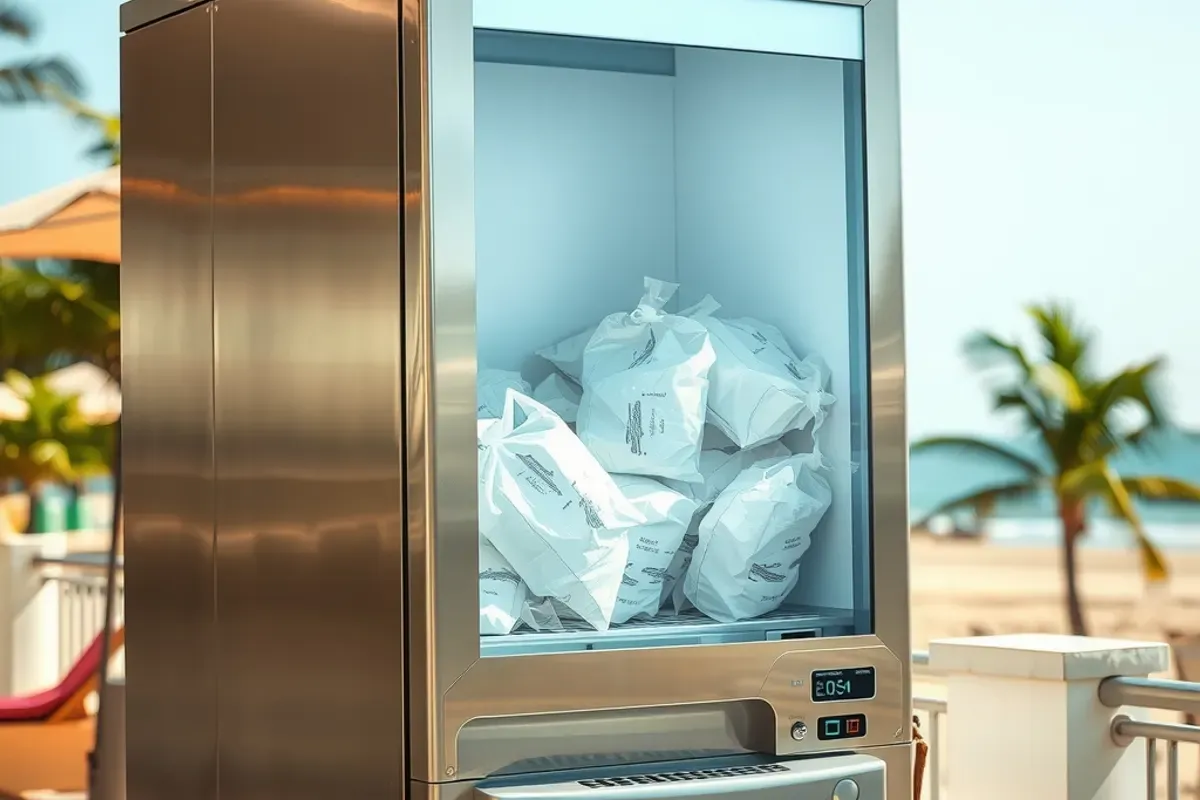
There are two broad types. The right one depends on your water supply, your space and how much ice you expect to sell.
An ice-making vending machine takes in water, filters it, freezes it into cubes and stores the cubes in an insulated bin. It works like an ice maker joined to a vending unit. When a buyer pays, the machine fills a bag or releases loose ice into the buyer’s own container, depending on the model.
They need a water line, a drain and a strong power supply. In return, you do not depend on an outside ice supplier, and the ice is made on site from water you can check.
A bagged ice dispenser is a freezer with a vending mechanism. You or an operator load them with sealed bags of ice bought from a supplier. The machine keeps the bags frozen and releases one per sale.
They are simpler to install because they do not need plumbing. The trade-off is that you must trust your ice supplier and arrange regular deliveries.
| Point | Ice-making machine | Bagged ice dispenser |
|---|---|---|
| Water connection | Needed, with filtration | Not needed |
| Drainage | Usually needed | Usually not needed |
| Ice source | Made on site | Bought from a supplier |
| Control over water quality | High, if filters are maintained | Depends on the supplier |
| Installation effort | Higher | Lower |
| Refill work | Water is automatic; bags and cleaning still needed | Regular restocking of ice bags |
| Best for | Fixed sites with plumbing and steady demand | Sites without water lines, or for a trial |
Neither type is better in every case. A resort with a service area and plumbing may prefer an ice-making model. A market stall area without water lines may start with a bagged ice dispenser.
The machine summary on this page lists restaurants, resorts, markets and events as typical uses. Here is how each one tends to work.
Small food businesses use a lot of ice for drinks, juices, lassi and storage. Many do not have space for a large ice maker of their own. An ice vending machine placed in a food street or near a cluster of eateries lets them buy ice as needed, even during a late rush.
Guests ask for ice for drinks, cooler boxes and picnics. An ice vending machine in a service area or near a pool can reduce trips to the kitchen. If you run a hotel, our hotel vending solutions page explains how vending fits guest areas and staff zones.
Markets that sell fish, meat, flowers, fruit and vegetables use ice to keep goods fresh. Here it is very important to separate food-grade ice from ice meant only for cooling goods. Do not let ice from a non-food line go into drinks.
Caterers and event organisers often need large amounts of ice at short notice. An ice vending machine near a function hall or event ground can serve them through the evening. Demand can be uneven, so plan your stock and cleaning around the event calendar.
Residents hosting parties or caring for elderly family members in summer may also buy ice. An ice vending machine near a society’s shops can serve them, if the society agrees and the site has power.
Ice is food. If people put it in drinks, it must be as safe as the water they drink. The World Health Organization’s drinking-water fact sheet explains how unsafe water can carry disease. Freezing does not make bad water safe.
That is why hygiene is the most important part of running an ice vending machine.
For an ice-making model, start with a safe drinking water supply. Most machines add their own filtration stage, but filters only work if they are changed on time. Keep a written log of every filter change.
Test the water at sensible intervals, and after any change in source, such as switching from a borewell to a municipal line.
In any ice vending machine, ice bins, chutes and bagging parts can grow slime or mould if they are not cleaned. Follow the cleaning schedule for your model and use cleaning agents meant for food equipment.
Good practice includes:
Packaged ice should be stocked in FSSAI-compliant packaging, with labels that meet the rules that apply to your product. The FSSAI’s food safety and standards regulations page lists the main rules. Who holds the food licence depends on the model you choose, such as whether you or an operator runs the machine. Please check this before selling.
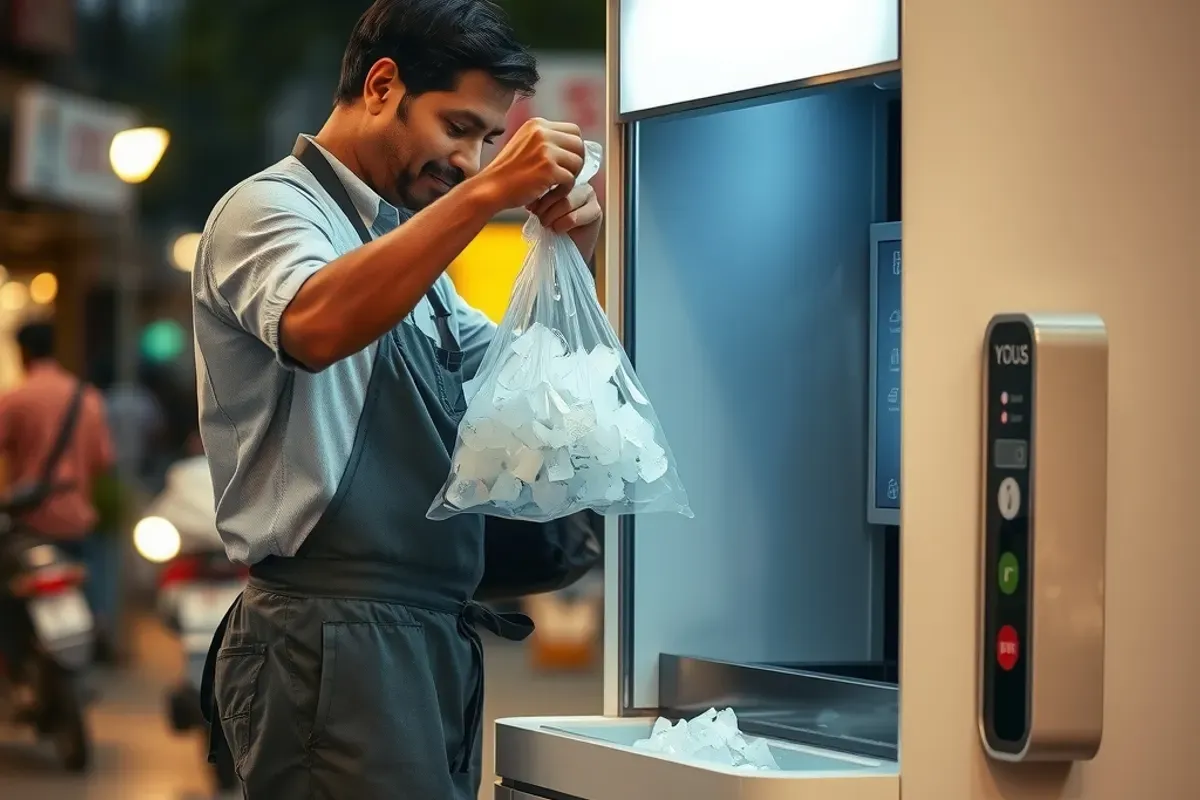
Before you pick an ice vending machine model, check that your site can support it. A short survey saves a lot of trouble later.
Freezers and ice makers draw a lot of power, especially when the machine starts up or the weather is hot. You need a stable supply with proper earthing. Voltage swings are common in some areas, so ask about stabilisers or other protection for your model. Power cuts can melt stored ice, so think about backup or a plan to discard melted stock.
An ice vending machine needs room around its vents so hot air can escape. Do not push it tight against a wall or place it in a closed box. Avoid spots next to ovens, tandoors or generators.
Ice-making models need a water inlet and usually a drain for melt water. Plan the pipe route before the machine arrives. A bagged ice dispenser can skip this step.
Direct sun on an ice vending machine raises its workload and can damage the panels. A roof, canopy or shaded wall helps a lot. In coastal areas, salty air can corrode metal parts, so ask about suitable finishes.
Wet floors near an ice vending machine can be slippery. Use a drip tray, anti-slip mats and a drain where possible. Electrical and safety certification for the model you choose is confirmed in your written quote.
A modern ice vending machine aims for a quick, simple sale. The buyer picks a pack size on a screen or button panel, pays and collects the bag.
Payment options are model dependent and optional. Common choices in India include:
Smart features such as remote stock alerts, sales reports and temperature monitoring are also model dependent. You can read more about these options on our smart vending page. They help operators know when to refill, clean or fix a fault before buyers notice.
A clear help note on the ice vending machine is important. If a bag gets stuck or a payment fails, buyers should know whom to contact and how refunds work for your setup.
An ice vending machine needs less staff time than a counter, but it is not hands-free. Plan these routine jobs from day one:
Demand for ice changes a lot with the season. In peak summer, a busy spot may need daily attention. In the monsoon or winter, sales may drop sharply. Plan your refill and cleaning schedule around these swings instead of using one fixed plan all year.
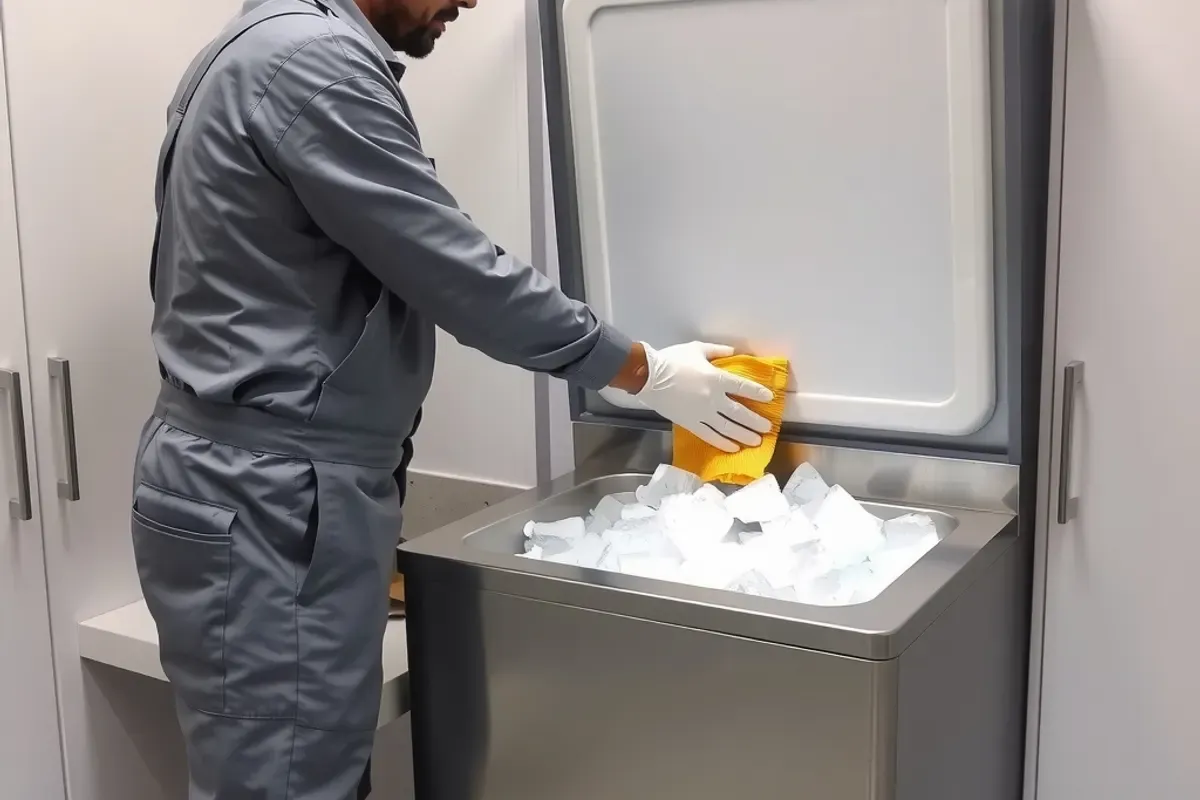
Use these tips to plan a sensible first setup:
Our vending machine finder can help you narrow down machine types for your venue. It takes a few minutes and hands your choices to the enquiry form.
An ice vending machine often works well next to other cold products. Consider pairing it with these machines:
You can browse every type on our vending machine catalogue. If you want to run machines as a business, our vending partner page explains how to start the conversation. Engagement models are still being finalised, so ask us whether a particular arrangement is available.
Many problems with an ice vending machine come from a few simple mistakes:
Avoiding these mistakes protects your buyers and your ice vending machine. It also builds trust, which matters a lot for a food product like ice.
Ready to explore an ice vending machine for your restaurant, resort, market or event venue? Share your site details, water and power situation and expected demand. We will help you choose a suitable type and confirm specifications, certification and options in a written quote.
It can be, as long as the machine uses safe drinking water, the filters are changed on time and the ice bin and chute are cleaned on a fixed schedule. Ice is treated as food, so the same care you give to drinking water applies. Ask for the cleaning steps and filter schedule for your model before you start.
An ice-making model needs a steady supply of clean water and usually a drain, because it freezes water on site. A bagged ice dispenser does not make ice, so it only needs power and a regular refill of sealed ice bags from a supplier. Your site survey will tell you which type your location can support.
It can work, but heat makes the cooling system work much harder and can slow ice production. A shaded, ventilated spot away from kitchens, generators and direct sun is best. Leave space around the vents. The working temperature range for the model you choose is confirmed in your written quote, along with any safety certification.
Typical buyers are small restaurants, juice stalls, caterers, event organisers, resort guests and people running home parties or picnics. Fishing and flower markets also use ice, though food-grade and non-food ice should not be mixed. The best fit depends on who passes your spot and when they need ice most.
Look at who is nearby, how far the closest ice seller is, and how demand changes with season and events. Ice sales usually rise sharply in summer and at weddings or festivals. Run your own numbers in our illustrative calculator and test with a small setup. We cannot promise sales figures for any site.
Different arrangements exist, such as buying the machine outright or having an operator stock and service it. Which models we can offer for your site is still being finalised, so please ask us whether a particular arrangement is available for your location when you request a quote.