
Best for
Places this machine suits
Have a different kind of site? Ask us whether it fits.
Catalogue
50 machine types for every place people gather.
By venue
Machine mixes planned around where they stand.
Dairy & frozen
Dispenses chilled or fresh milk through automated payment.
Best for
Have a different kind of site? Ask us whether it fits.
What it can stock
The final range is planned with you for each site, with food and drink to be stocked in FSSAI-compliant packaging.
Key points
Specifications
Sizes, capacity and hardware depend on the model and configuration we agree for your site. We share a spec sheet with your quote; the safety certification that applies to this model (such as BIS, where required) is confirmed in your written quote, and you can ask us for the documents.
Smart features
Options vary by model and are confirmed in your quote.
UPI QR, cards and wallets through the payment reader.
Browse by category and tap to buy, like the machines in our photos.
Stock levels, sales and alerts on a dashboard, so refills are planned.
Chilled, frozen or heated compartments, depending on the model.
Shelf layout and product mix planned around who uses the space.
Signage on the machine body to suit your venue or your brand.
Ways to get it
Pick the model that suits your budget and how hands-on you want to be. Terms are shared with your quote.
For businesses and operators
Own the machine outright and run it your way. We help with configuration, installation and training.
Ask about this option: buy a machineFor offices, campuses and sites
Pay a periodic fee instead of buying upfront, with servicing included as agreed in the contract.
Ask about this option: rent or subscribeFor hosts with space and footfall
We place, stock and maintain the machine; you provide the location. Subject to a site survey.
Ask about this option: we operate itFor entrepreneurs and franchisees
Run machines in your city with our hardware, software and support behind you.
Ask about this option: become a partnerHow we deploy it
Footfall, space, power and who will use it.
Machine model, product mix and payment options.
Delivery, set-up and a test run on site.
Refills planned from remote stock data.
Upkeep and support as per your agreement.
Related machines
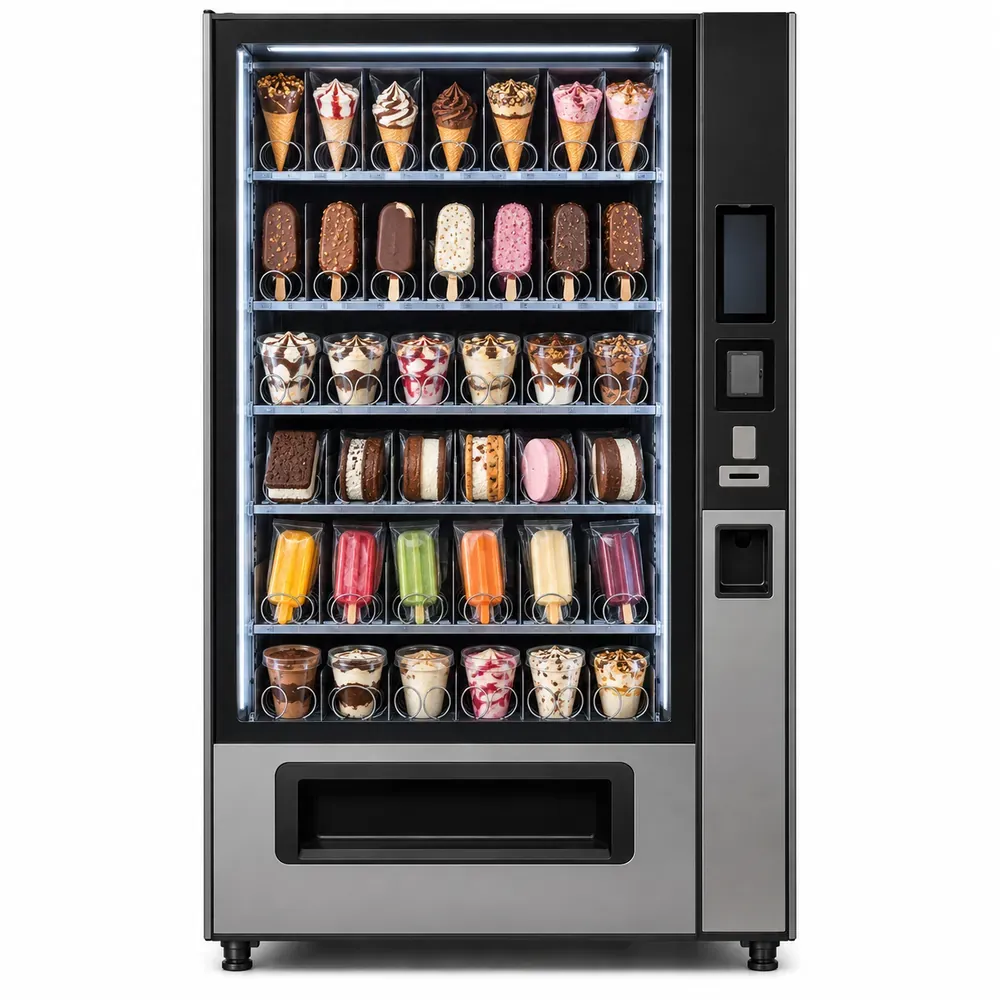
Freezer-based machine selling ice creams and frozen desserts.
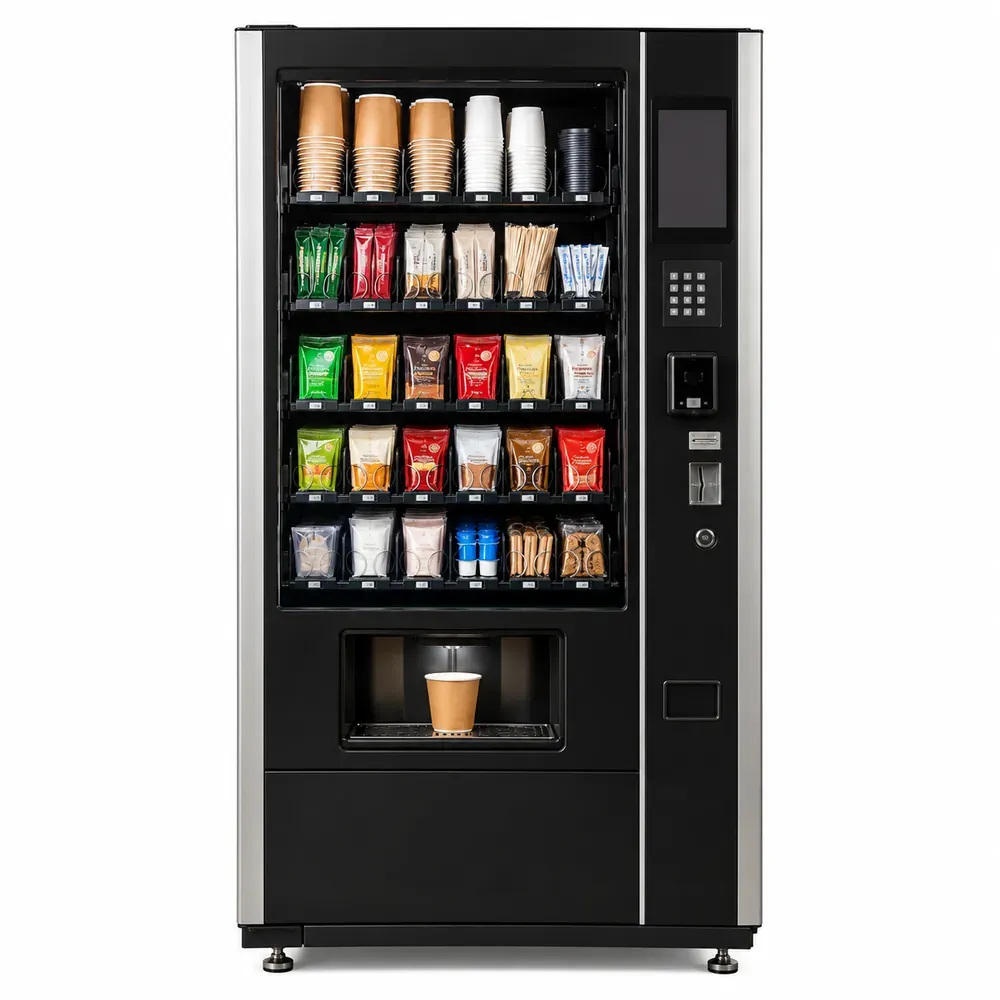
Automated machine serving hot beverages such as tea, coffee, cappuccino and premixes.
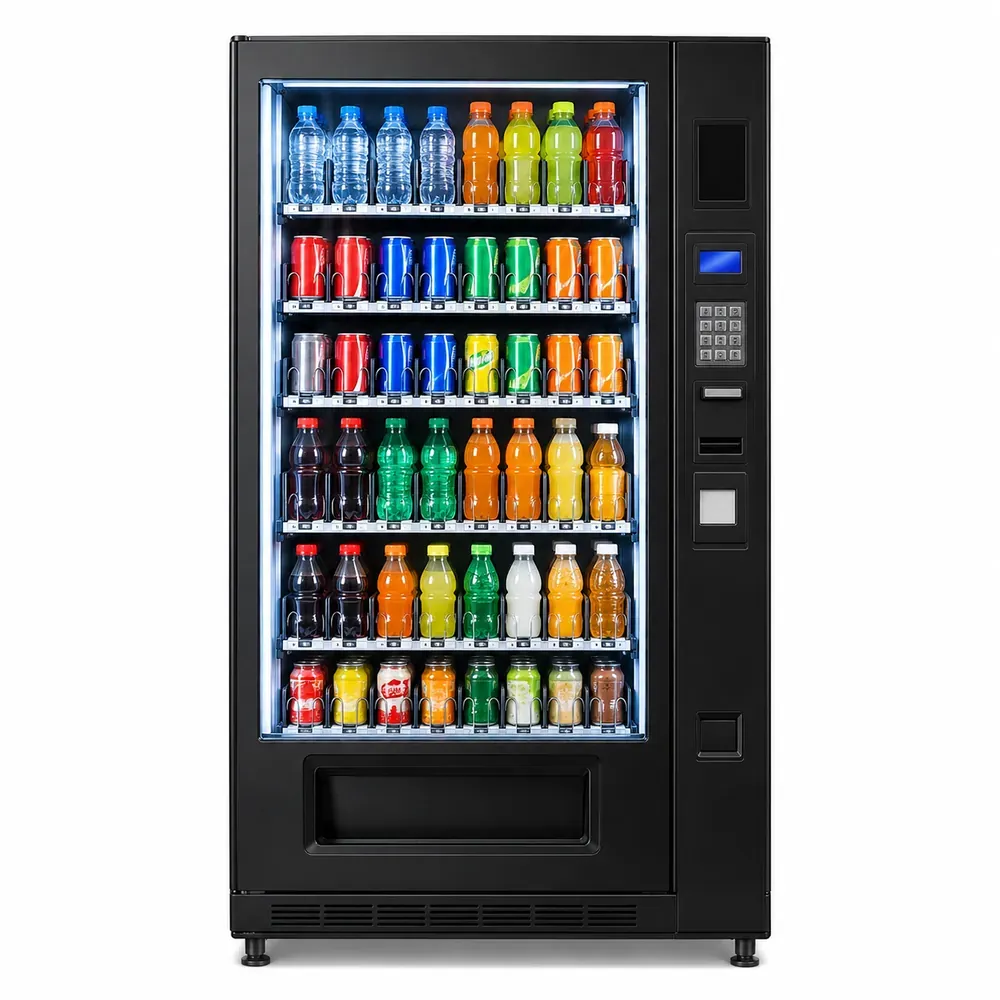
Dispenses chilled soft drinks, juices, energy drinks and water.
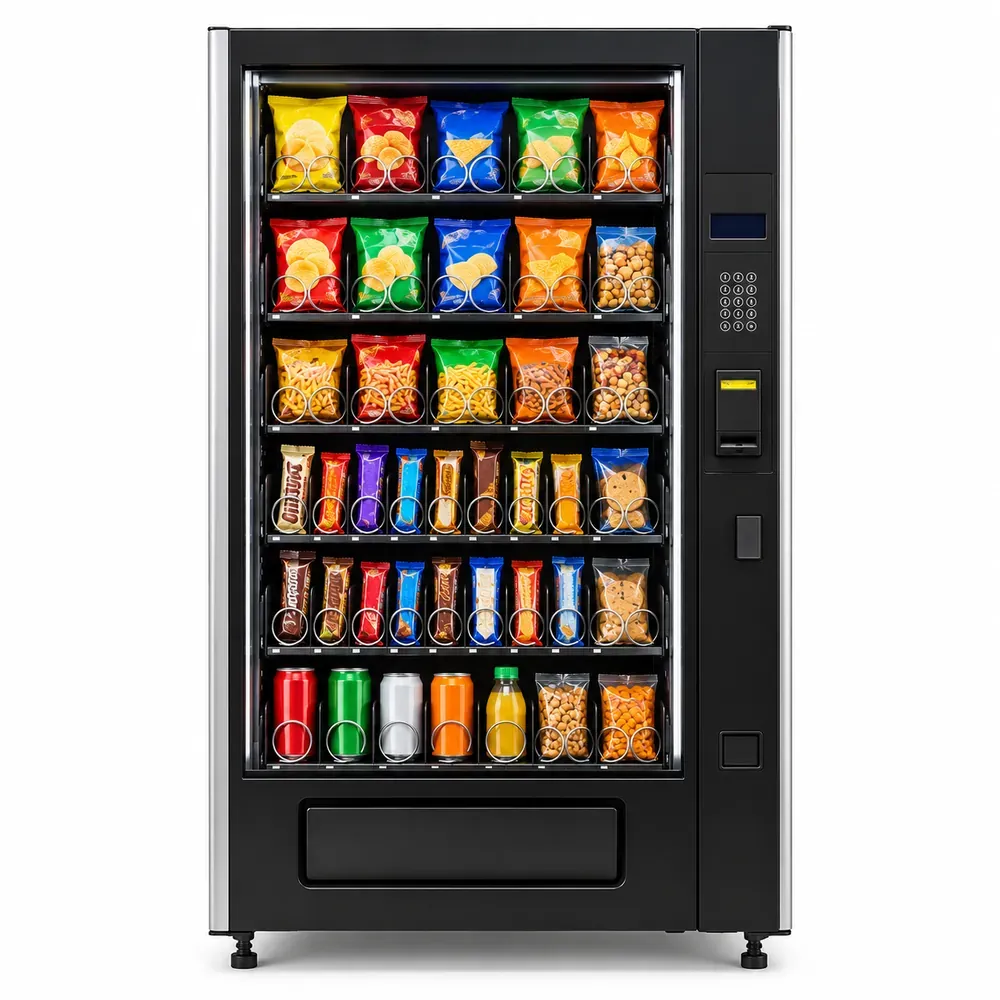
Sells packaged snacks such as chips, biscuits, chocolates and namkeen.
Tell us where it will go and roughly how many people pass by. We reply with configuration options and the engagement model that suits you.
A milk vending machine lets people buy fresh, chilled milk on their own, at any hour, without waiting for the milkman or walking to a dairy booth. The buyer pays, places a container or picks up a packet, and walks away with milk in a minute or two.
Milk is part of almost every Indian home. It goes into the morning chai, the children’s glass at night, curd set at home and sweets on festival days. Many families buy milk twice a day. When the regular delivery is late or the corner booth runs out, the whole morning gets disturbed.
India is one of the largest milk producers in the world, and much of that milk moves through dairy cooperatives and private dairies. The National Dairy Development Board works with this cooperative network across the country. A milk vending machine does not replace that system. It simply gives the last few metres, from dairy to home, a cleaner and more predictable shape.
This guide adds detail to the machine summary above. It explains the types, what the machine needs, where it fits and how to plan one step by step.
The basic idea is simple. Milk is kept cold inside the milk vending machine, and a set amount is released only after payment. Behind that simple idea are a few parts that decide how well the machine performs.
On a milk vending machine, smart features such as remote temperature alerts, stock reports and app-based payment are model dependent and optional. Ask which ones your chosen model actually supports.
There are two main styles, plus a few variations. Choosing the right one is the first big decision.
A bulk milk vending machine holds loose milk in a chilled steel tank. Buyers bring their own steel can, bottle or jug, and the machine fills it with the amount they paid for. This mirrors the way many Indian families already buy loose milk, so a milk ATM feels familiar.
The upside is less packaging waste and a flexible quantity. The trade-off is that the tank, pipes and tap need careful daily cleaning, and the milk supply must be fresh every day.
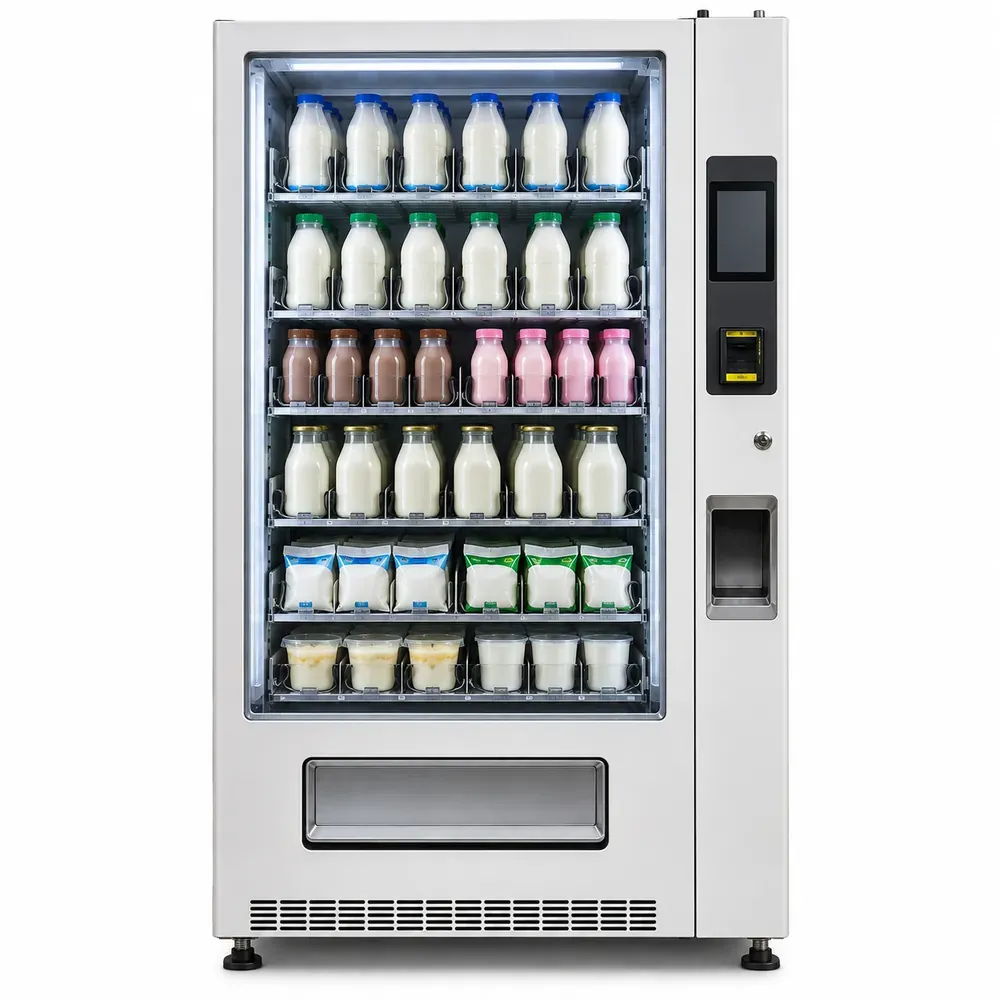
A packet milk vending machine works like a refrigerated snack machine. It stores sealed milk pouches, bottles or tetra packs on cold shelves and releases one after payment. The milk stays in its original sealed pack from the dairy, so cleaning is simpler.
This style suits offices, campuses and places where people want a single serving rather than a family quantity. An automatic milk dispenser of this kind can also hold flavoured milk, curd cups or buttermilk in the same machine.
Some sites want more than plain milk. A combo setup may sell milk alongside curd, paneer packs or chaas. If buttermilk and lassi are your main interest, look at our lassi and buttermilk vending machine page as well.
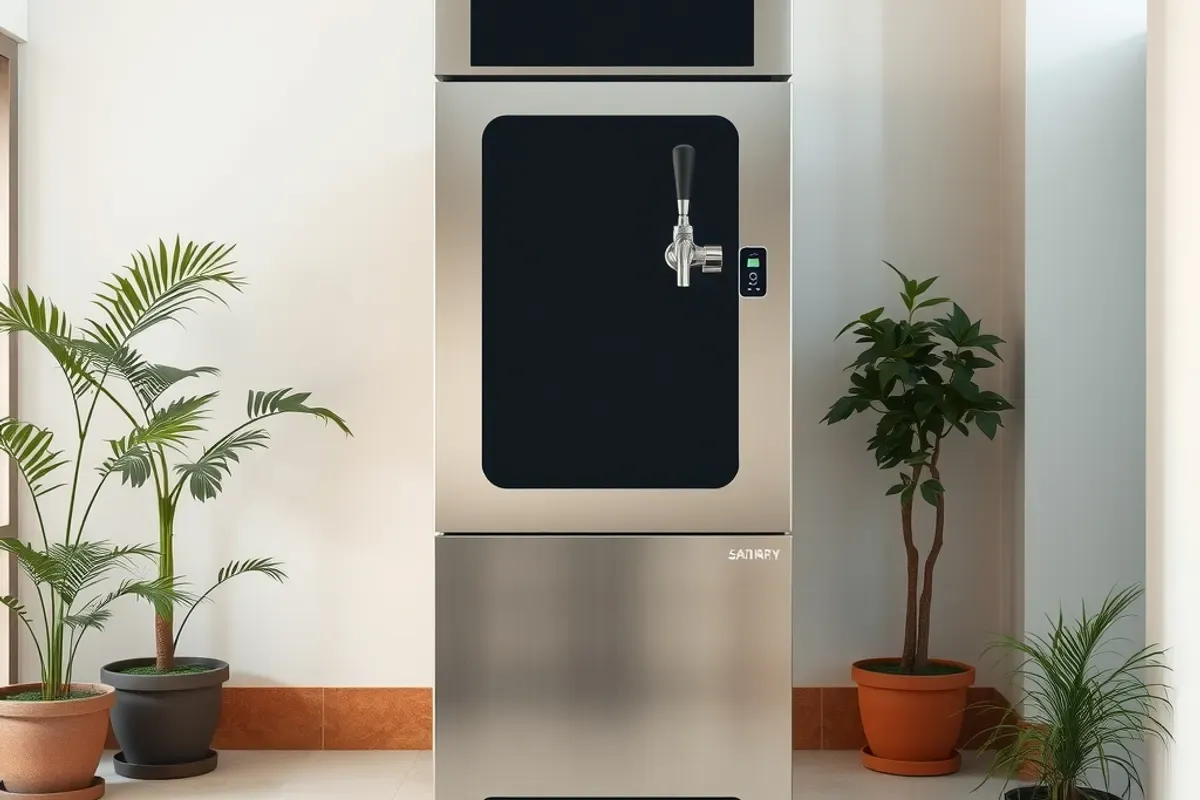
The table below compares the two main styles in plain terms. It is general guidance, not a promise about any particular model.
| Point | Bulk milk dispenser | Packet or bottle machine |
|---|---|---|
| What the buyer gets | Loose milk in their own container | Sealed pouch, bottle or tetra pack |
| Typical buyer | Families buying daily household milk | Individuals wanting one serving |
| Packaging waste | Low | Higher, depends on pack type |
| Cleaning effort | High, tank and tap cleaned daily | Lower, shelves and trays cleaned |
| Shelf life of stock | Short, refilled daily | Depends on pack, often longer |
| Quantity choice | Flexible, set by the buyer | Fixed pack sizes |
| Best-fit sites | Housing societies, dairy outlets | Offices, campuses, gyms |
| Key risk | Hygiene slips in pipes or tap | Expired packs left on shelves |
For many housing societies, a bulk milk vending machine fits daily habits better. For an office pantry, a packet machine is usually easier to manage.
The right location matters more than the machine itself. A milk vending machine sells well where people already need milk often and have few easy options nearby.
A society is the most natural home for a milk vending machine. Residents need milk every morning and often again in the evening. A machine in the lobby or near the main gate gives them milk downstairs, without waiting for delivery. See our residential society vending solutions for the wider set of machines that suit apartment complexes.
Office pantries use a lot of milk for tea and coffee. A packet machine or a small bulk unit can supply the pantry staff and employees who want a glass of milk or a flavoured drink. Our office vending solutions page covers how machines fit into a workplace.
A dairy that already sells milk can add a milk vending machine outside its shop. It keeps selling after the shop shuts, early in the morning or late at night, without extra staff at the counter.
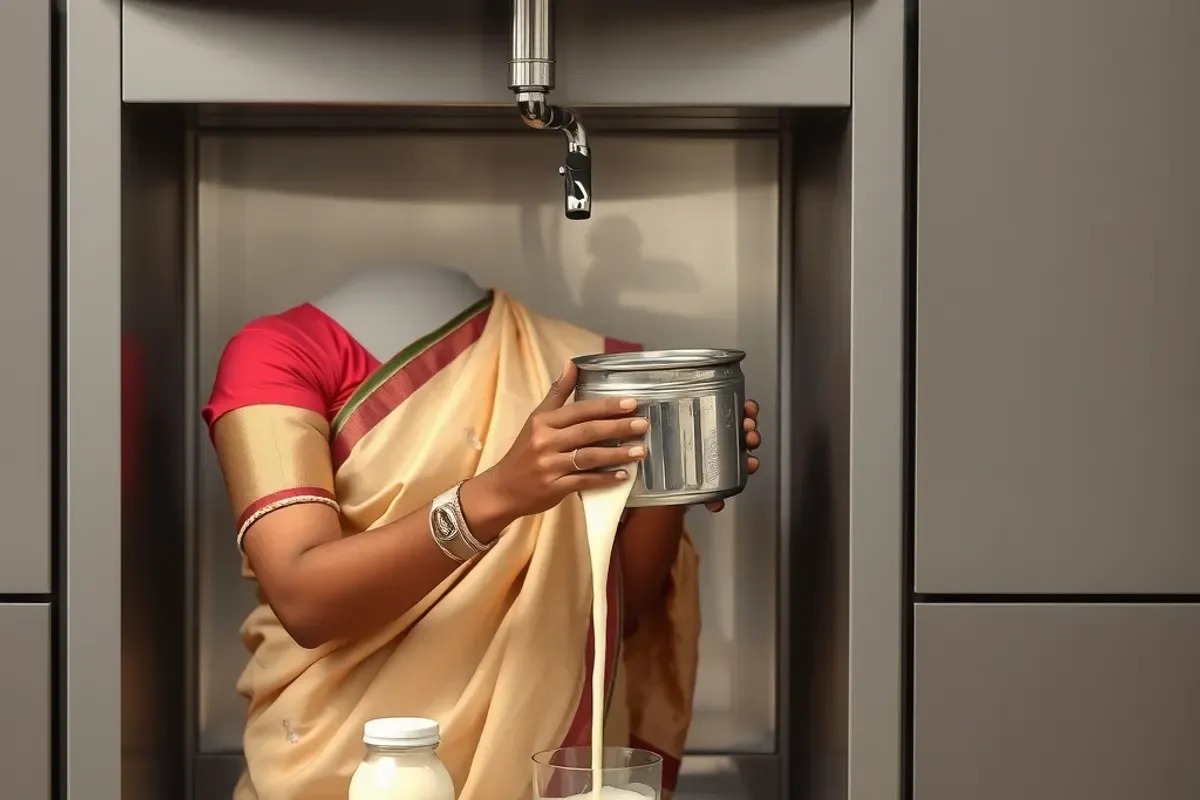
Milk spoils quickly if it gets warm, and it can carry germs if the equipment is not clean. Hygiene is the area where a milk vending machine can win or lose the trust of buyers.
Milk should stay chilled from the moment it leaves the dairy to the moment it reaches the buyer. Check that the milk vending machine holds a steady low temperature even in an Indian summer. A temperature display or alert is very useful here. If the power cuts out often in your area, plan for backup power.
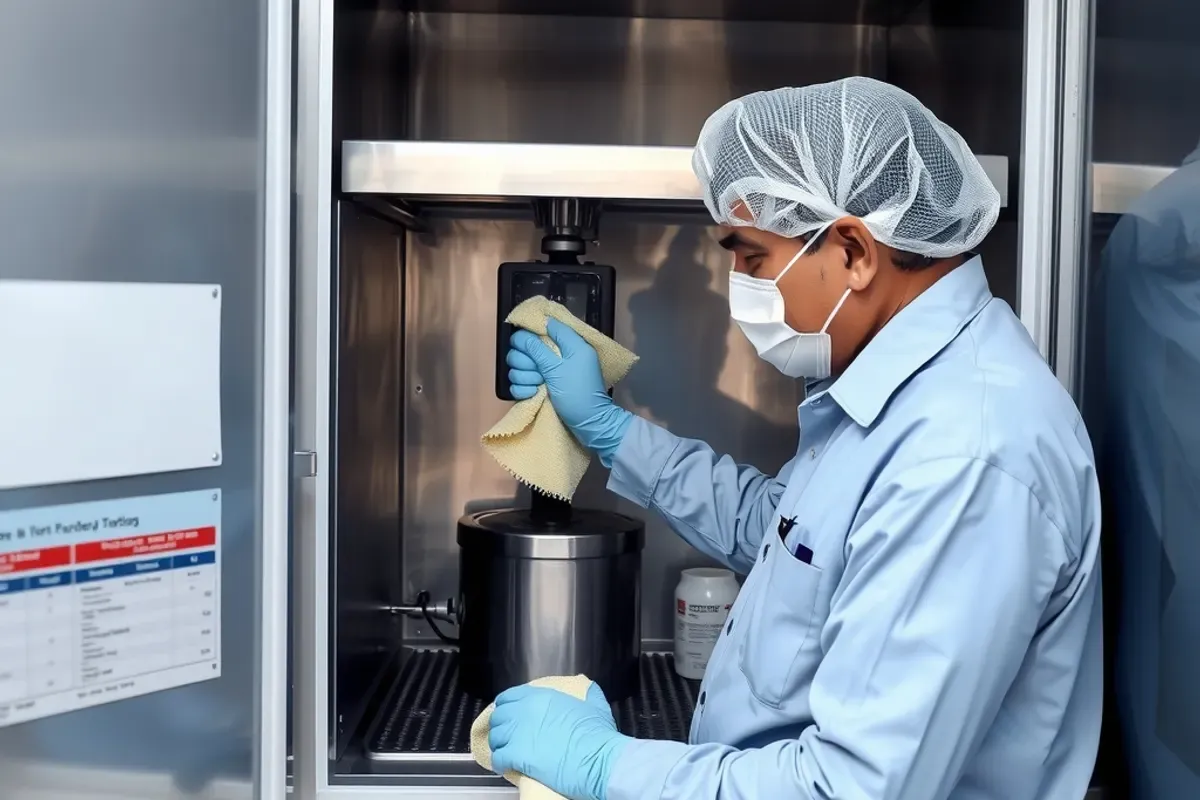
For a bulk machine, the tank must be emptied, washed and sanitised before each fresh refill. The pipes and tap need the same care, because milk residue builds up quickly. Many machines support a cleaning cycle. Follow the cleaning steps given for your model and keep a simple written log.
Selling milk is a food business. The Food Safety and Standards Authority of India sets the rules for licensing, hygiene and food handling. Packed milk and dairy products should be stocked in FSSAI-compliant packaging. Who holds the licence or registration depends on the model, such as the dairy, the society or the operator. We never claim to hold a licence on your behalf.
A milk vending machine is only as good as the milk inside it. Sourcing and refill timing deserve as much planning as the machine.
Most milk vending machine owners tie up with a local dairy, a dairy cooperative or a trusted private supplier. Ask the supplier how the milk is collected, chilled and transported, and whether it is pasteurised. Pasteurised milk is the safer choice for an unattended milk vending machine. Agree on delivery timing, quantity and what happens to unsold milk.
Demand for milk is not steady through the day. For a milk vending machine in a society, it usually peaks early in the morning and rises again in the evening. Time your refills just before these rush hours. Start with a smaller quantity, watch the sales record for two to three weeks and then adjust. This reduces waste and keeps milk fresh.
We do not publish prices, because the right figure depends on the model, the site and local milk rates. Costs to think about include the machine, electricity for cooling, cleaning supplies, the milk itself and the time spent on refills. Use our illustrative calculator with your own numbers. Treat every figure as an assumption until you test your site.
Indian buyers now expect to pay by phone. UPI has made small, daily payments quick and easy, which suits a product like milk that people buy every day. Most buyers will expect a milk vending machine to accept UPI.
A prepaid card system on a milk vending machine for society use can work well. Residents load money once and tap each morning, and the society or operator can see usage clearly.
Some models offer remote monitoring, temperature alerts, low-stock alerts and sales reports on a phone. These are model dependent and optional. They help most when the owner is not on site every day. Read more about connected machines on our smart vending page.
Use these seven steps to move from an idea to a working milk vending machine.
Any BIS or electrical safety certification for the machine is confirmed in your written quote. If you want help matching a machine to your site, try our vending machine finder.
Many problems with a milk vending machine come from a few simple mistakes. Avoiding them saves money and protects buyer trust.
There are different ways to run a milk vending machine. A society or dairy may buy it and manage it, while others prefer an operator who handles stocking, cleaning and repairs. Which models we can offer for a milk vending machine is still being confirmed, so please ask us whether a particular arrangement is available for your site.
If you also want clean drinking water in the same location, our water vending machine is a common partner for a society setup.
Tell us about your site, the number of households or staff, and whether you prefer bulk or packet milk. We will suggest a suitable milk vending machine setup and send a written quote that confirms specifications, safety certification and running arrangements. Request your free milk vending machine quote today.
It can be, when the milk comes from a reliable dairy, stays cold from delivery to dispensing and the tank, pipes and tap are cleaned on a fixed schedule. Most families still boil loose milk at home, and that habit is sensible. Ask for the cleaning steps and the cooling range of your model before you start.
Both work. A bulk machine fills the buyer's own container from a chilled tank, which suits societies where people already buy loose milk. A packet machine keeps sealed pouches or bottles cold and needs less cleaning. Your choice depends on who your buyers are, how fresh your supply is and how much daily cleaning your team can manage.
Selling milk is a food business, so FSSAI rules apply. Who holds the licence or registration depends on the arrangement, for example the society, the dairy supplying the milk or the operator running the machine. We never claim to hold a licence for you. Check the requirement for your exact setup before you go live.
Milk has a short life, so the plan for leftover stock matters. Common steps are ordering smaller quantities until demand is clear, matching refills to the morning and evening rush, and taking back unsold milk as agreed with the dairy. Never top up old milk with fresh milk in the same tank.
Some groups prefer to buy a machine and tie up with a local dairy themselves. Others want an operator to stock, clean and service it. Which arrangements we can offer for your site is still being finalised, so please ask us whether a particular model is available for your location when you request a quote.