
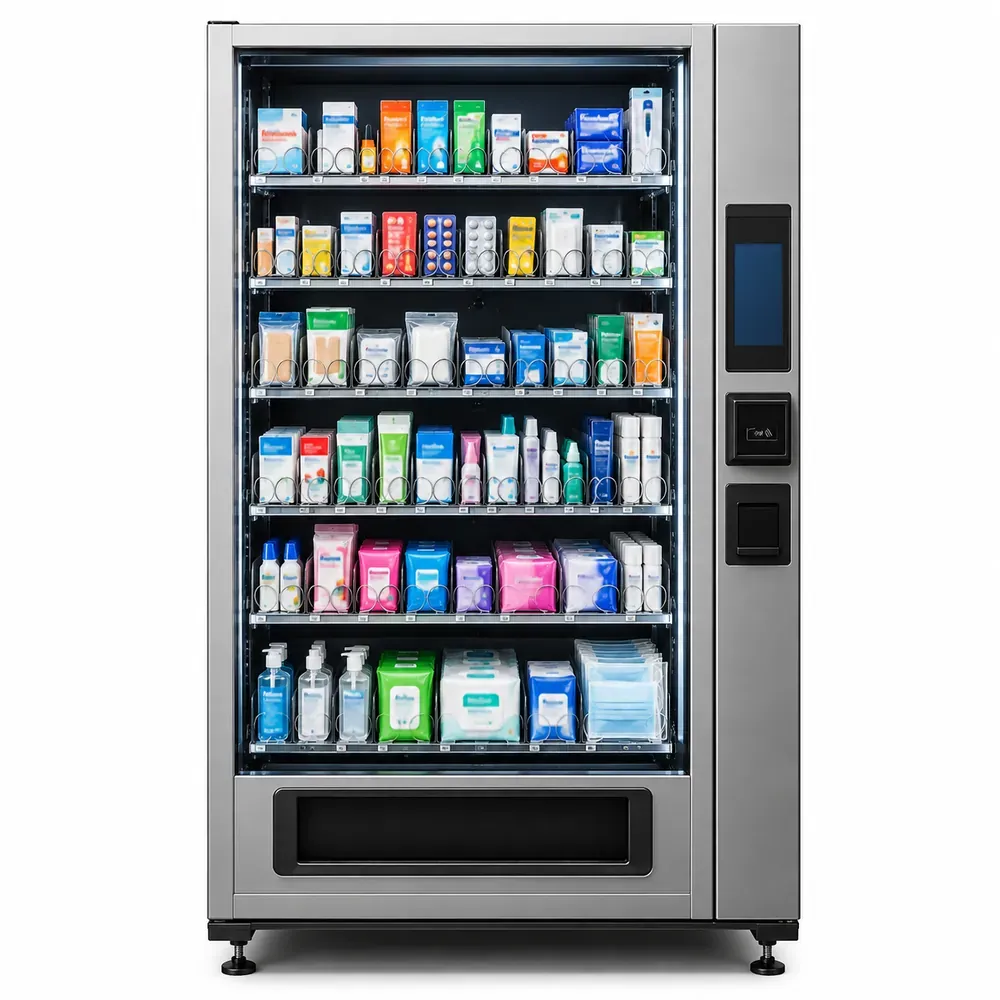
Best for
Places this machine suits
Have a different kind of site? Ask us whether it fits.
Catalogue
50 machine types for every place people gather.
By venue
Machine mixes planned around where they stand.
Healthcare & hygiene
Dispenses permitted OTC and healthcare-related essentials.
Best for
Have a different kind of site? Ask us whether it fits.
What it can stock
The final range is planned with you for each site.
Permitted OTC essentials only. Prescription medicines (Schedule H, H1, X) are never stocked, each item is checked before stocking, and venue licensing is confirmed per site.
Key points
Specifications
Sizes, capacity and hardware depend on the model and configuration we agree for your site. We share a spec sheet with your quote; the safety certification that applies to this model (such as BIS, where required) is confirmed in your written quote, and you can ask us for the documents.
Smart features
Options vary by model and are confirmed in your quote.
UPI QR, cards and wallets through the payment reader.
Browse by category and tap to buy, like the machines in our photos.
Stock levels, sales and alerts on a dashboard, so refills are planned.
Shelf layout and product mix planned around who uses the space.
Signage on the machine body to suit your venue or your brand.
Ways to get it
Pick the model that suits your budget and how hands-on you want to be. Terms are shared with your quote.
For businesses and operators
Own the machine outright and run it your way. We help with configuration, installation and training.
Ask about this option: buy a machineFor offices, campuses and sites
Pay a periodic fee instead of buying upfront, with servicing included as agreed in the contract.
Ask about this option: rent or subscribeFor hosts with space and footfall
We place, stock and maintain the machine; you provide the location. Subject to a site survey.
Ask about this option: we operate itFor entrepreneurs and franchisees
Run machines in your city with our hardware, software and support behind you.
Ask about this option: become a partnerHow we deploy it
Footfall, space, power and who will use it.
Machine model, product mix and payment options.
Delivery, set-up and a test run on site.
Refills planned from remote stock data.
Upkeep and support as per your agreement.
Related machines
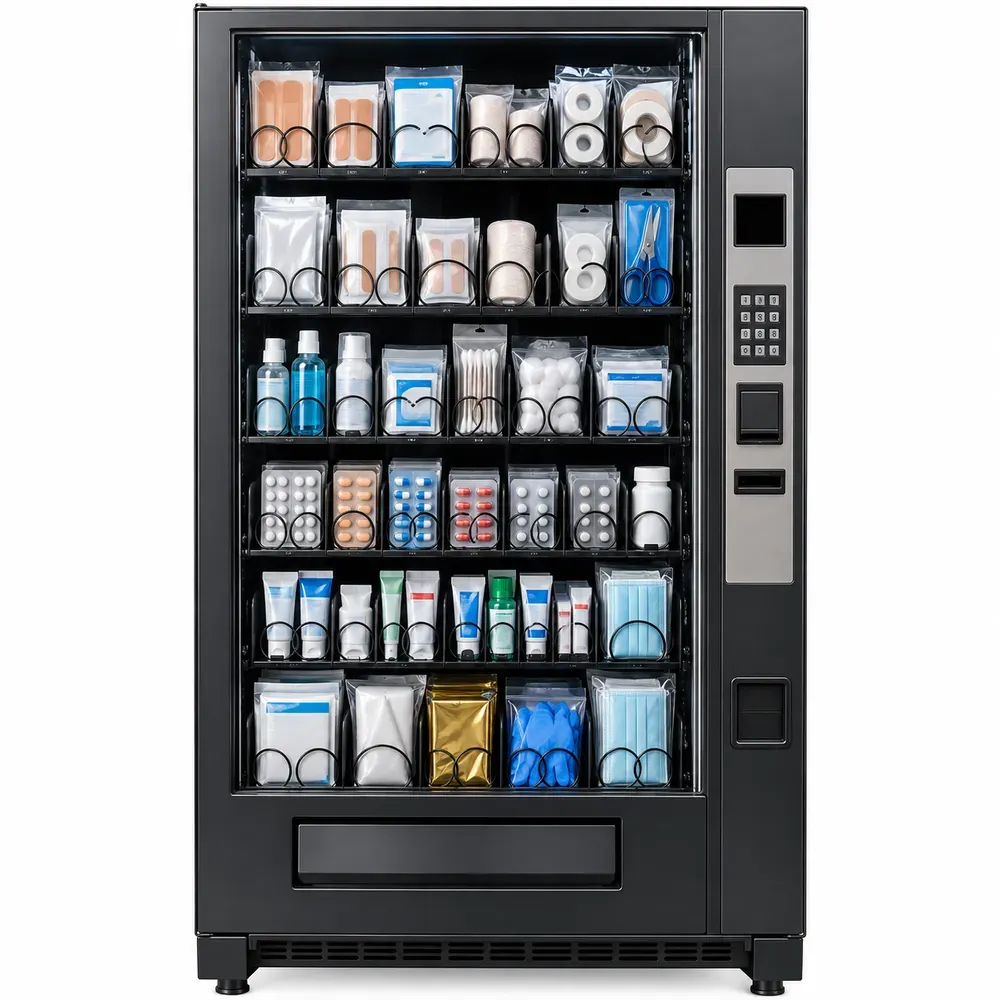
Provides emergency first-aid supplies.
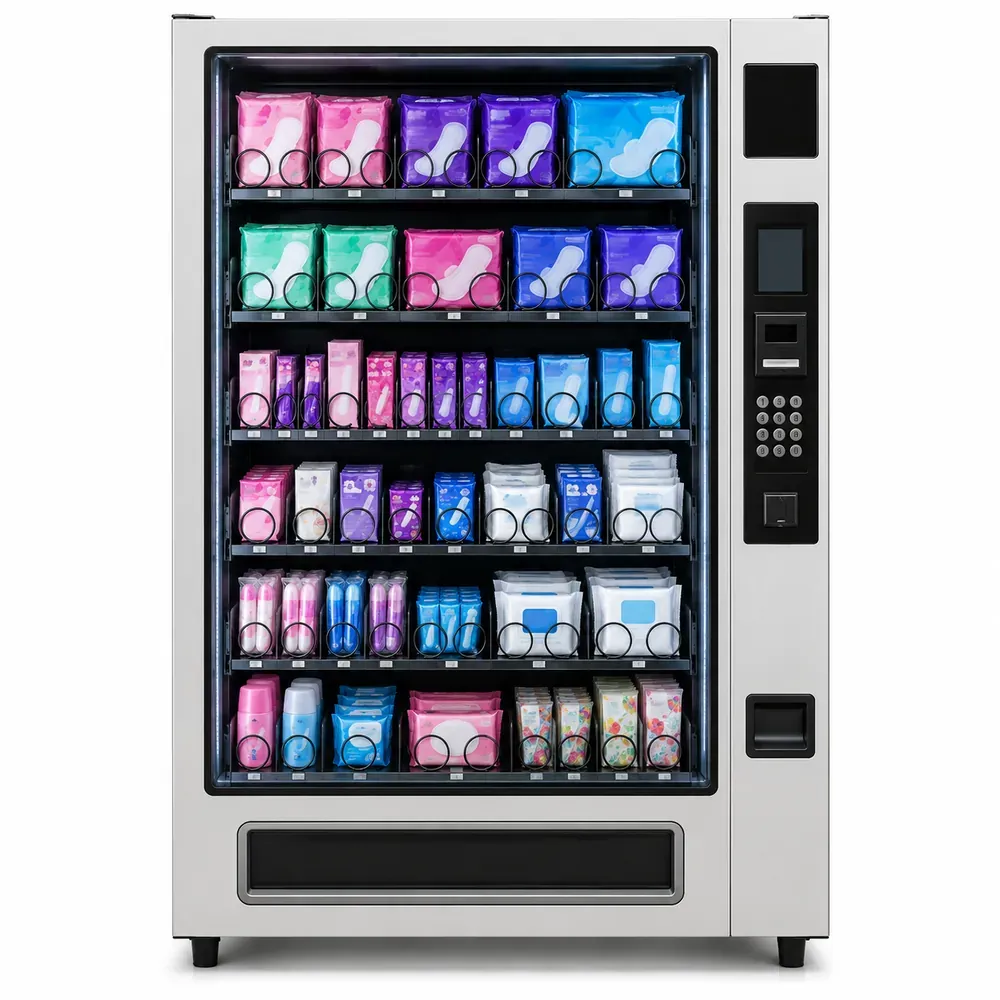
Dispenses sanitary pads and menstrual hygiene products.
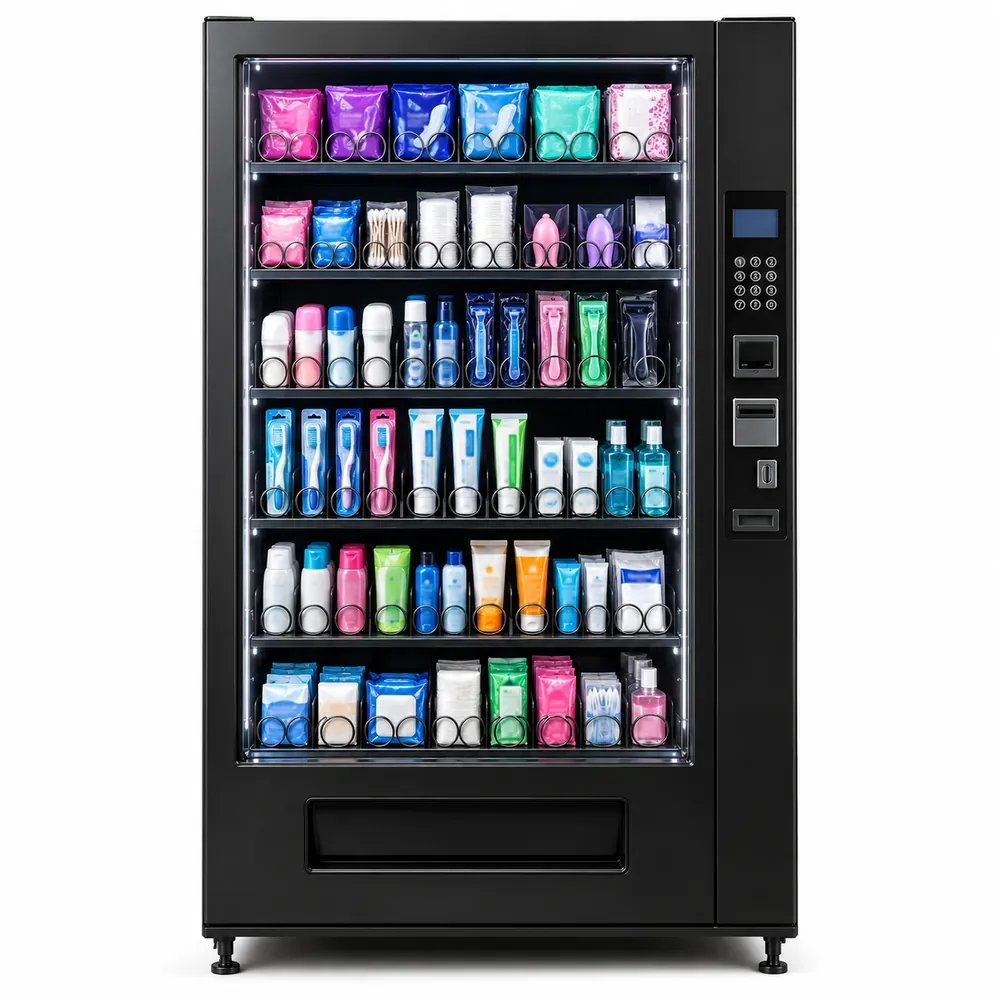
Provides emergency hygiene products.
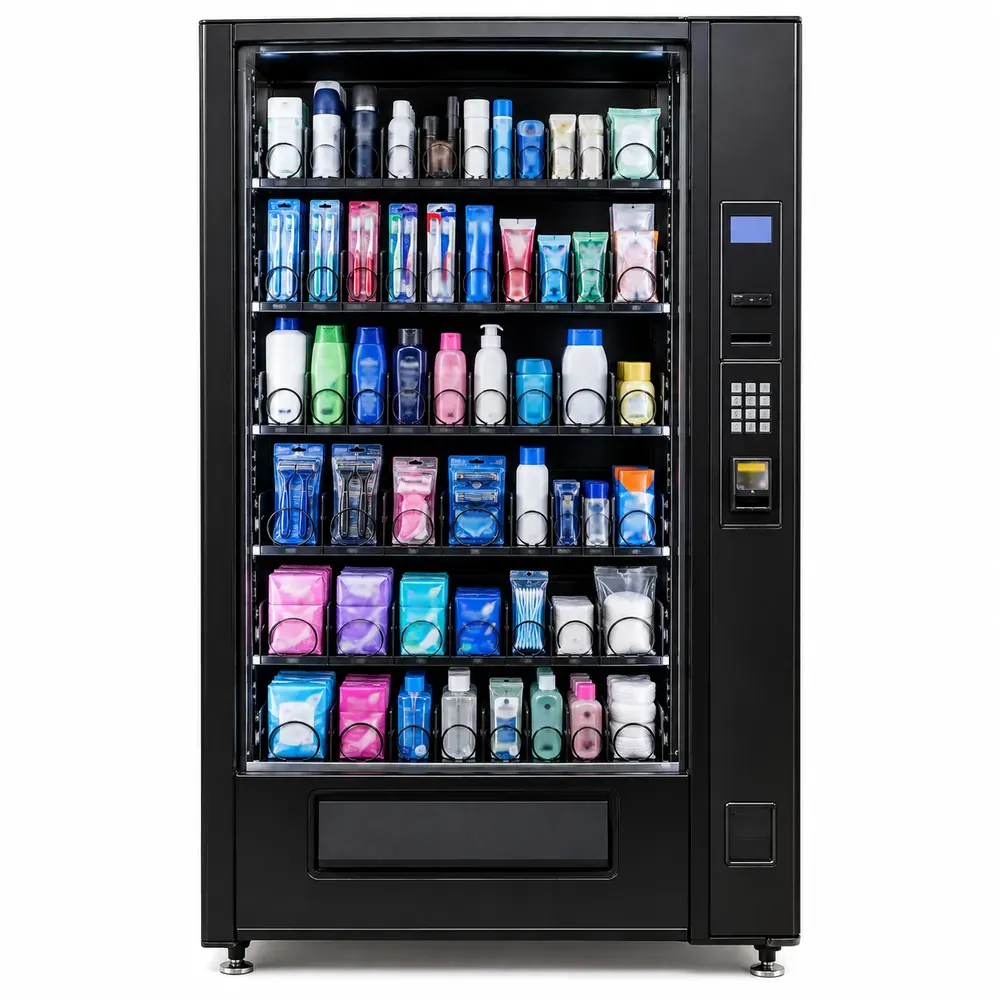
Sells toothbrushes, toothpaste, razors, combs and other toiletries.
Tell us where it will go and roughly how many people pass by. We reply with configuration options and the engagement model that suits you.
A pharmacy essentials vending machine is a self-service unit that sells permitted over-the-counter healthcare items at any hour. Think of a bandage after a small cut at work, a mask on a polluted morning or a thermometer for a worried parent at night. People rarely plan for these small needs, and the nearest chemist may be closed or far away.
In Indian cities, hospitals, colleges, offices and travel hubs all see people who need a basic item quickly. A pharmacy essentials vending machine placed in the right corridor turns that moment of need into a simple, 24-hour service. It also frees staff from handing out supplies from a drawer or a reception desk.
This guide explains how to plan, stock, place and run a pharmacy essentials vending machine. It focuses on the practical choices that decide whether the machine is trusted and used, or ignored. A short note on wording first: this page is about permitted OTC essentials only, and it is general information, not medical or legal advice.
The flow is close to any snack machine. Each product sits in a numbered slot or small compartment. The user picks an item, pays and collects it from a pickup tray.
For a pharmacy essentials vending machine, smart features such as remote stock alerts, sales reports, and price changes from a phone are optional and model dependent. Ask us which features the shortlisted machine supports before you decide. If you want to understand the wider idea first, read our overview of smart vending.
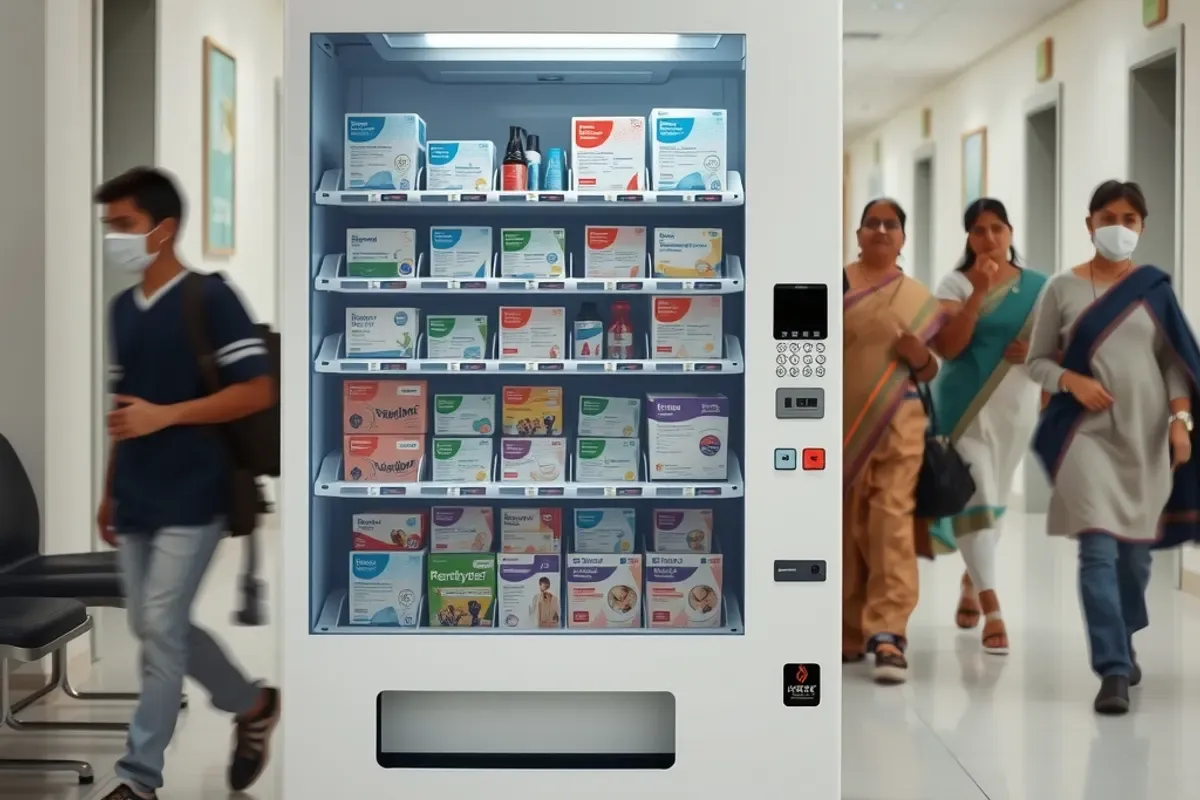
Healthcare essentials come in very different shapes. A flat strip of bandages, a small sanitiser bottle and a boxed thermometer all need different handling.
A good OTC vending machine often mixes two of these. Measure your top items and share the sizes with us, so the slot plan fits real products and not guesses.
The right product mix decides most of your sales and also your safety record. Start with simple, sealed, clearly labelled items that people buy in an urgent moment.
| Product type | Typical pack | Slot fit | Why it sells |
|---|---|---|---|
| Adhesive bandages | Small boxes | Standard spiral | Common minor cuts at work and school |
| Antiseptic wipes | Slim sachets or packs | Standard spiral | Quick cleaning of small wounds |
| Face masks | Small packs | Standard or wide coil | Dust, pollution and crowded places |
| Hand sanitiser | Small bottles | Wide coil or locker | Hygiene on the go |
| Digital thermometer | Boxed unit | Locker | Urgent need when someone feels unwell |
| Oral rehydration sachets | Small packs | Standard spiral | Popular in hot months and for travellers |
Only sell sealed, labelled packs from reliable suppliers, and check expiry dates at every refill. Prescription medicines and restricted drugs are never part of an unattended machine. Ask a qualified pharmacist to review your list, and keep a written record of what was approved.
The Central Drugs Standard Control Organisation is the national regulator for drugs and medical devices in India, and its website is a useful place to understand the rules. Rules can change, and they can differ for each product, so check the current position for every item before you stock it. Who holds any licence depends on the engagement model, so agree on this in writing before you start.
In the first few weeks with a new pharmacy essentials vending machine, stock fewer product types and more units of the fast movers. Track what sells, what sits and what people ask for. Then swap slow rows for items that users request, as long as they stay within permitted OTC essentials. A healthcare essentials vending machine that empties its bandage row twice a week is a clear sign to give that product more space.
Placement matters as much as the product list. A pharmacy essentials vending machine tucked in a dark corner will sell little, while one near a waiting area, lobby or corridor will see steady use. Good spots have regular foot traffic, a safe power point, shade and a dry floor.
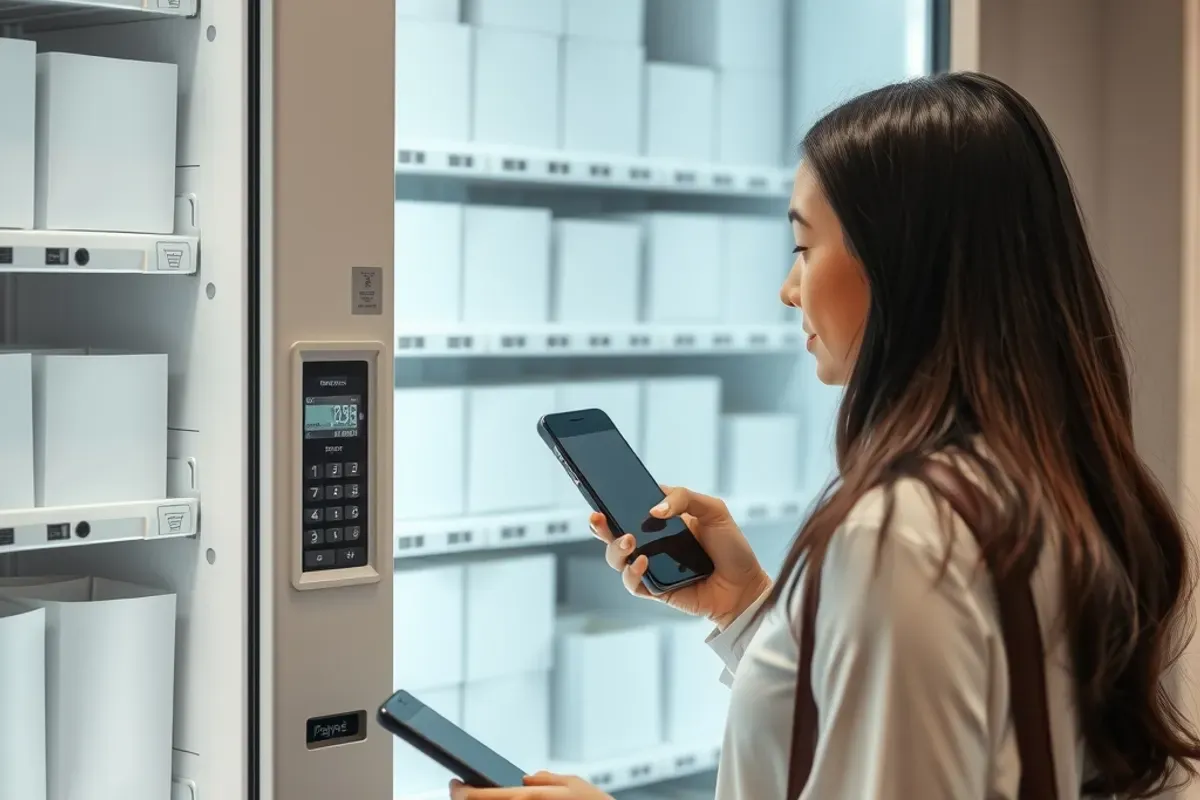
Walk the spot for your pharmacy essentials vending machine at different times of day. Check that the floor is level and can take the weight of a loaded machine. Confirm that the area is not exposed to direct sun, since heat can damage some packs and fade labels. Make sure a stable mobile network or Wi-Fi signal is available if you want UPI payments and remote alerts.
Also think about access and safety. In a hospital, a machine should not block a corridor, an exit route or a stretcher path. Get written approval from the facility manager or property owner before you finalise the spot.
Most Indian users now expect to pay by UPI. A QR code payment is quick and avoids the need for exact change. UPI is run by the National Payments Corporation of India and works with most banks and payment apps.
Cash and card options can still help in places used by older visitors or travellers. Which payment methods are available is model dependent, so confirm them in your quote.
Failed payments and stuck items will happen now and then. In a healthcare setting, a person may be anxious or in a hurry, so a quick fix matters even more.
Quick, fair refunds build trust. People return to a machine they believe will treat them fairly.
A pharmacy essentials vending machine is only as good as its upkeep. Empty rows, expired items or a dirty pickup tray will push users back to the shop, or worse, make them stop trusting the machine.
Set a written routine for your pharmacy essentials vending machine and stick to it. A simple plan might look like this:
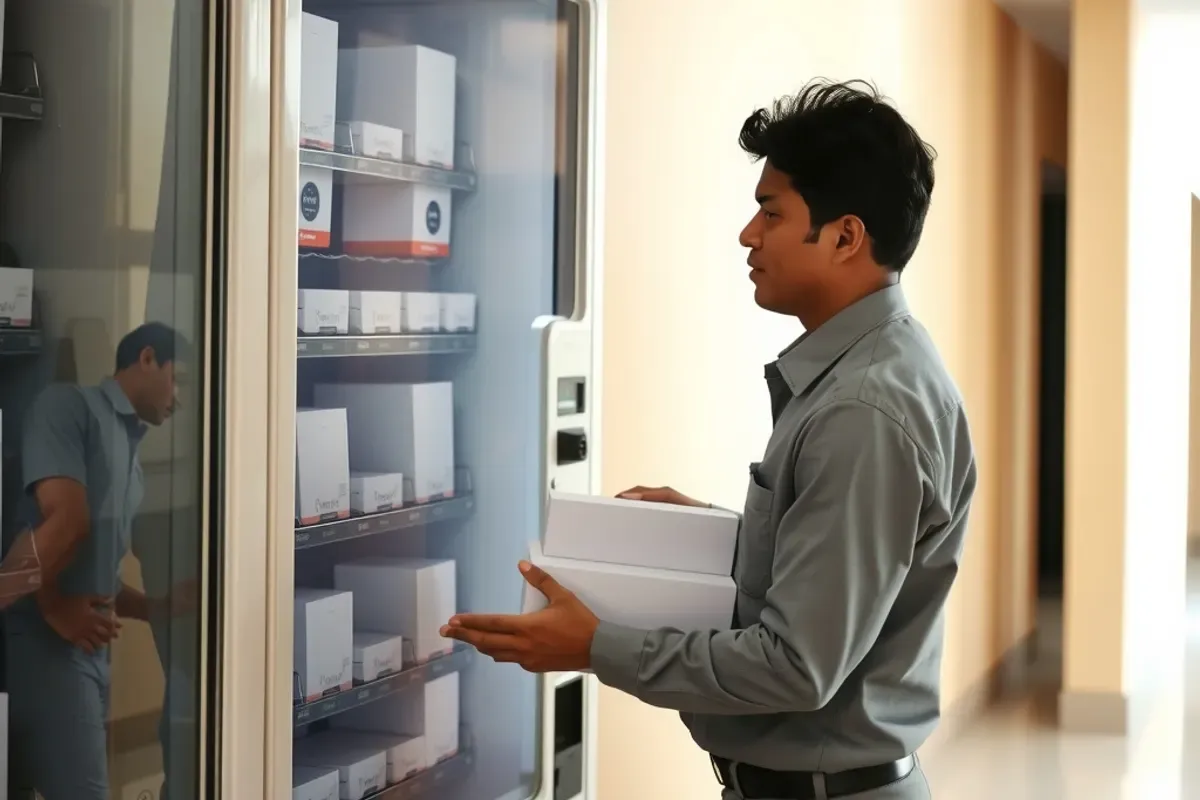
Expiry control is the heart of a healthcare essentials vending machine. Put the earliest expiry dates at the front, and record each refill date. Keep spare stock in a clean, dry store away from sunlight, and follow any storage instructions printed on the pack. If a pack looks damaged, open or wet, remove it at once.
Electrical safety should never be guessed. Any BIS or other safety certification for the machine will be confirmed in your written quote. You can read about Indian product standards on the Bureau of Indian Standards website. Use an earthed power point and keep cables away from walking paths.
A pharmacy essentials vending machine is not the only way to make basic healthcare items easy to reach. Here is how it compares with common alternatives.
For many sites, the best answer is a mix. The pharmacy essentials vending machine covers urgent and after-hours needs, while larger or prescription needs still go to a licensed chemist.
If your site mainly needs emergency supplies for injuries, a dedicated first-aid vending machine may fit better. If the need is for everyday grooming and cleanliness products, look at the personal hygiene vending machine. For sanitary products, see the sanitary pad vending machine. You can also browse all vending machine types to compare sizes and formats.
A pharmacy essentials vending machine that sells healthcare items carries extra responsibility. It should help people, never replace proper medical care. Put a short notice on the machine telling users to speak to a doctor or pharmacist if symptoms continue or if they are unsure what to use.
The World Health Organization shares guidance on hand hygiene, which is a useful reference when you choose items such as sanitiser. Keep the notice simple and in the local language as well as English. Avoid any wording that sounds like medical advice or promises a result.
Keep a few more habits in mind:
There are different ways to bring a machine to your site. The right one depends on your budget, how much effort you want to put in and the number of people who pass by each day.
If you are thinking about running machines as a business, our vending machine partner page explains how to start that conversation. Not sure which machine fits your site? Use the vending machine finder to narrow your choices in a few steps.
A few simple errors cause most of the problems new operators face.
Use this short list before you request a quote:
Ready to plan a pharmacy essentials vending machine for your hospital, office, campus or travel hub? Share your site details, expected footfall and product list, and we will help you choose a suitable model. Request a free pharmacy essentials vending machine quote, and you can compare the options that fit your site.
Only permitted over-the-counter essentials, such as bandages, antiseptic wipes, masks, sanitiser, thermometers and similar sealed healthcare items. Prescription medicines are not sold from an unattended machine. Before you finalise the product list, check it with a qualified pharmacist and confirm what local rules allow at your site.
Rules for selling medicines in India are set by drug regulators, and they can differ by product type. This is why our guidance is limited to permitted OTC essentials and general healthcare items. Who holds any licence depends on the engagement model, so agree on it in writing and check with a qualified professional before you start.
Most bandages, wipes, masks and sanitiser are shelf-stable and fine in an ambient machine. A few items may carry storage instructions on the pack, so always follow the label. If your list includes anything that needs a cool shelf, ask us whether a chilled model is available and suitable.
UPI QR payment is the most common choice and works with most Indian apps. Card and cash options are model dependent, so confirm them in your written quote. Place a clear help QR code or number on the front so users can report a stuck item or failed payment.
It can be, if staff often need basic items outside shop hours and the nearest chemist is far or closes early. A compact unit with a short, carefully chosen product list usually fits better than a large one. A quick staff survey helps you judge demand before you commit to a model.