
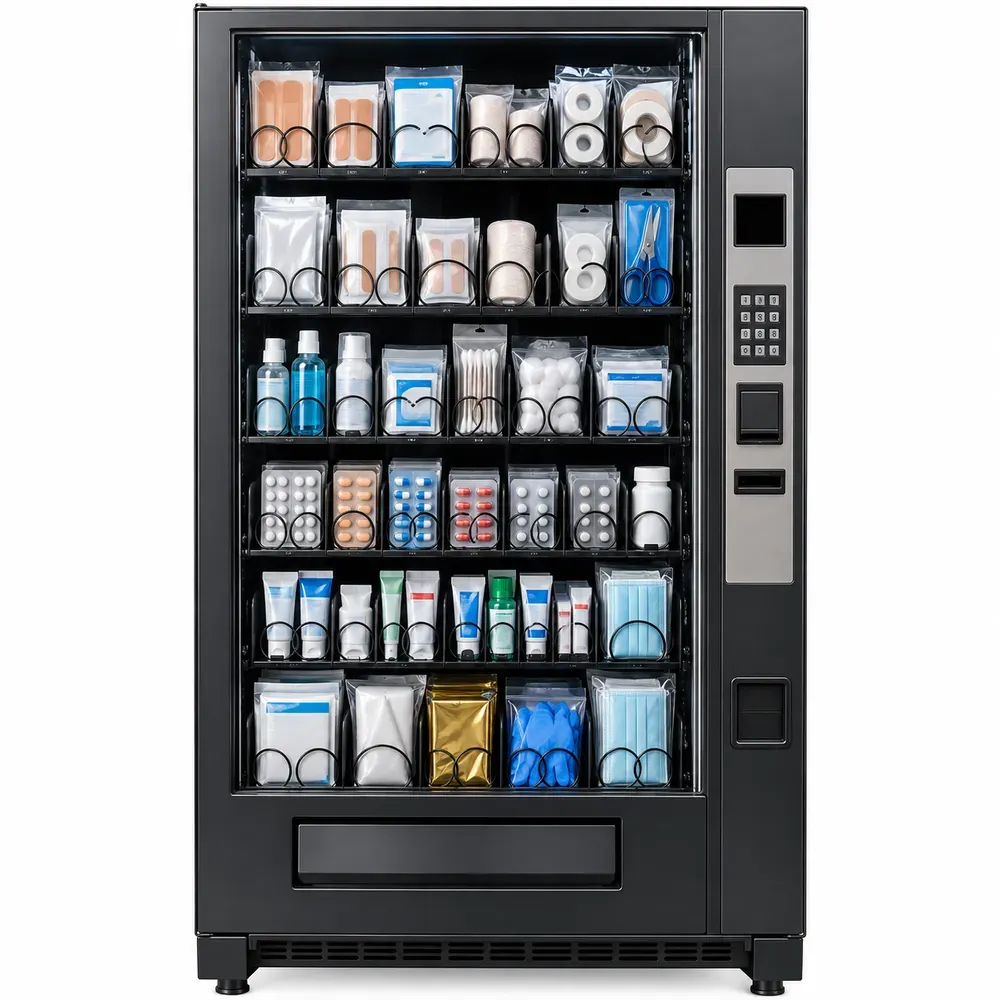
Best for
Places this machine suits
Have a different kind of site? Ask us whether it fits.
Catalogue
50 machine types for every place people gather.
By venue
Machine mixes planned around where they stand.
Healthcare & hygiene
Provides emergency first-aid supplies.
Best for
Have a different kind of site? Ask us whether it fits.
What it can stock
The final range is planned with you for each site.
Permitted first-aid and OTC items only; prescription medicines are never stocked. Venue licensing is confirmed per site.
Key points
Specifications
Sizes, capacity and hardware depend on the model and configuration we agree for your site. We share a spec sheet with your quote; the safety certification that applies to this model (such as BIS, where required) is confirmed in your written quote, and you can ask us for the documents.
Smart features
Options vary by model and are confirmed in your quote.
UPI QR, cards and wallets through the payment reader.
Browse by category and tap to buy, like the machines in our photos.
Stock levels, sales and alerts on a dashboard, so refills are planned.
Shelf layout and product mix planned around who uses the space.
Signage on the machine body to suit your venue or your brand.
Ways to get it
Pick the model that suits your budget and how hands-on you want to be. Terms are shared with your quote.
For businesses and operators
Own the machine outright and run it your way. We help with configuration, installation and training.
Ask about this option: buy a machineFor offices, campuses and sites
Pay a periodic fee instead of buying upfront, with servicing included as agreed in the contract.
Ask about this option: rent or subscribeFor hosts with space and footfall
We place, stock and maintain the machine; you provide the location. Subject to a site survey.
Ask about this option: we operate itFor entrepreneurs and franchisees
Run machines in your city with our hardware, software and support behind you.
Ask about this option: become a partnerHow we deploy it
Footfall, space, power and who will use it.
Machine model, product mix and payment options.
Delivery, set-up and a test run on site.
Refills planned from remote stock data.
Upkeep and support as per your agreement.
Related machines
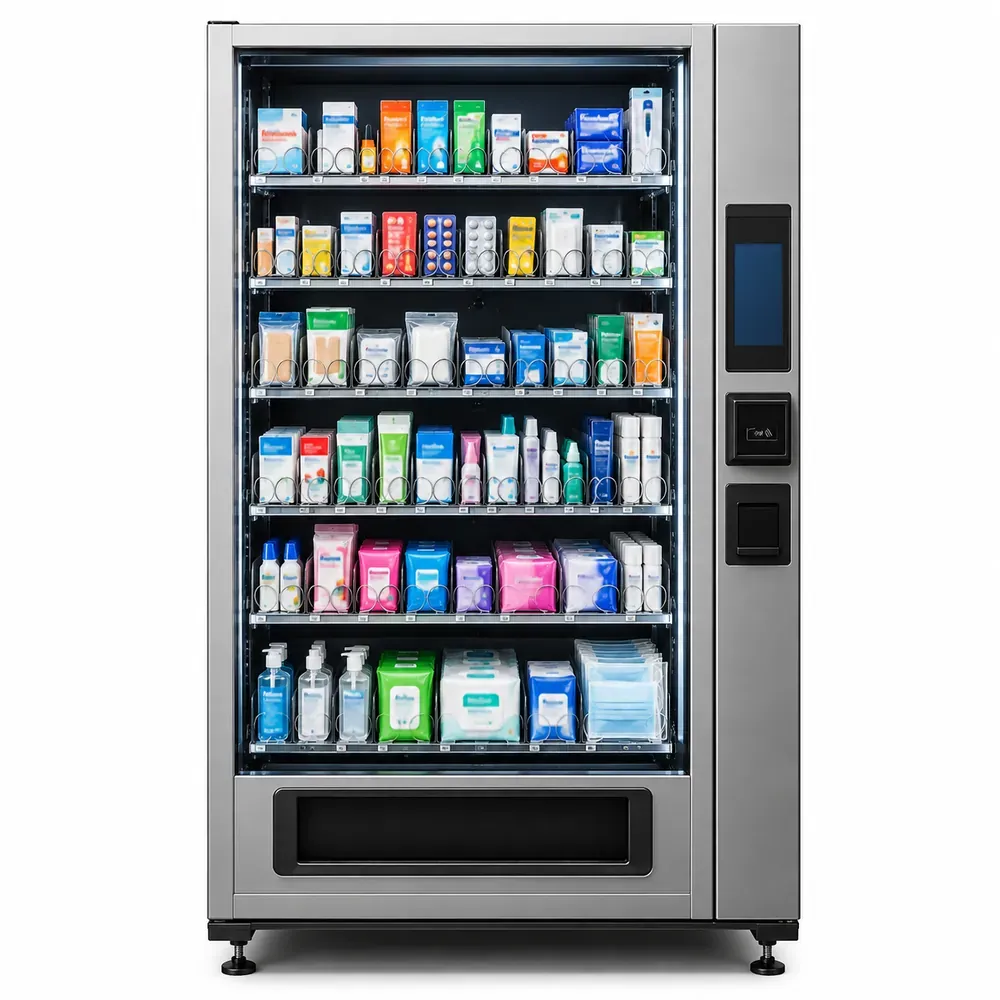
Dispenses permitted OTC and healthcare-related essentials.
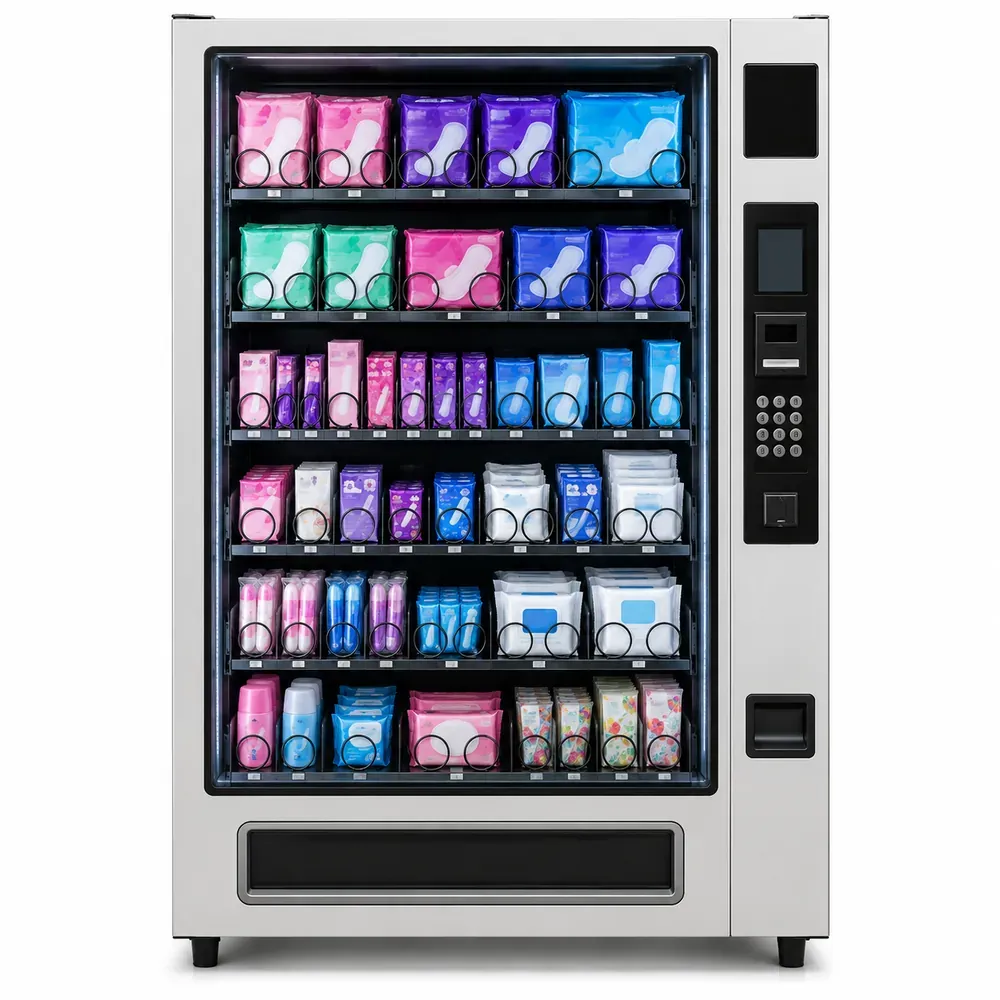
Dispenses sanitary pads and menstrual hygiene products.
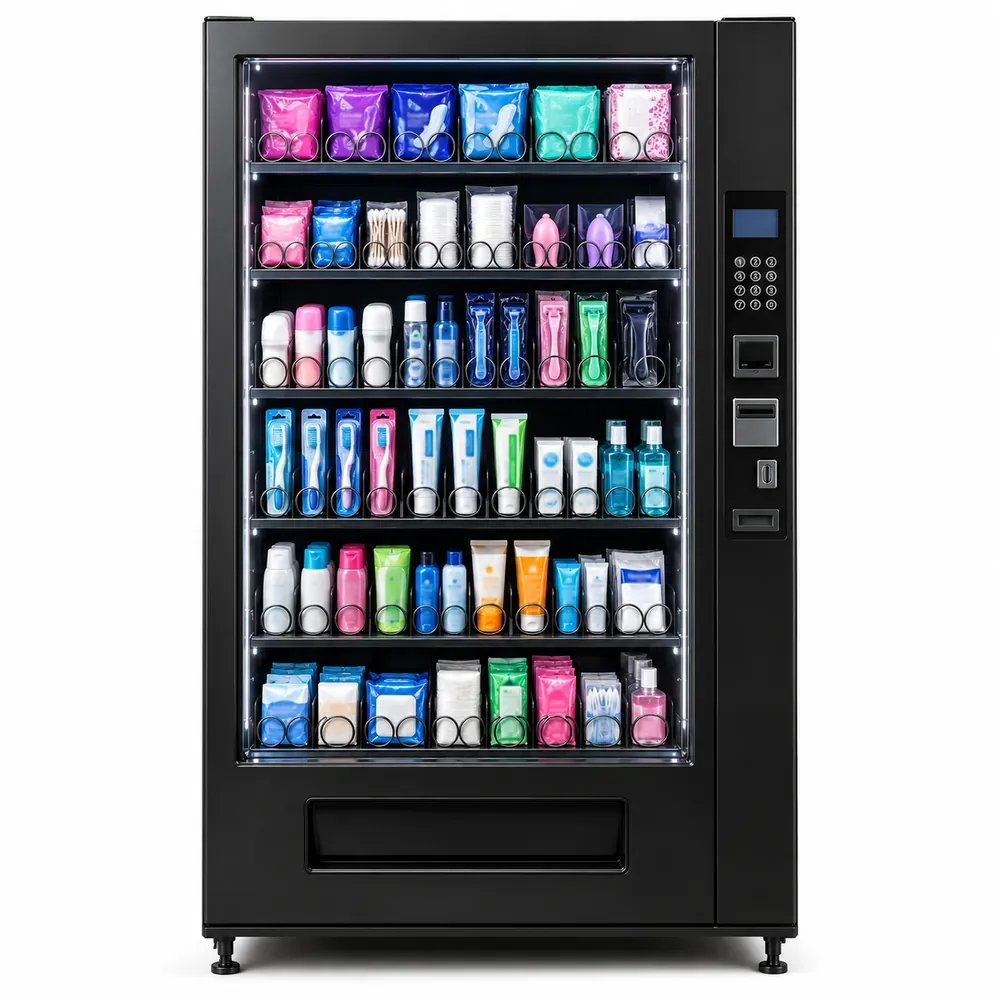
Provides emergency hygiene products.
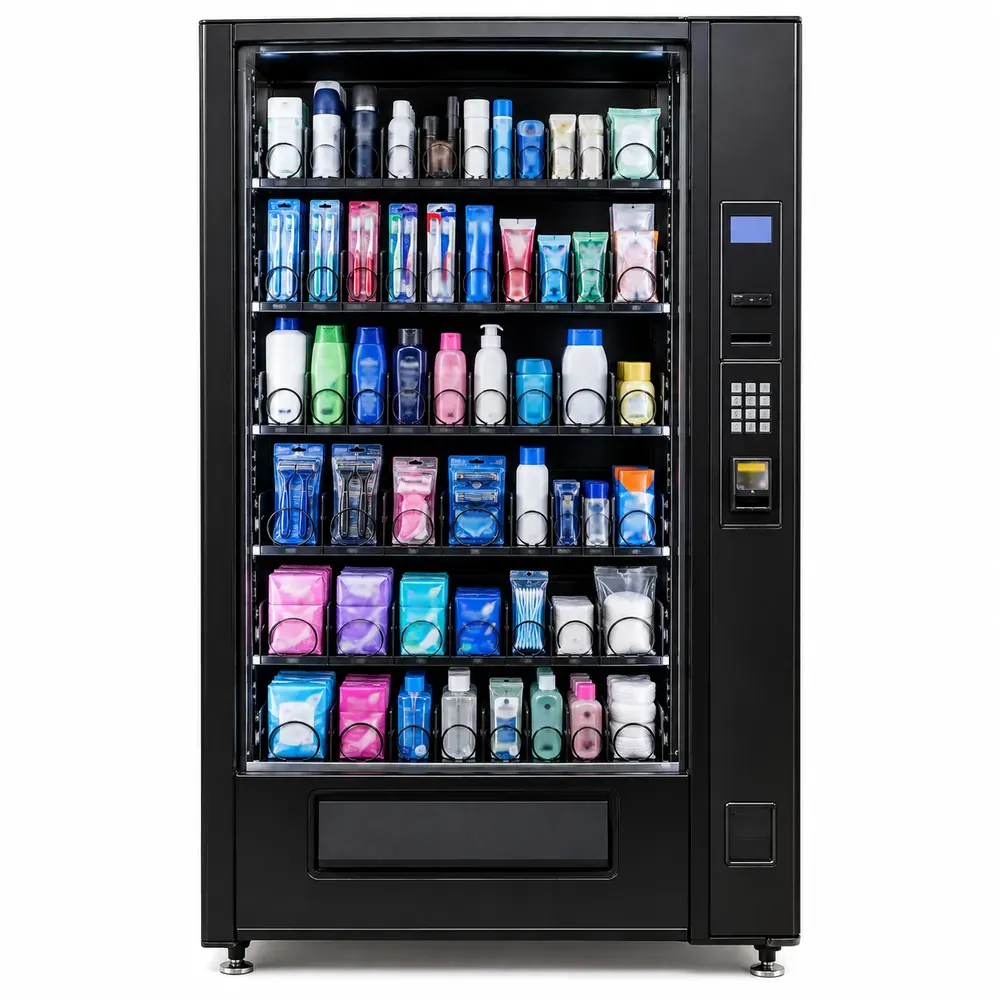
Sells toothbrushes, toothpaste, razors, combs and other toiletries.
Tell us where it will go and roughly how many people pass by. We reply with configuration options and the engagement model that suits you.
A first aid vending machine gives people quick, self-service access to small first-aid items such as plasters, gauze, antiseptic wipes and cold packs. It works at any hour, without anyone needing to find a key, a nurse or a supervisor. For a minor cut or a twisted ankle, that speed matters.
Most Indian workplaces already keep a first-aid box. The trouble is that boxes run empty, the key goes missing, or nobody knows who refills them. A machine adds a clear, always-stocked point for the small things people need most often.
This guide explains what to stock, where the machine fits, how it compares with a first-aid box, and how to run it well. It sits below the machine details above, so it focuses on planning rather than repeating them.
Here is the short version:
Small injuries are common wherever people work, study or exercise. A paper cut at a desk, a scrape on a factory floor or a blister in a gym all need simple care. The World Health Organization fact sheet on injuries explains that injuries are a major cause of harm worldwide, and quick basic care is part of reducing that harm.
In India, factories and many other workplaces already have duties around first aid. Guidance from the Directorate General Factory Advice Service and Labour Institutes covers safety and health at work. A first aid vending machine does not change those duties. It simply helps make the everyday items easier to reach.
Training is just as important as supplies. Organisations such as the Indian Red Cross Society run first-aid awareness and training. A good plan combines trained people, a proper first-aid box and, where it helps, a first aid vending machine for quick top-ups.
The product list decides how useful the machine will be. Start with items that are needed often, are easy to use without help, and do not need a doctor’s advice.
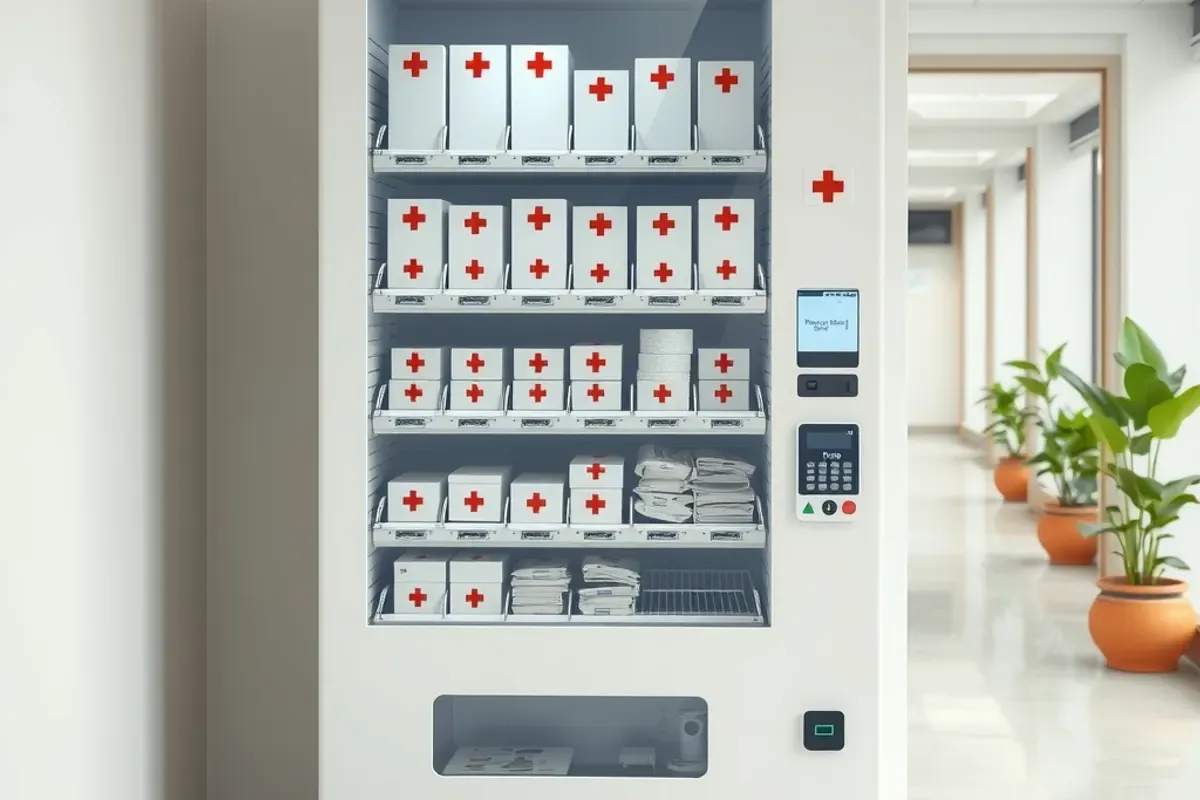
Prescription medicines are never stocked. If any medicine is considered at all, it must be a permitted OTC essential only, checked item by item for your site. Many workplaces choose to keep medicines out of the machine completely and leave them with the medical room or a trained person.
Keep each item in its sealed retail pack with the label and expiry date visible. That makes refills and checks much simpler.
The machine works best where people are active, busy or far from a chemist. The site data for this machine lists factories, offices, schools and gyms. Here is how each one tends to use it.
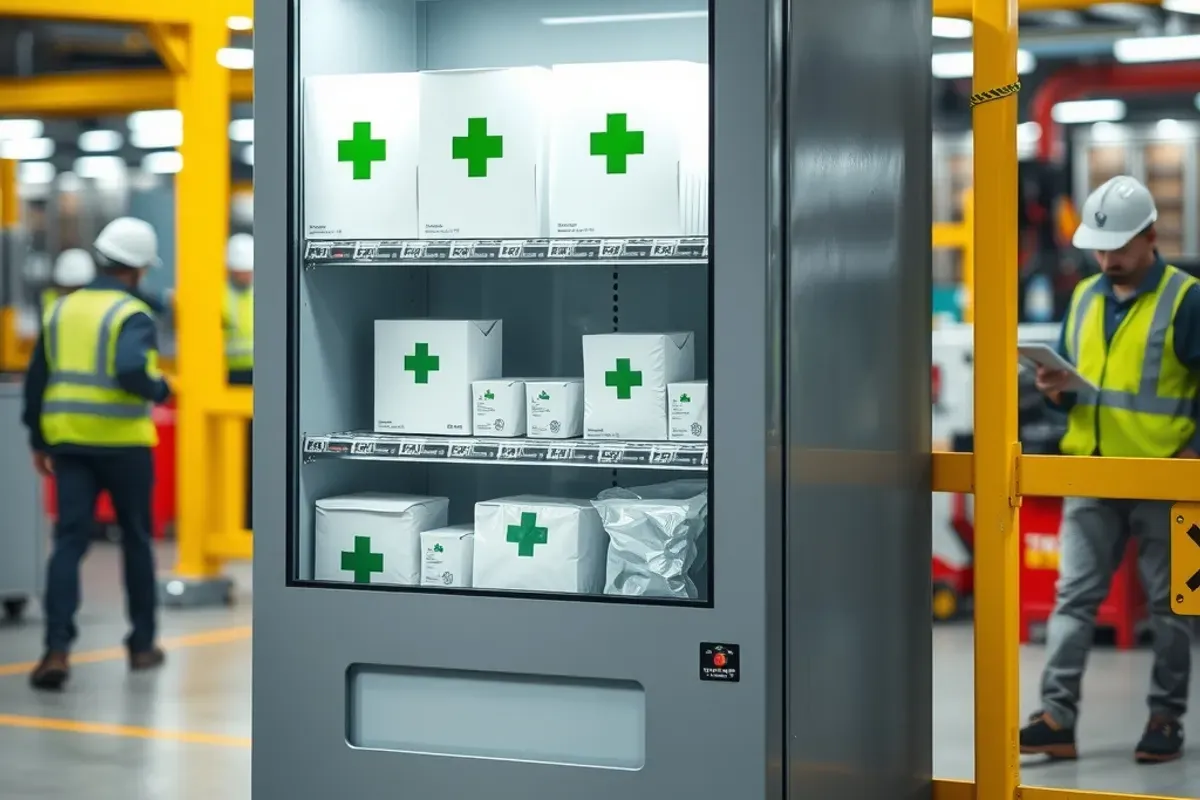
Shop floors see cuts, scrapes and small burns more often than offices do. A first aid vending machine near a shop-floor exit or the security cabin lets workers treat a small cut quickly and get back to work safely. It pairs well with a PPE and safety vending machine, so gloves, earplugs and dressings sit side by side. See our industrial vending solutions for more ideas.
In offices, the common needs are plasters, small burns from the pantry and blisters from new shoes. A first aid vending machine near the pantry or reception covers these without anyone hunting for a box. Our office vending solutions page shows how it can sit alongside snack and drink machines.
On a campus, sports grounds and labs bring regular small injuries. A machine in a staff room, sports block or near the medical room gives students and staff a quick option, while the nurse or first-aider handles anything serious. For more, see our campus vending solutions.
Gym users need blister plasters, tape, elastic supports and cold packs. A first aid vending machine near reception or the changing rooms fits naturally. Our gym vending solutions explain how it can sit next to water and protein machines.
Each option has a place. The table below shows how a first aid vending machine compares with a standard first-aid box and a staffed medical room.
| Feature | First-aid box | First aid vending machine | Staffed medical room |
|---|---|---|---|
| Access hours | When the key holder is around | Any time the site is open | Staff hours only |
| Stock visibility | Hard to see what is missing | Visible through the glass | Managed by staff |
| Item tracking | Usually none | Possible on many models (model dependent) | Manual records |
| Handles serious injuries | No | No | Yes |
| Replaces legal first-aid duties | No | No | Depends on the rules for your site |
| Best for | Basic legal cover | Quick top-ups and minor care | Proper medical care |
The key point: a first aid vending machine is a helper, not a replacement. Keep your first-aid box, your trained first-aiders and your emergency numbers in place.
Not every model suits every site. Use these questions to narrow the choice.
Count how many different items you want to offer. A small office may need eight to ten items. A large factory may want more choices and bigger stock per item. A compact wall-mounted unit can suit a gym, while a full-size cabinet may suit a busy shop floor.
Decide who pays. In a gym or public area, users usually pay by UPI, card or cash, depending on the model. In a workplace, the employer may prefer staff to take items free, using an ID card or PIN. These modes are model dependent, so ask us whether one suits your site.
Factories need a sturdy cabinet that copes with dust and heat. Offices may prefer a slimmer, quieter design. Any BIS or safety certification for the specific machine is confirmed in your written quote.
Some machines can send low-stock alerts or usage reports. These features are model dependent and optional. They help most at larger sites, where nobody walks past the machine every day.
If you are not sure where to start, try our vending machine finder. It walks you through your venue, products and payment needs.
Payment should never slow someone down when they are hurt. That is why many sites think hard about this step.
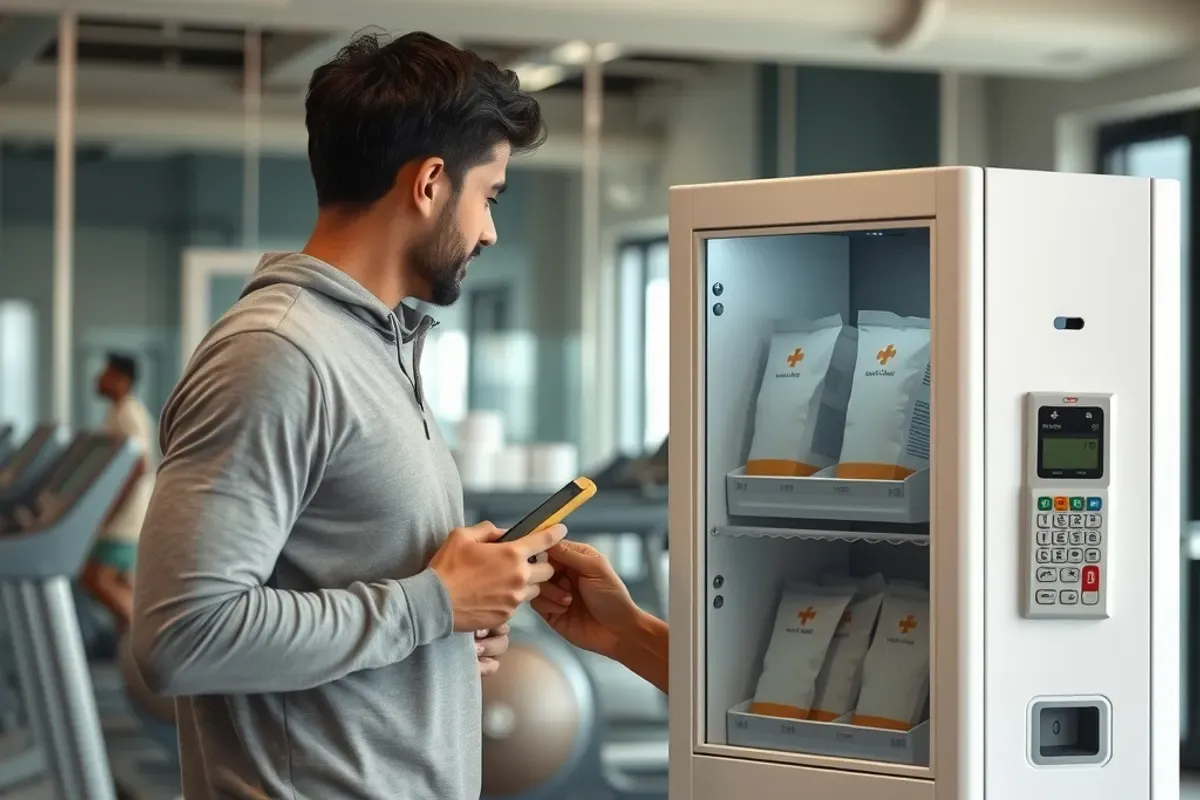
For a workplace first aid vending machine, free-vend with a usage log is often the most practical choice. People get what they need straight away, and the employer can still see which items are used most.
A machine is only useful if it is stocked, clean and trusted. A few simple habits keep it that way.
Set a fixed day each month to check stock and expiry dates. Move older items to the front. Remove anything close to expiry. Keep a simple log of what was added and removed. If your model offers remote stock reports, use them, but keep the log as a backup.
Place a sign above the machine that explains what it is for and what to do in a real emergency. Add the site’s emergency contact, the location of the first-aid box and the name of the trained first-aider on duty. A first aid vending machine is for minor needs, and the sign should say so.
Wipe the glass, buttons and pickup tray every week. Health items should look clean and cared for. A dusty machine makes people doubt what is inside.
If the machine runs out of plasters every week in one area, that may point to a safety issue worth checking. Usage data can quietly support your wider safety work.
Ask staff, students or gym members what they could not find when they needed it. A small suggestion box or a short online form next to the first aid vending machine works well. People often ask for simple things, such as larger plasters, blister pads or more gloves. Acting on this feedback shows that the machine is there for them, and it helps you spend money only on items that are really used. Review the suggestions at each monthly check and update the list in small steps.
Before you choose any machine, take stock of your current workplace first aid supplies. Walk the site with your safety lead, look inside each first-aid box and note what is missing, what has expired and what people ask for most. This gives you a real starting list instead of a guess.
Next, think about who uses each area. A packing line, a server room and a reception desk have very different needs. A first aid vending machine near the shop floor may need more gauze and burn gel, while one near the office pantry may need more plasters and cold packs.
Some buyers search for a “first aid kit vending” setup, where the machine sells small ready-made kits. Others want a medical supplies vending machine with single items. Both approaches work. Single items reduce waste, while small kits suit travel, field staff and sports teams. A simple bandage vending machine with only plasters and tape can also work for a small gym or studio.
Write your list down and share it with us. It is the fastest way to get a useful quote.
A clear plan makes the first few weeks smooth. Here is a simple order that works for most sites.
After the first review, most sites settle into a steady rhythm. The first aid vending machine then becomes a normal, trusted part of the building, much like a water cooler or a notice board.
Many first aid vending machine projects run into the same small problems. Avoid these and the machine will serve people well.
A first aid vending machine often works best as part of a small group of machines. Here are some that sit well beside it:
You can also browse every type on our vending machine types page to see what else fits your venue.
How you get the machine depends on your site and budget. Some organisations prefer to buy outright, while others want someone else to manage the stock and refills. These engagement models are still being finalised, so please ask us whether a particular option is available for your location.
Tell us your headcount, venue type and the items you have in mind. We will suggest a sensible first aid vending machine setup and explain the choices in plain language.
Ready to plan your first aid vending machine? Share your venue, the items you want to stock and how you prefer people to pay. Request a free first aid vending machine quote and we will help you shape a setup that suits your site.
No. Rules such as the Factories Act expect first-aid boxes and trained first-aiders, and a machine does not take their place. Think of the machine as a top-up point. It lets people pick up small items like plasters or a cold pack quickly, while the required box, the trained staff and the emergency plan stay exactly as they are.
Only permitted OTC essentials, and only after each item is checked for your site. Prescription medicines are never stocked. Many sites keep the machine to non-medicine items such as dressings, antiseptic wipes and cold packs. Any licence the venue may need is confirmed per site before stocking starts.
Some machines can run in a free-vend or ID-based mode, where the employer pays for the stock and staff take what they need. This is model dependent. Share how you want it to work and ask us whether a suitable model and engagement option is available for your site.
A monthly check suits most sites, with a quick look after any busy period. Antiseptic liquids, burn gels and some sprays carry expiry dates, so the oldest stock should sit at the front. Some machines can report stock levels remotely, but this is model dependent, so a simple written log is a good backup.
Put it where people already walk and where help is close by, such as near a security desk, a shop-floor exit, a gym reception or a staff room. It should be well lit, easy to reach and clearly signed. Avoid hidden corners, very hot spots and places that get wet.