
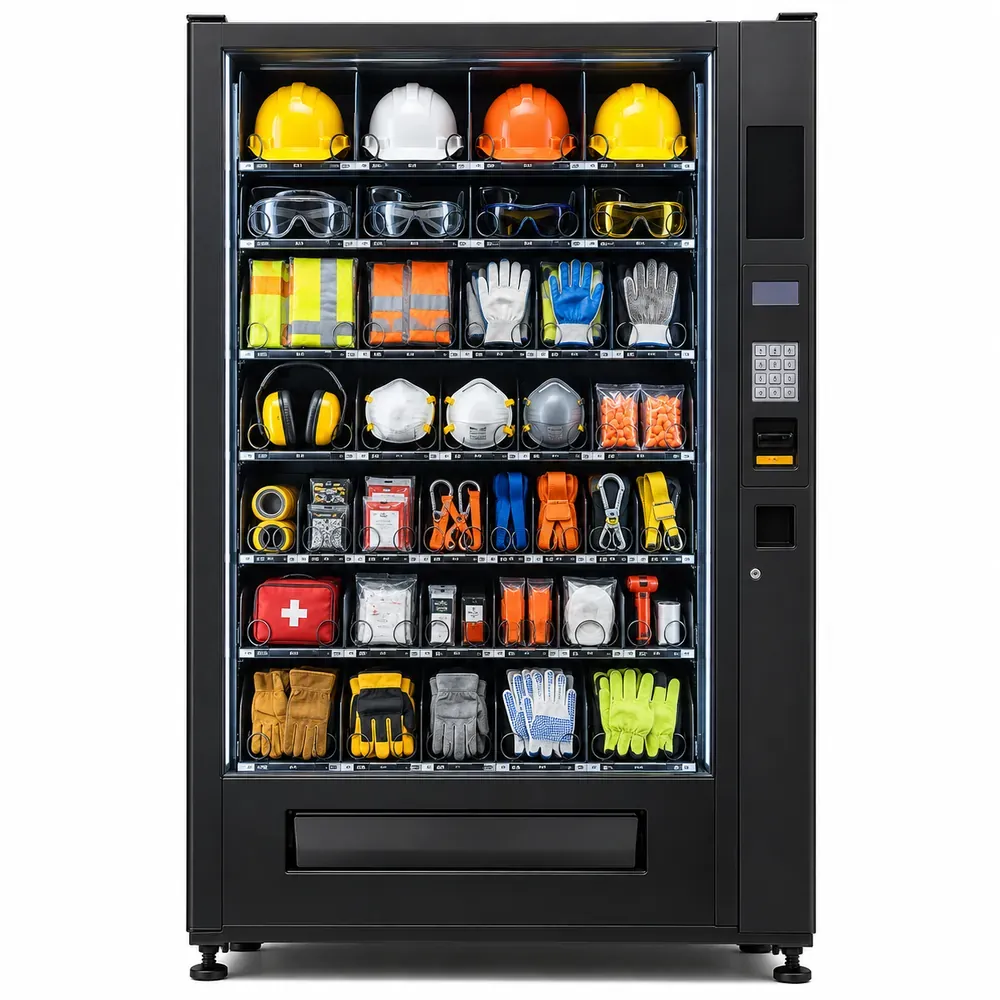
Best for
Places this machine suits
Have a different kind of site? Ask us whether it fits.
Catalogue
50 machine types for every place people gather.
By venue
Machine mixes planned around where they stand.
Workplace & safety
Automated distribution of PPE and consumables at construction sites.
Best for
Have a different kind of site? Ask us whether it fits.
What it can stock
The final range is planned with you for each site.
Key points
Specifications
Sizes, capacity and hardware depend on the model and configuration we agree for your site. We share a spec sheet with your quote; the safety certification that applies to this model (such as BIS, where required) is confirmed in your written quote, and you can ask us for the documents.
Smart features
Options vary by model and are confirmed in your quote.
UPI QR, cards and wallets through the payment reader.
Browse by category and tap to buy, like the machines in our photos.
Stock levels, sales and alerts on a dashboard, so refills are planned.
Shelf layout and product mix planned around who uses the space.
Signage on the machine body to suit your venue or your brand.
Ways to get it
Pick the model that suits your budget and how hands-on you want to be. Terms are shared with your quote.
For businesses and operators
Own the machine outright and run it your way. We help with configuration, installation and training.
Ask about this option: buy a machineFor offices, campuses and sites
Pay a periodic fee instead of buying upfront, with servicing included as agreed in the contract.
Ask about this option: rent or subscribeFor hosts with space and footfall
We place, stock and maintain the machine; you provide the location. Subject to a site survey.
Ask about this option: we operate itFor entrepreneurs and franchisees
Run machines in your city with our hardware, software and support behind you.
Ask about this option: become a partnerHow we deploy it
Footfall, space, power and who will use it.
Machine model, product mix and payment options.
Delivery, set-up and a test run on site.
Refills planned from remote stock data.
Upkeep and support as per your agreement.
Related machines
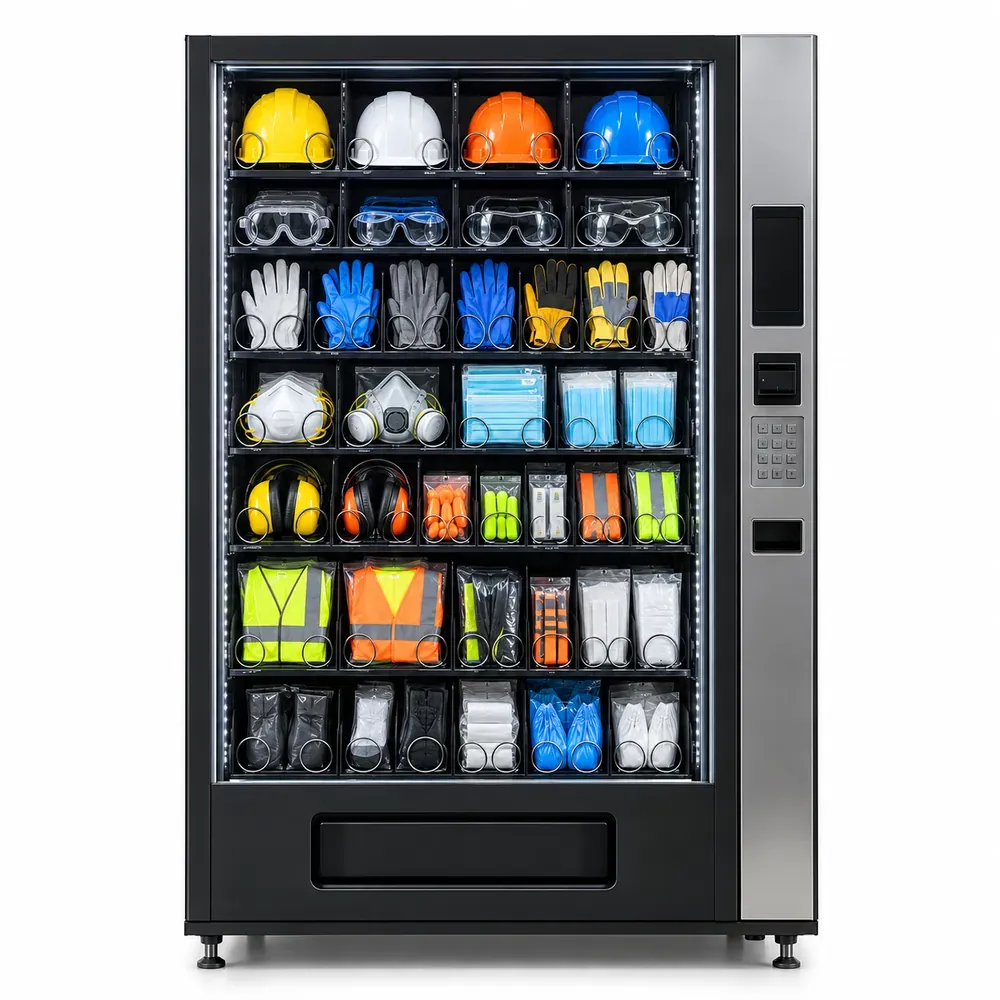
Provides masks, gloves, helmets and other workplace safety supplies.
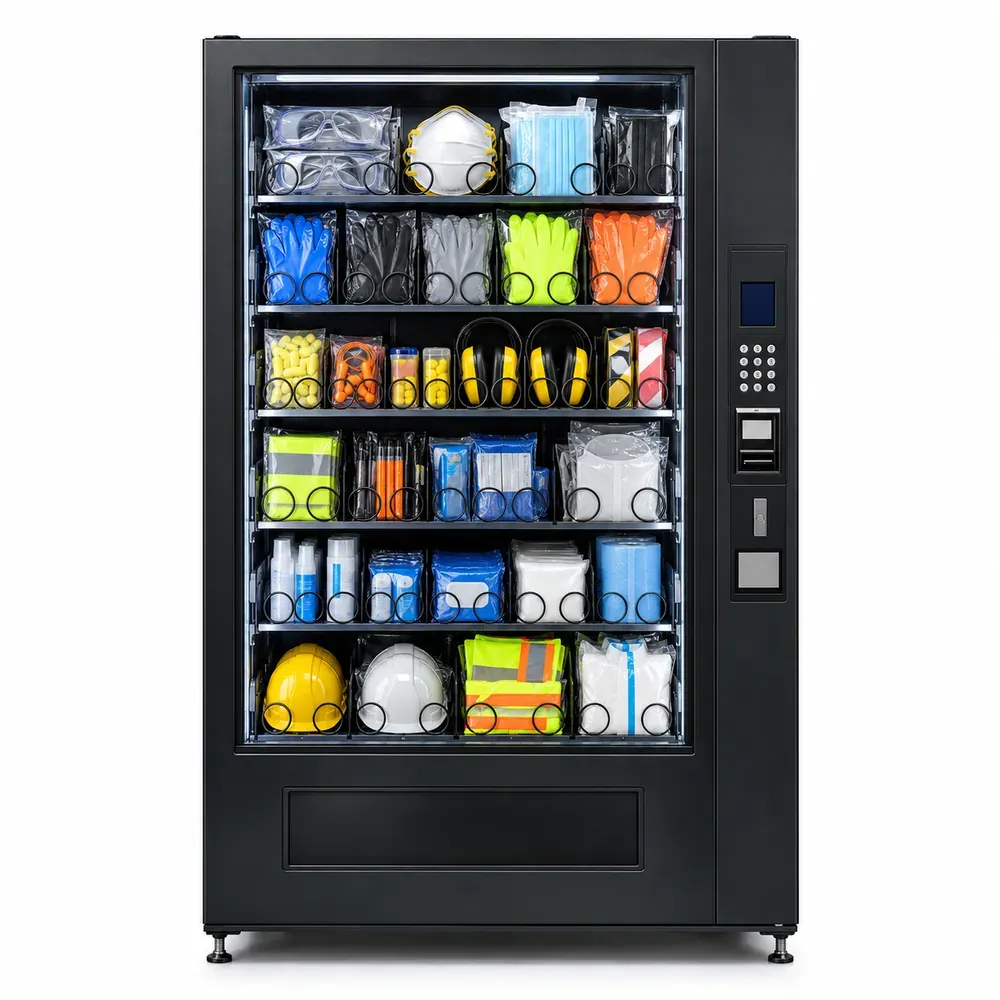
Controlled dispensing of safety consumables to employees.
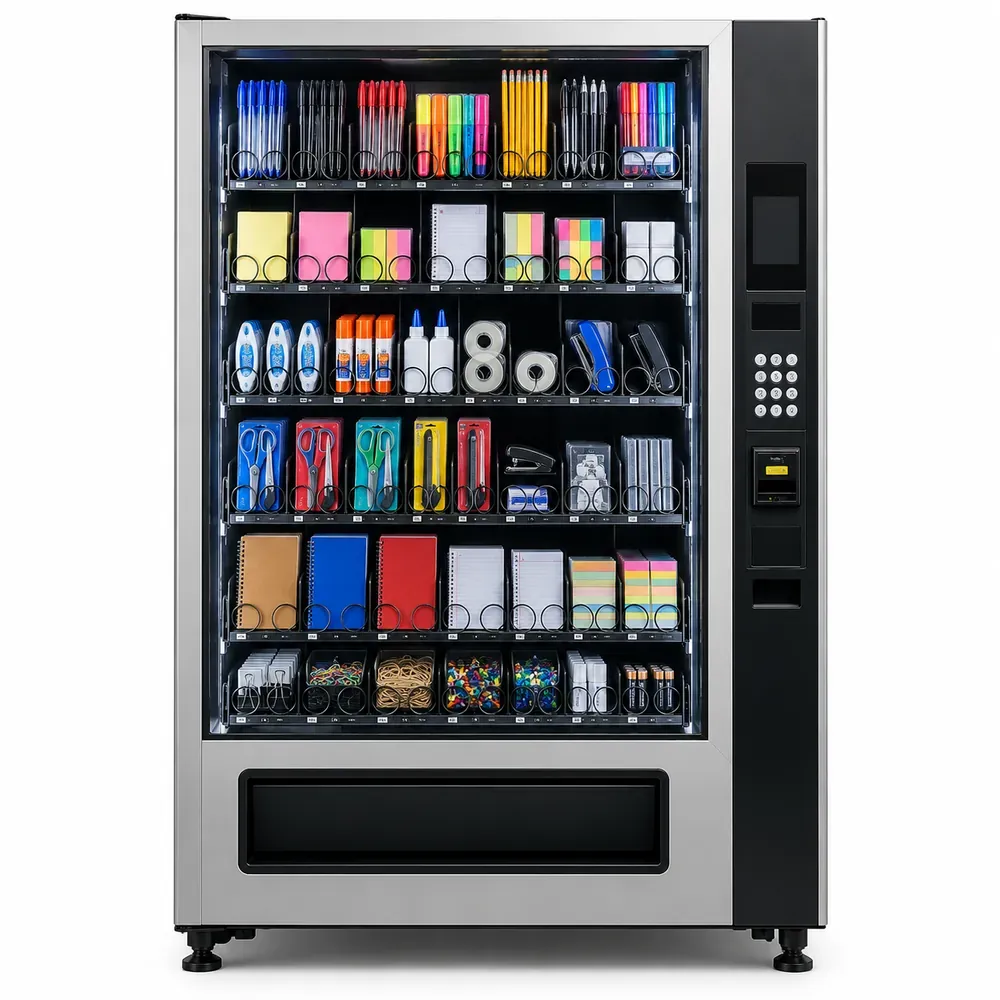
Sells pens, pencils, notebooks, markers and other stationery.
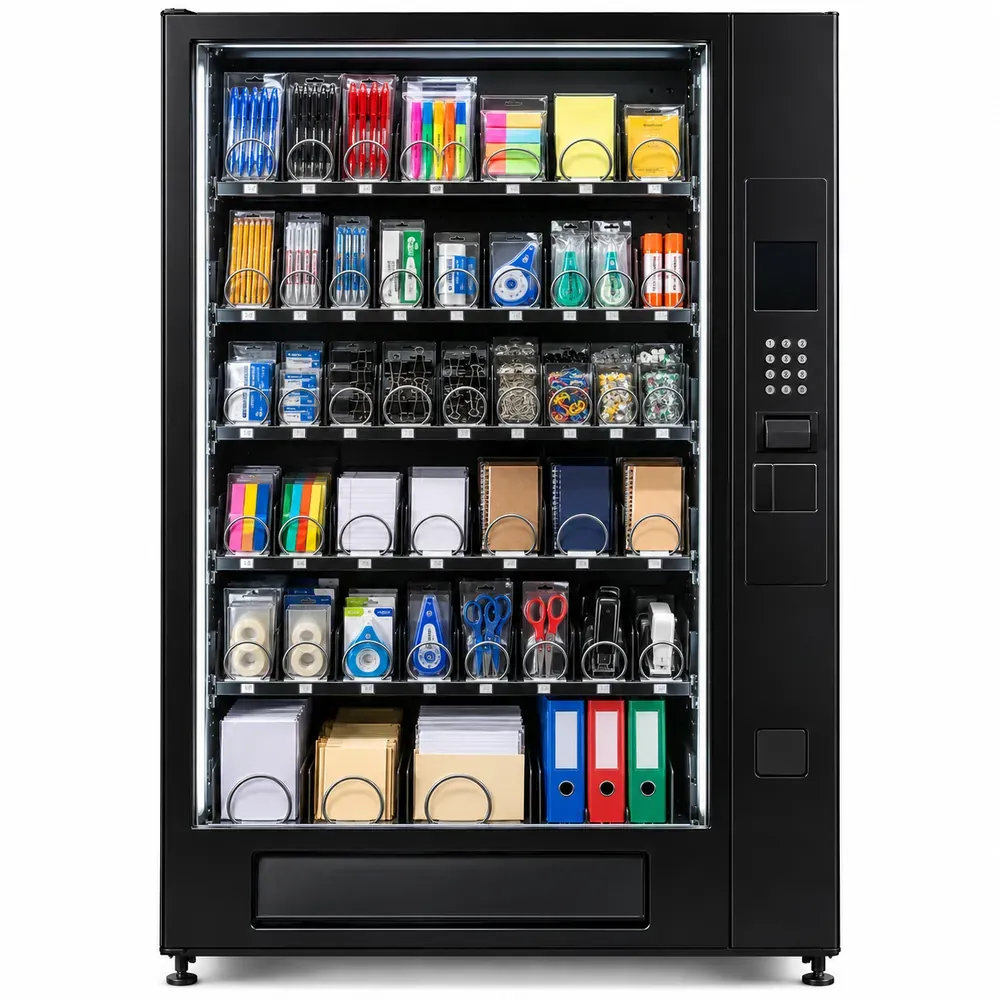
Provides frequently required workplace consumables.
Tell us where it will go and roughly how many people pass by. We reply with configuration options and the engagement model that suits you.
A construction safety vending machine is a self-service unit that stores PPE such as helmets, gloves, masks and safety gear at a building site and issues it on demand. Instead of a worker waiting at a store-room window, they tap an ID card, enter a PIN or scan a code, and the machine releases the item. Each issue can be recorded against that person, shift or contractor.
On Indian sites a construction safety vending machine solves a simple problem. Workers start early, crews change often, and the storekeeper is not always at the counter. A machine near the gate or the site office keeps basic safety items within reach at every shift change.
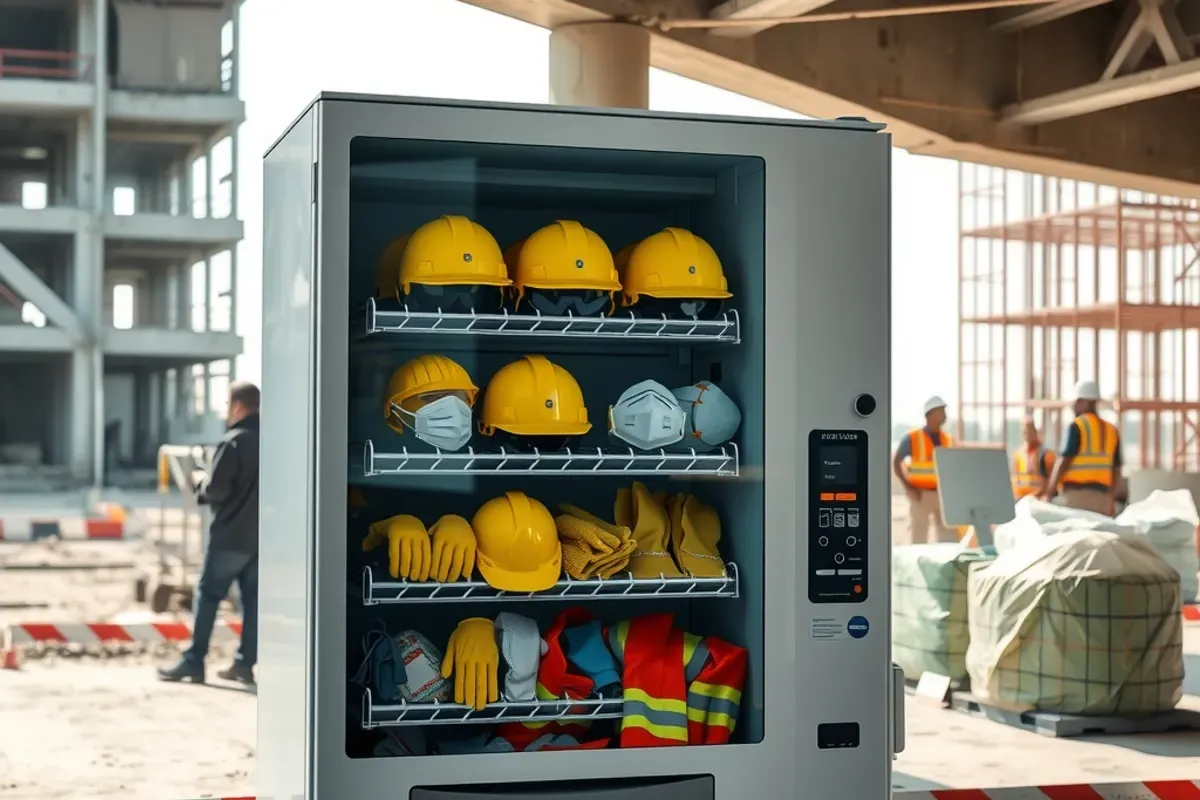
Our PPE and safety vending machine is built for factories and plants, where the same workers return every day to a fixed line. A construction site is different:
These differences shape which construction safety vending machine model, cabinet and issue method suit your project.
Construction is one of the most labour-heavy sectors in India. A single mid-size project can have many contractors, each with its own crew. Keeping track of who received what gear, and when, is hard with paper registers alone. This is where a PPE vending machine for construction sites can help.
India’s Building and Other Construction Workers Act, 1996 sets out safety, health and welfare measures for construction workers. Employers and contractors are expected to provide suitable protective equipment. A construction safety vending machine does not replace those duties, but it can make day-to-day issue faster and easier to show on paper.
Here is what site managers usually want to fix:
A construction safety vending machine targets each of these with self-service, limits and records.
When a worker cannot get gloves or a mask quickly, two things happen. Either they wait and lose working time, or they start work without the gear. Neither outcome is good for the project.
Missing PPE also makes audits harder. Safety officers need to show that gear was issued, not just bought. A recorded issue per ID gives a clearer trail than a handwritten register filled in at the end of the day.
The page above lists the core items: helmets, gloves, masks and other safety gear. In practice, a site stocks what its workers use and replace most often. Fast-moving consumables usually sit at the front, with larger items lower down.
A typical mix might include:
Bulky items like full harnesses and safety shoes may need a larger locker-style unit or a separate store. Many sites keep those in the store room and put the fast-moving items in the machine.
What workers need changes as the building grows. During excavation and foundation work, dust masks and gloves move fastest. During shuttering and slab work, helmets and cut-resistant gloves matter more. During finishing, painters and tilers often need masks, goggles and lighter gloves.
Review the stock mix in your construction safety vending machine at every major stage. A construction safety vending machine is only useful if it holds what the current crew actually needs today.
Indian Standards cover many PPE items, including industrial safety helmets and several types of gloves and masks. The Bureau of Indian Standards publishes these standards and runs the certification marks. Always check the mark and the standard on the product itself before you stock it.
Any BIS or safety certification for products we help source is confirmed in your written quote. A construction safety vending machine itself stores and issues gear; it does not make an item safe or unsafe.
Most sites use controlled issue rather than cash sales. The aim is to make sure the right person gets the right item at the right time. Exact features are model dependent, but the common flow looks like this:
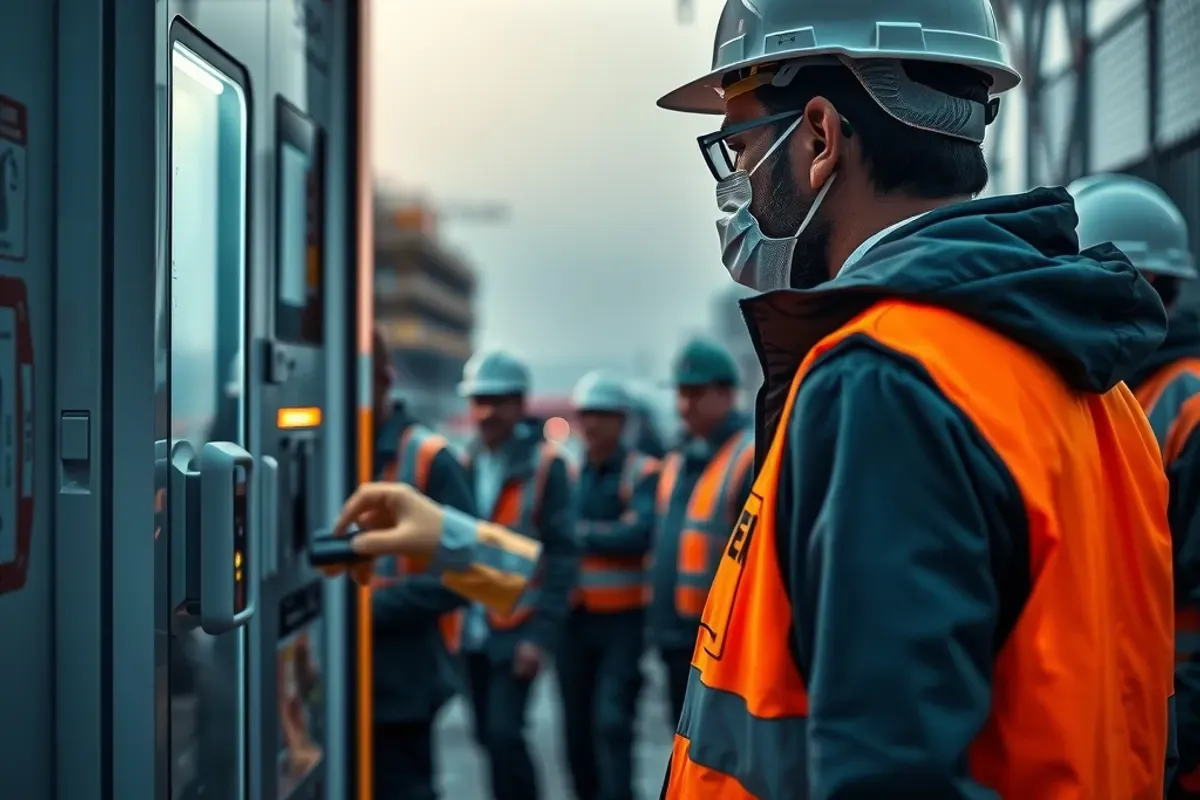
Each site picks the method that suits its crew and budget. This table compares the common options in plain terms:
| ID method | Best for | Watch out for |
|---|---|---|
| RFID or ID card | Large sites with existing worker cards | Lost or shared cards |
| PIN code | Small crews and short projects | PINs being shared between workers |
| QR code on phone or slip | Mixed crews, visitors and short-term labour | Workers without phones need printed slips |
| Face recognition | Strict one-person-one-issue control | Dust, helmets and lighting can affect accuracy |
| Supervisor approval | Costly items like harnesses | Slower, needs a supervisor nearby |
Smart features such as face check, live stock alerts and remote reports are optional and model dependent. Confirm each one in your quote before you plan around it.
Some sites want a mix of free issue and paid items. For example, the company issues helmets and gloves free, while workers can buy extra towels or a rain poncho. Machines that accept UPI can handle this, depending on the model. Decide clearly which items are free and which are paid, and put that on a simple notice beside the machine.
Placement decides whether a construction safety vending machine gets used. A machine hidden behind the store room will be ignored. One at the main gate, where every worker passes at the start of a shift, will be used every day.
Good spots usually share a few features:
Construction sites are hard on equipment. Cement dust gets into gaps, rain blows in from the side and summer heat can be intense. Ask about cabinet protection, a weather hood and dust filters when you choose a construction safety vending machine.
Keep a simple routine: wipe the glass and screen daily, check the dispensing area for jams and keep debris away from the base. A few minutes each day saves larger repairs later.
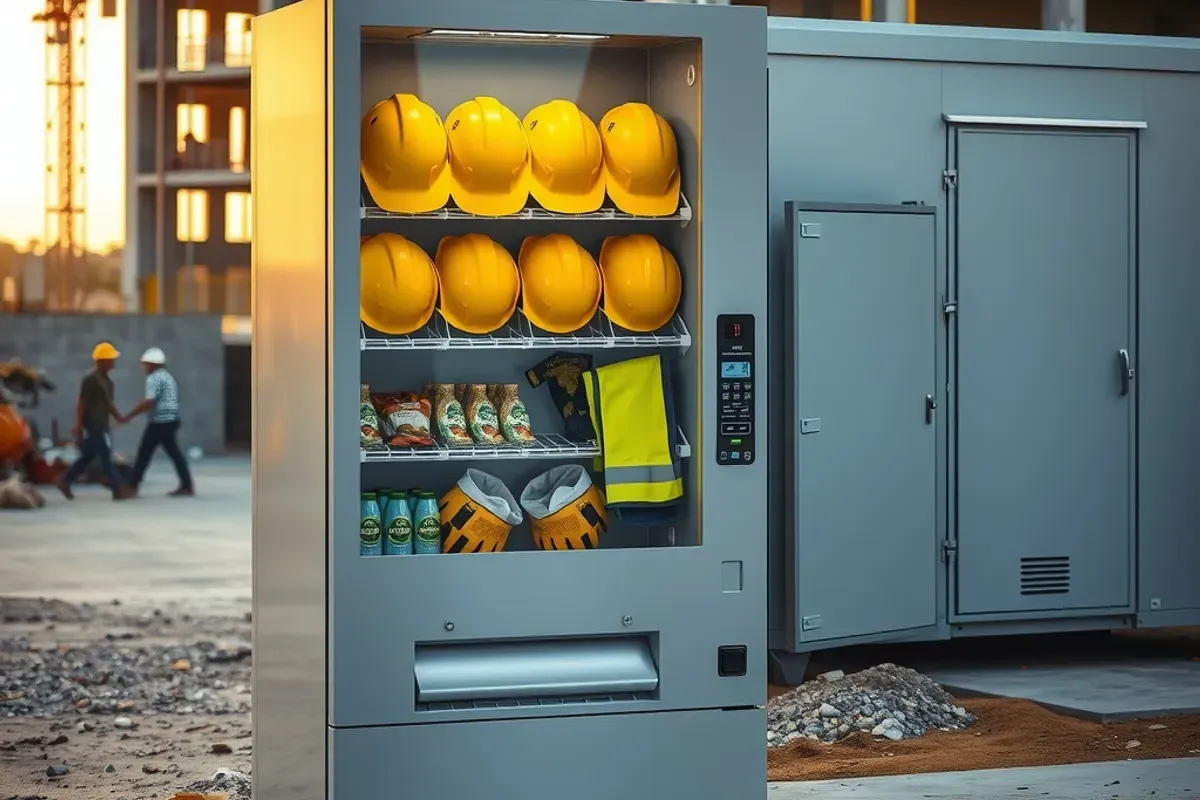
Many sites ask whether a machine is really better than a storekeeper with a register. The honest answer is that it depends on the size of the site and how well the store room works today. A machine helps most where issue is frequent, crews are large and records are weak.
Here is how the two approaches usually compare:
Many sites use both. The construction safety vending machine handles fast-moving items, and the store room handles bulky or unusual gear.
Before you ask for a construction safety vending machine quote, gather a few basic facts. They help us suggest a sensible model and stock plan instead of guessing.
You can also try our vending machine finder to shortlist machines for your venue and needs in a few steps.
A construction safety vending machine often works well alongside other units. A first-aid vending machine can keep bandages, antiseptic and other basic first-aid items near the work area. A PPE consumables vending machine can take over high-volume items like masks and earplugs on very large sites. A water vending machine helps crews stay hydrated in summer.
See our vending solutions for factories and industrial sites for more ideas on combining machines for shift-based work.
A construction safety vending machine is only as good as its refill routine. Empty slots quickly teach workers to stop using it. Agree early on who refills it, how often and from which stock.
Simple habits that help:
Some sites run the construction safety vending machine themselves, with the store team handling refills. Others prefer a partner to manage the machine, stock and service. Engagement models vary, so ask us whether a managed option is available for your site and region.
We do not publish fixed prices, because the right construction safety vending machine depends on size, ID method, cabinet protection and how long your project runs. Your written quote sets out the model, features and terms for your site. If you are comparing options, ask for the same details from every supplier so the comparison is fair.
A few problems come up again and again on site. Avoid them and the machine is far more likely to be used well.
Spend ten minutes at a toolbox talk showing crews how the machine works. Explain the limits and who to call if an item does not drop.
Safety on site is mostly about habits. When gear is easy to get, workers are more likely to wear it. When gear is hard to get, shortcuts creep in.
A machine also sends a quiet message. It shows that the company takes PPE seriously enough to make it available at every shift. Combined with toolbox talks, supervision and good site rules, it becomes one more small support for safe work.
Reports from a construction safety vending machine can help safety officers too. Unusual patterns, such as one crew using far more gloves, can lead to a useful conversation about tools, materials or methods.
It is worth being clear about limits. A construction safety vending machine cannot check that a worker wears the helmet correctly, or that a harness is clipped on at height. It cannot replace supervision, training or a site safety plan. Treat it as a tool for faster, better-recorded issue, not as a safety system on its own.
For safety helmet vending in particular, remember that a helmet hit hard should be replaced even if it looks fine. A machine with per-person limits should allow supervisors to approve an early replacement when needed.
Tell us about your project, crew size, shifts and the safety items you issue most. We will suggest a construction safety vending machine setup, stock plan and ID method to suit your site, and confirm model features and any certifications in a written quote.
Request your free construction safety vending machine quote and share your site details with us.
It needs steady power to run its screen, payment or ID reader and motors. On sites that depend on a generator or temporary connection, plan a protected socket and, where possible, a small backup supply. Share your site power setup with us during the survey and we will tell you what the chosen model needs.
In most construction setups the employer or contractor issues PPE, so the machine is usually set to free issue against a worker ID or PIN rather than cash. Some sites also sell extra personal items. How payment and issue work is decided per site, and you should check your own legal duties before charging workers for anything.
Most controlled-issue machines can set limits, such as one pair of gloves per shift or one helmet per month for each ID. Whether a given model supports per-person limits is model dependent, so confirm it in your quote. Limits work best when they match your actual replacement rules for each item.
Yes, a freestanding machine can usually be shifted between sites on a truck with careful packing. Plan a level base, power point and cover at the new site before moving it. Ask us whether relocation support is available under the engagement model you choose, as this varies.
The machine only stores and issues what you stock in it. Choose PPE that meets the relevant Indian Standards for your work, and check the marks on the product itself. Any BIS or safety certification for items we help source is confirmed in your written quote, item by item.
It can be, if gear is often lost, borrowed or issued late. For a very small crew with one storekeeper, a locked cabinet and a register may be enough. Share your crew size, shift pattern and current PPE problems with us and we will suggest whether a machine is worth it.