
Best for
Places this machine suits
Have a different kind of site? Ask us whether it fits.
Catalogue
50 machine types for every place people gather.
By venue
Machine mixes planned around where they stand.
Workplace & safety
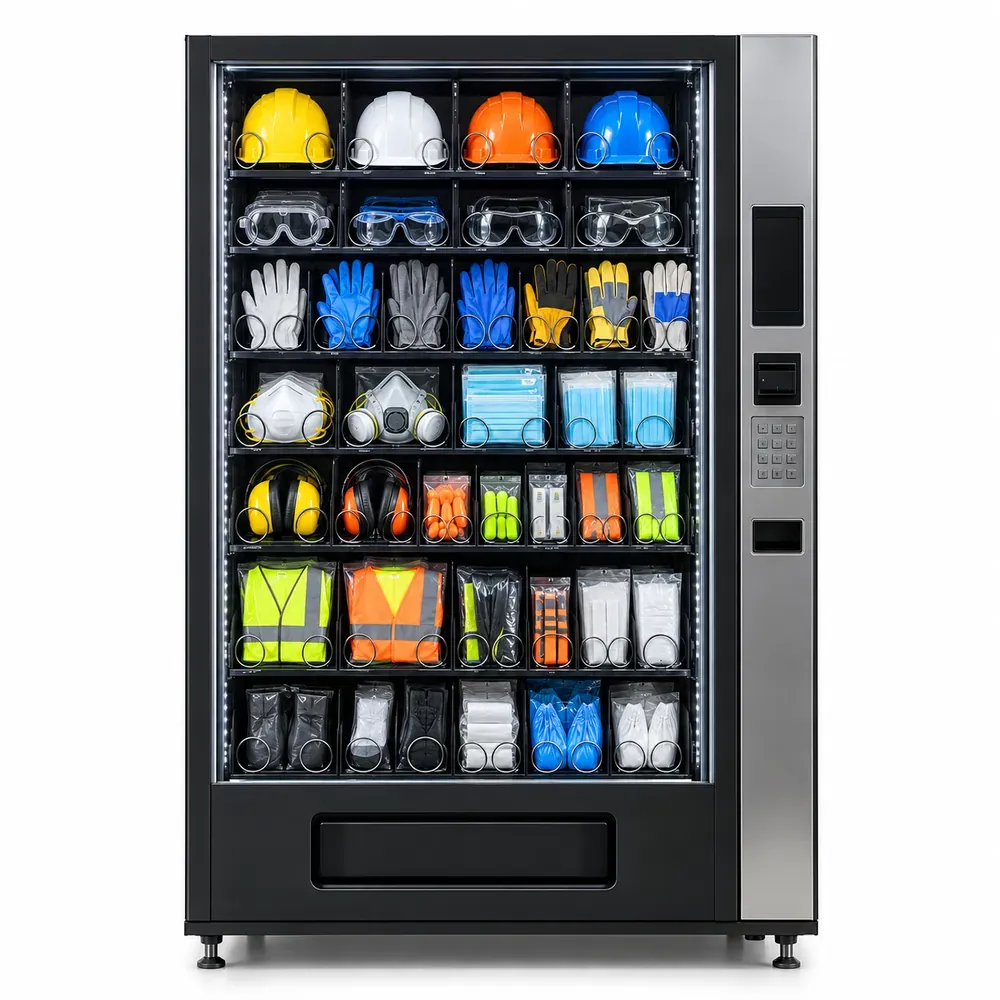
Provides masks, gloves, helmets and other workplace safety supplies.
Best for
Have a different kind of site? Ask us whether it fits.
What it can stock
The final range is planned with you for each site.
Key points
Specifications
Sizes, capacity and hardware depend on the model and configuration we agree for your site. We share a spec sheet with your quote; the safety certification that applies to this model (such as BIS, where required) is confirmed in your written quote, and you can ask us for the documents.
Smart features
Options vary by model and are confirmed in your quote.
UPI QR, cards and wallets through the payment reader.
Browse by category and tap to buy, like the machines in our photos.
Stock levels, sales and alerts on a dashboard, so refills are planned.
Shelf layout and product mix planned around who uses the space.
Signage on the machine body to suit your venue or your brand.
Ways to get it
Pick the model that suits your budget and how hands-on you want to be. Terms are shared with your quote.
For businesses and operators
Own the machine outright and run it your way. We help with configuration, installation and training.
Ask about this option: buy a machineFor offices, campuses and sites
Pay a periodic fee instead of buying upfront, with servicing included as agreed in the contract.
Ask about this option: rent or subscribeFor hosts with space and footfall
We place, stock and maintain the machine; you provide the location. Subject to a site survey.
Ask about this option: we operate itFor entrepreneurs and franchisees
Run machines in your city with our hardware, software and support behind you.
Ask about this option: become a partnerHow we deploy it
Footfall, space, power and who will use it.
Machine model, product mix and payment options.
Delivery, set-up and a test run on site.
Refills planned from remote stock data.
Upkeep and support as per your agreement.
Related machines
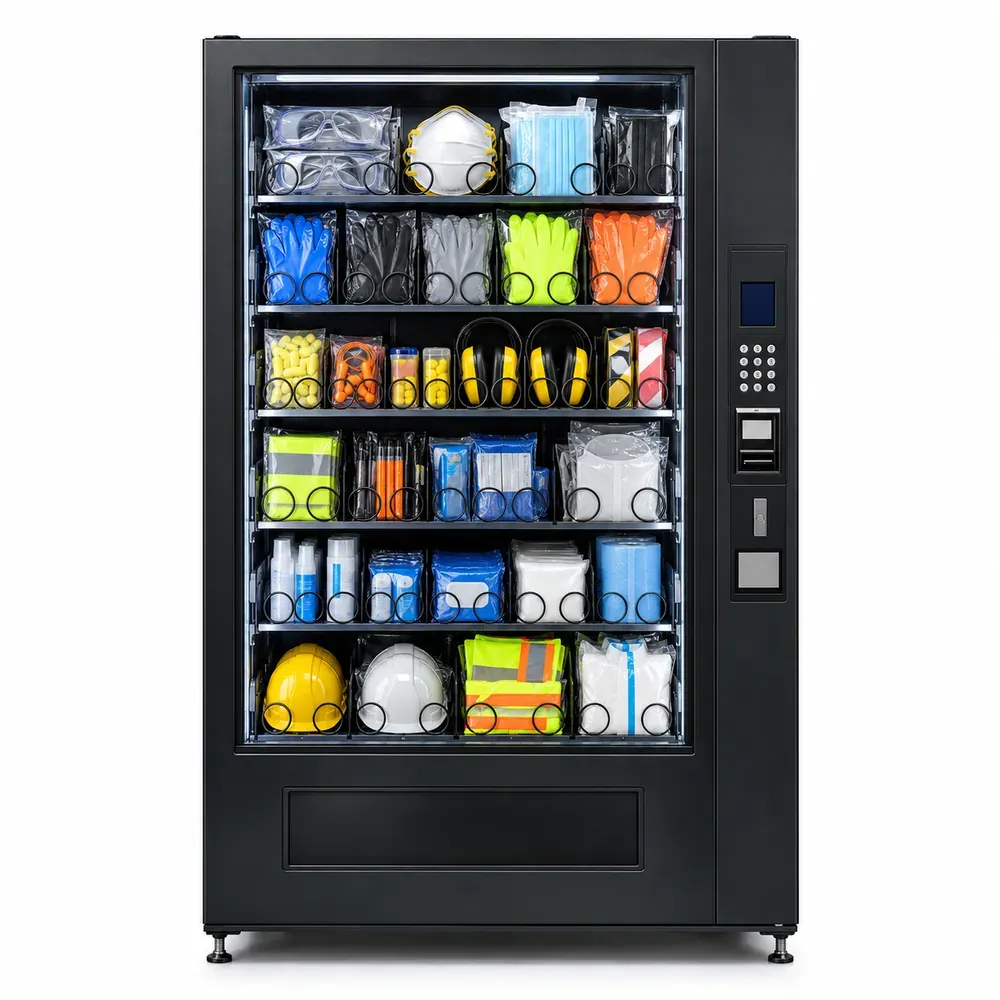
Controlled dispensing of safety consumables to employees.
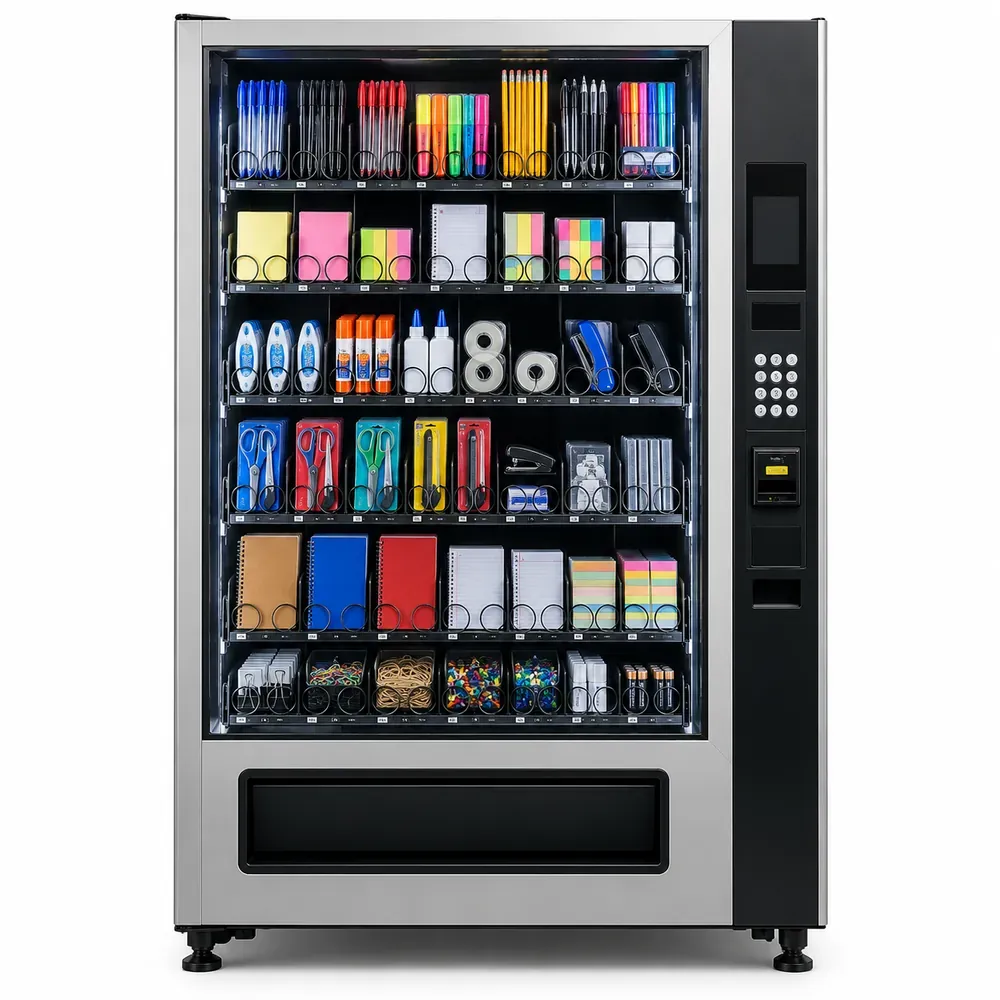
Sells pens, pencils, notebooks, markers and other stationery.
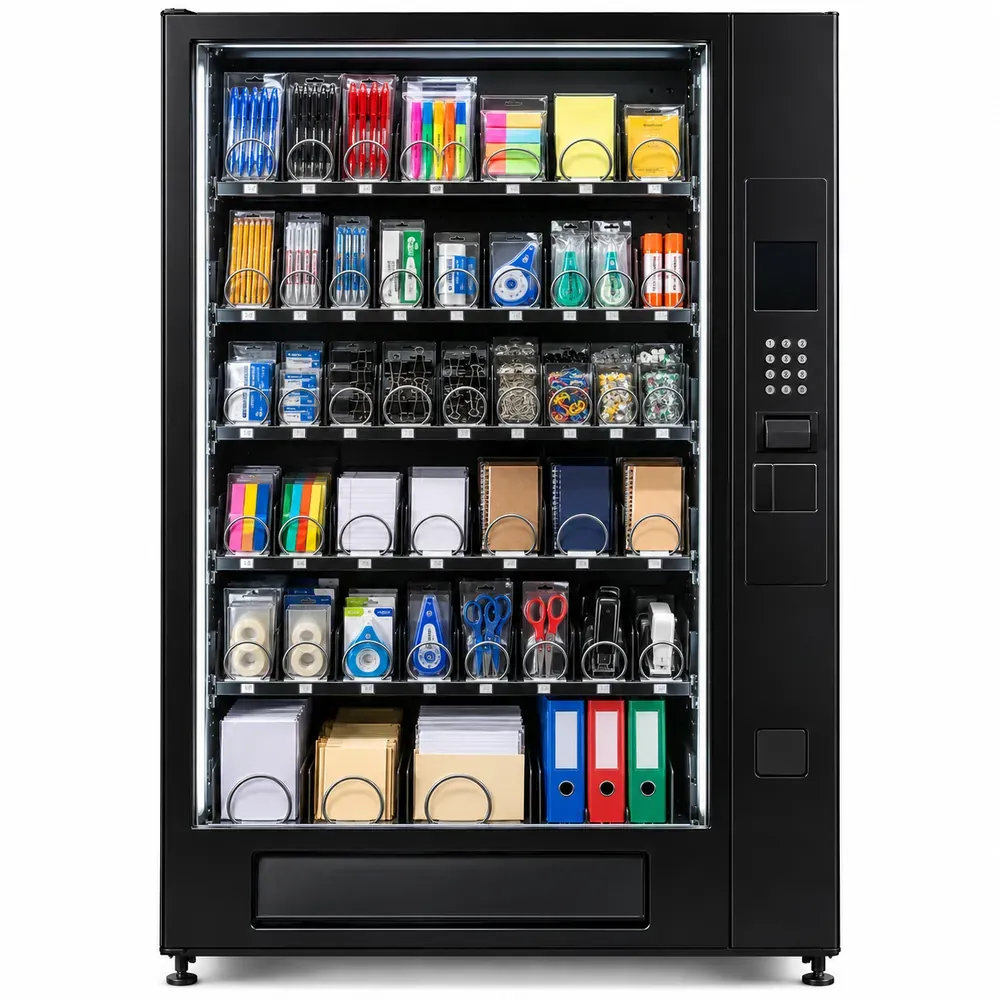
Provides frequently required workplace consumables.
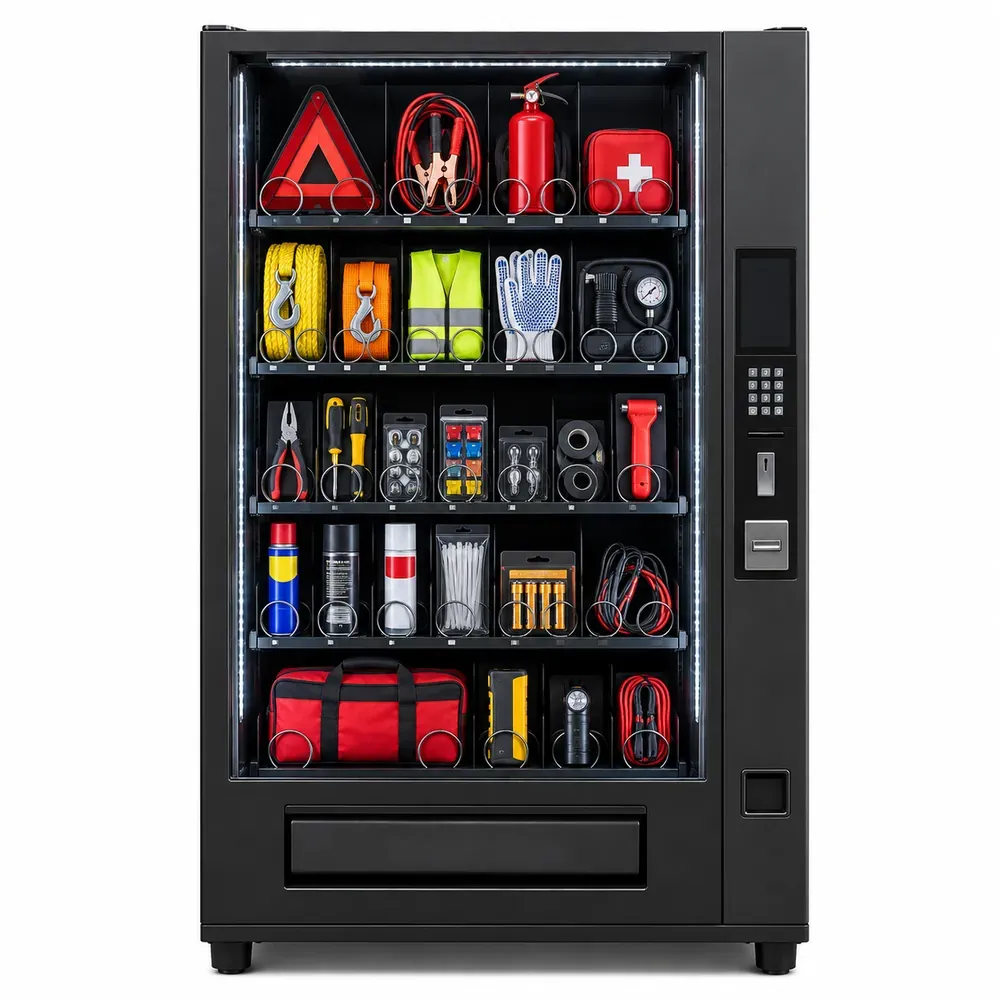
Sells basic emergency vehicle accessories and consumables.
Tell us where it will go and roughly how many people pass by. We reply with configuration options and the engagement model that suits you.
A PPE and safety vending machine is a self-service unit that holds personal protective equipment and hands it out on demand, day or night. Instead of waiting at a store counter, a worker identifies themselves, picks the item and collects it from the pickup tray. For factories, construction projects and laboratories, this removes a daily queue and a lot of paperwork.
Indian workplaces run long shifts, often with night crews and contract workers. Gloves tear, masks get dirty and earplugs go missing in the middle of a shift. When the store is shut or far away, people either work without the item or share one, and both are unsafe.
This guide explains how a PPE and safety vending machine works, what to stock, where to place it and what to ask before you buy. It focuses on practical choices rather than sales talk, so you can judge if the idea fits your site.
The basic flow is close to any snack machine, with one big difference: access is often tied to a person, not to a coin. The machine can be set to sell items or to issue them free against an ID.
Smart features such as remote stock alerts, issue reports and limit rules are optional and depend on the model you choose. Ask us which features a shortlisted machine supports before you finalise.
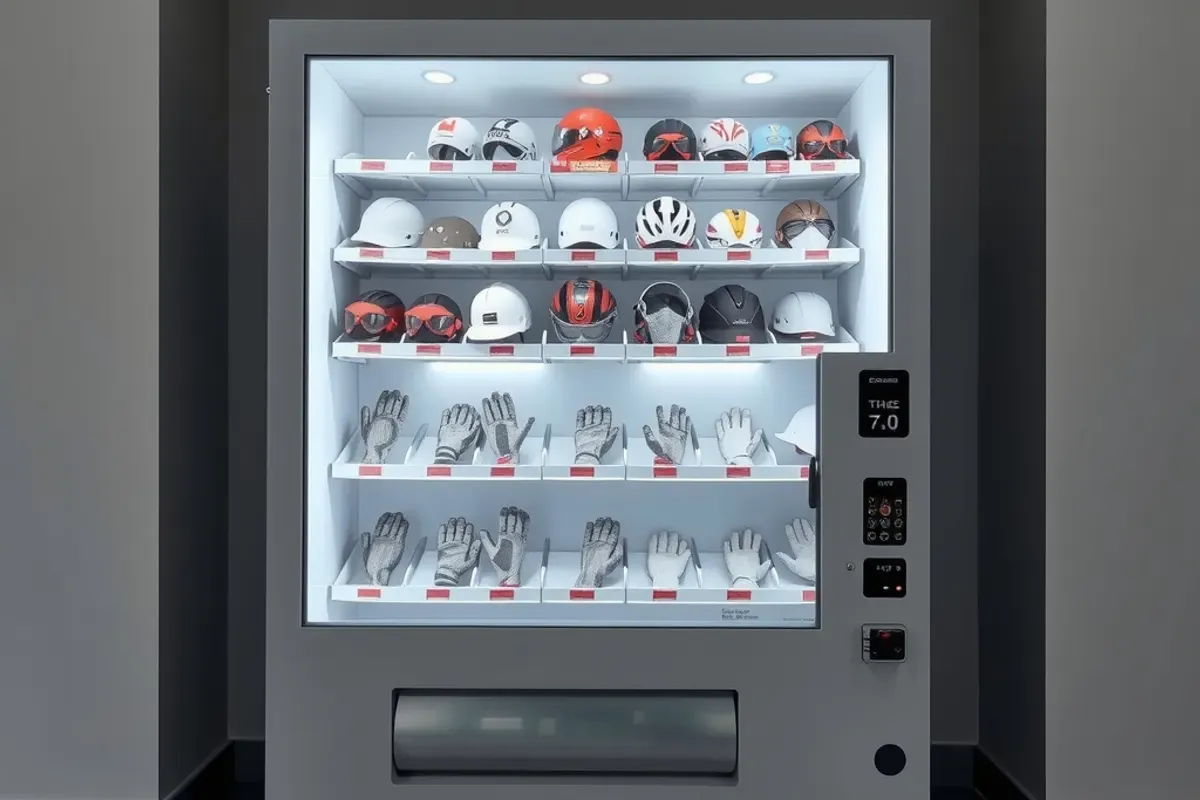
PPE comes in very different shapes. A pair of gloves in a bag, a box of masks and a hard hat all need different handling.
A good industrial PPE dispenser, or any safety equipment vending machine, often mixes two of these types. Measure your most-used items and share the sizes with us, so the slot plan fits real products and not guesses.
Start with the consumables your workers use most often and that wear out fast. Heavy, rarely issued or highly specialised gear is usually better kept in the store.
| Item | Typical pack | Slot fit | Why it suits a machine |
|---|---|---|---|
| Work gloves | Pair in a bag | Standard or wide coil | Wear out quickly, high use |
| Disposable masks | Small box or single pack | Standard coil | Daily need in dusty areas |
| Safety glasses | Boxed or pouched | Locker or wide coil | Often lost or scratched |
| Earplugs | Small pack | Standard coil | Cheap, frequently replaced |
| Hard hats | Single unit | Locker door | Needed for new joiners and visitors |
| Disposable coveralls | Folded pack | Wide coil | Useful for visitors and contractors |
PPE is not a free choice. The right gear depends on the hazards at your site, and the rules that apply to it are set by law and by standards. Your safety officer should approve each item before it goes into the machine, and you should keep supplier details and standard markings on file. The Bureau of Indian Standards website explains Indian product standards, and workplace safety duties are set by the labour authorities, so check your own obligations with the right advisor.
In the first month, stock a short list with enough units of the fast movers. Track what is issued, what sits unused and what workers ask for. Then swap slow rows for items that are actually needed. A glove row that empties every shift is a clear sign to give it more space.
The main value of a PPE and safety vending machine is not the metal box. It is the control and the record that comes with it. When issue is tied to an ID, you can see who took what, and you can spot patterns early.
On a PPE and safety vending machine, limits, a core part of workplace safety vending, stop waste without blocking genuine needs. A few examples that sites commonly use:
Whether a model supports per-person limits, reports and supervisor override is model dependent. Confirm these points in the written quote before you commit.
PPE often disappears because the store is open to everyone or poorly tracked. A PPE and safety vending machine with ID-based issue adds a simple check. It will not stop every loss, but it gives you data to act on. Share reports with team leaders and talk to workers about why replacement rules exist, not only about the numbers.
Placement decides whether workers actually use the PPE and safety vending machine. It should sit on the daily path, close to where PPE is needed, but away from the worst dust, heat and water.
Our industrial vending solutions page explains how machines fit into factory and plant settings, including power and network points. If your site is a school or college with science labs, see our campus vending solutions page too.
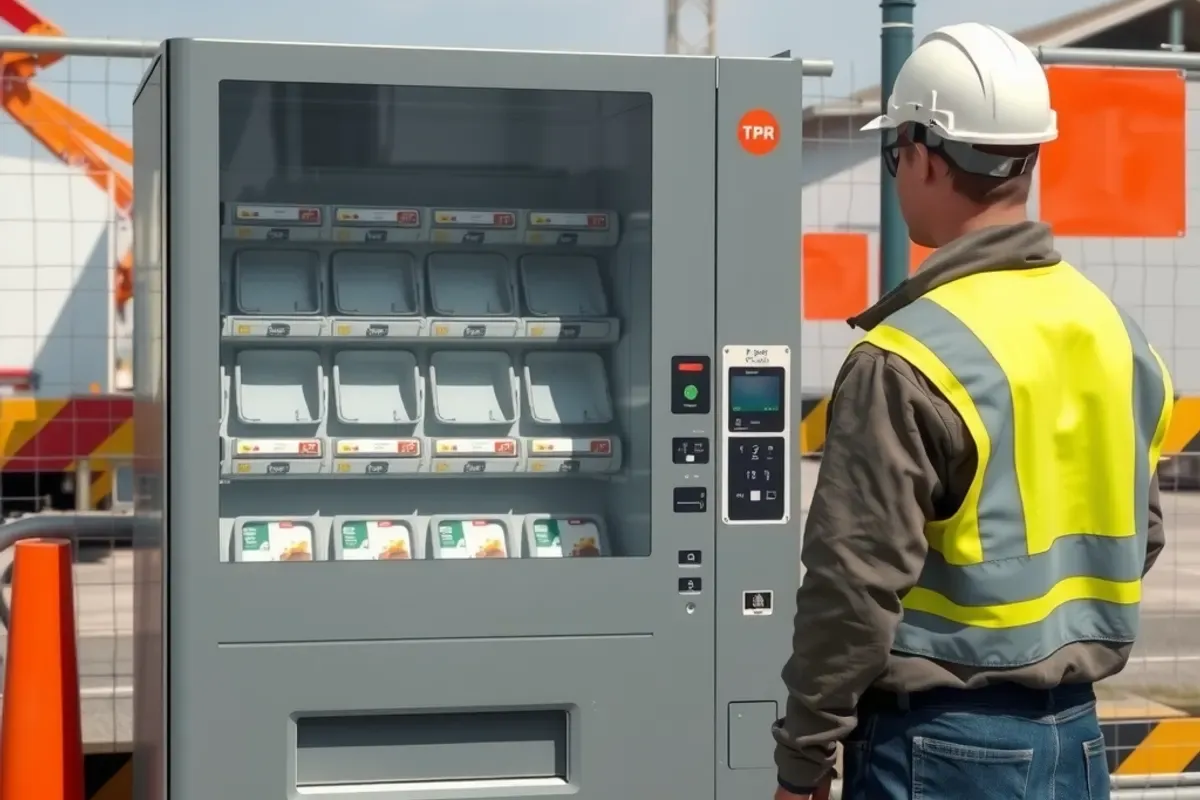
Before you install a PPE and safety vending machine, walk the spot at different times of day. Check that the floor is level and strong enough for a loaded machine. Look for shade and shelter from rain, because moisture and direct sun can harm electronics and packaging. Confirm stable power, and a network signal if you want remote alerts or UPI payments.
Dust is a real issue in many plants. Keep the machine away from grinding, cutting and cement mixing zones where possible. A covered entry point is a safer choice than the middle of the shop floor.
How the machine identifies users and takes payment depends on how you plan to run it. A free-issue PPE and safety vending machine needs an ID reader or PIN pad. A sales setup needs a payment option such as UPI.
Plan how to handle a failed drop or a wrong item. Display a clear help number or QR code on the machine, and keep a simple log of faults and how each was solved. Quick fixes build trust, and workers return to a machine they believe works.
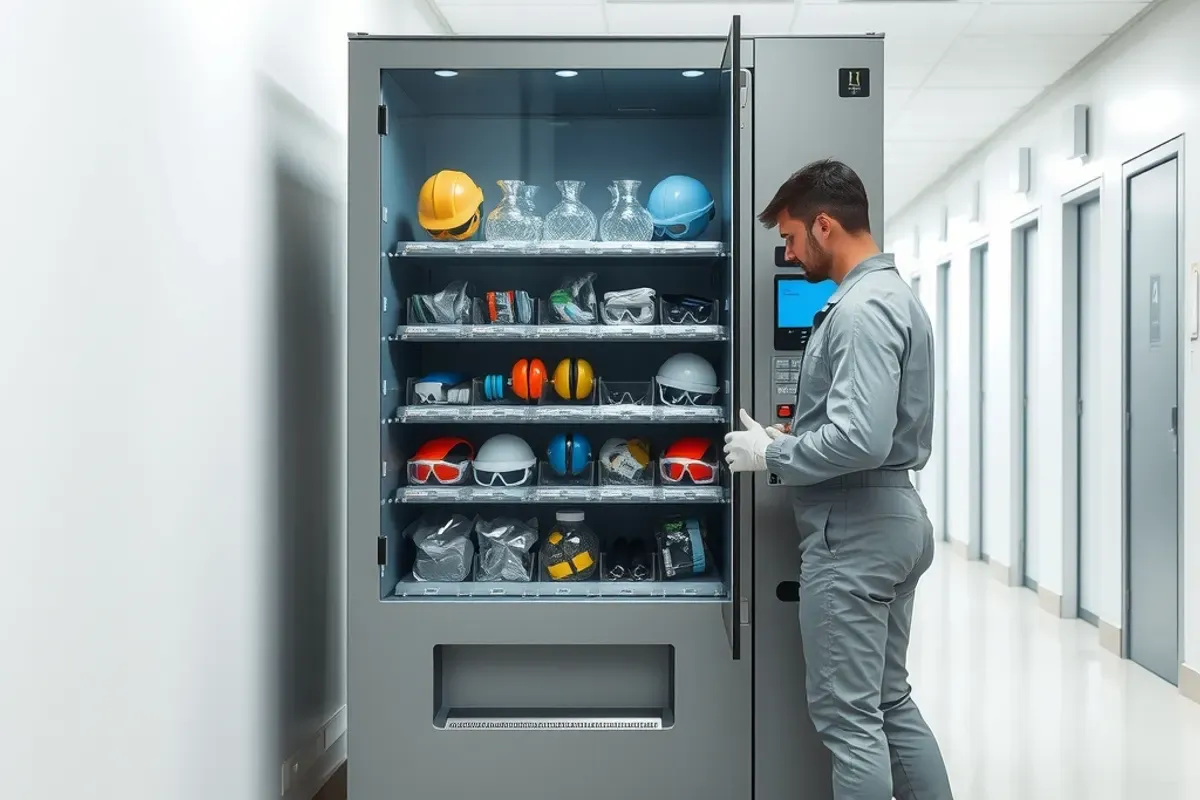
A PPE and safety vending machine is only as good as its upkeep. Empty rows or damaged items will push workers back to the store or, worse, to working without protection.
Set a written routine and stick to it. A simple plan might look like this:
Some PPE has a shelf life. Rubber, filters and certain disposable items can degrade with heat and time. Check the supplier instructions for each item, rotate stock and avoid placing the machine in direct sun or next to hot equipment.
Electrical safety should never be guessed. Any BIS or other safety certification for the machine will be confirmed in your written quote. Use an earthed power point, protect cables from vehicles and trolleys, and have the machine checked by a qualified electrician at installation.
A machine is not the only way to give workers access to gear. Here is how it compares with common alternatives.
For many sites, the best answer is a mix. The machine covers routine and out-of-hours needs, while bulk and specialised items stay in the store.
If your main need is gear for building projects, our construction safety vending machine page covers units planned around site conditions. If you also want basic injury supplies near the work area, read about the first aid vending machine. You can also browse all vending machine types to compare sizes and formats.
A new PPE and safety vending machine only works if people trust it. Spend time on a short briefing for supervisors and workers before go-live. Show them how to use the ID reader, how limits work and who to call if something fails.
Explain why the PPE and safety vending machine is there. If workers think it is a way to cut down on PPE, they may avoid it. Frame it as faster access and a fair record. Ask for feedback in the first few weeks and adjust the stock and limits based on what you hear.
There are different ways to bring a PPE and safety vending machine to your site. The right one depends on your budget, how much effort you want to put in and how many workers will use it.
If you are thinking about running machines as a business, our vending machine partner page explains how to start that conversation. Not sure which machine fits your site? Use the vending machine finder to narrow your choices in a few steps.
A few simple errors cause most of the problems new users face.
Use this short list before you request a quote:
Ready to plan a PPE and safety vending machine for your factory, site or lab? Share your site details, headcount and item list, and we will help you choose a suitable model. Request a free PPE and safety vending machine quote, and you can compare the options that fit your site.
Most units can hold small, boxed or bagged items such as gloves, masks, safety glasses, earplugs and disposable coveralls. Bulky items like helmets may need wider slots or locker-style doors. Share your item list and pack sizes with us and we will check the slot plan against your real products.
Both are possible. Many employers issue PPE free against a worker ID, PIN or card, and some sites also sell extra personal items. Which mode a model supports is model dependent, so confirm it in your quote. Check your own legal duties on who must supply PPE before you decide.
Controlled-issue models can often set limits, for example one pair of gloves per shift or one helmet per month for each ID. Whether per-person limits and reports are available depends on the model. Match the limits to your written replacement rules so workers are treated fairly.
No. The machine speeds up routine issue of consumables and records what was taken. Your safety officer still decides which PPE is right for each task, trains workers and inspects the gear. The store may still hold bulk stock and specialised items that do not fit a machine.
It depends on the site and the model. Dust, heat, moisture and vibration all affect electronics and payment or ID readers. Placing the machine at a covered, ventilated entry point rather than inside the dirtiest zone usually works better. Tell us about your site conditions during the survey.